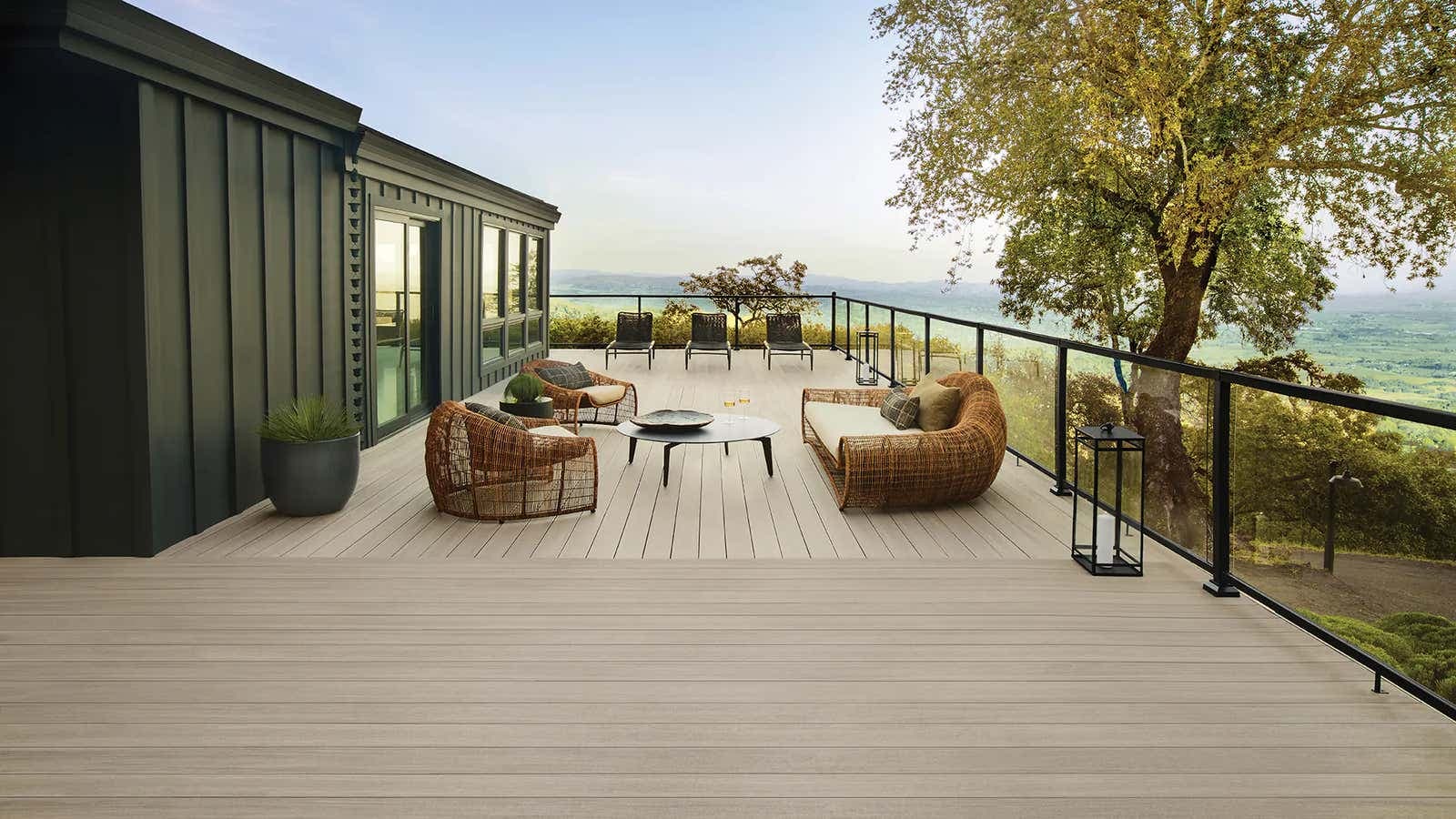
Understanding Your Compact Space: Balcony, Patio, or Courtyard?
Before selecting composite decking, define the type of compact outdoor space you are working with. A balcony, for instance, often has specific weight load limits and requires careful consideration of drainage. A small ground-level patio might involve integrating with existing landscaping or paving. An urban courtyard could present challenges with sunlight exposure, ventilation, and access for material delivery.
Each type of space has unique structural and environmental characteristics that influence decking choice. For example, a space with limited natural light might benefit from lighter-colored boards to brighten the area, while a sun-exposed balcony could leverage cooler-underfoot options available in some composite collections. Understanding these distinctions is crucial for a successful project.
Composite Decking Profiles and Their Impact on Small Spaces
Composite decking is available in various profiles, including solid and scalloped boards, as well as different widths and lengths. In a compact space, the choice of profile can significantly influence both the visual perception of size and the practicalities of installation.
Wider boards can sometimes make a small area feel larger by reducing the number of visible seams, creating a more expansive look. Conversely, narrower boards might be used to create a sense of intricate detail or to better fit a specific design aesthetic without overwhelming the space. Longer boards can minimize butt joints, which is particularly beneficial in small, linear spaces. For areas where weight is a concern, such as some balconies, lighter-weight scalloped profiles might be a consideration, though structural review is always paramount.
Manufacturers like Trex, TimberTech, and Fiberon offer a range of profiles. Reviewing the specific dimensions and characteristics of each collection is important to ensure it aligns with your project's needs and any structural limitations. For instance, some collections are designed with capped shells that resist humidity, which can be useful in coastal or humid environments.
Color and Finish: Brightening or Defining Your Area
The color and finish of your composite decking play a significant role in how a compact space feels. Lighter colors, such as grays, tans, or light browns, can reflect more light, making a small area appear brighter and more open. This is especially advantageous in shaded courtyards or spaces with limited natural light.
Darker colors, while potentially absorbing more heat, can create a sense of intimacy and sophistication. They can also provide a strong contrast with lighter building exteriors or landscaping. Consider the existing color palette of your home or surrounding structures. Composite decking offers consistent color and grain, board after board, ensuring a predictable aesthetic.
Many composite decking lines feature options designed to be cooler underfoot, which can be a practical benefit for sun-exposed balconies or patios where bare feet are common. These options can help maintain comfort even on warm days.
Planning for Access and Installation in Confined Areas
One of the primary challenges of decking a compact outdoor space is material delivery and installation access. Assess how decking boards will be transported to the project site – whether through narrow doorways, up stairs, or via an elevator. Longer boards might be more efficient for minimizing cuts but can be cumbersome to maneuver in tight spaces. Conversely, shorter lengths might require more cuts but offer easier handling.
Consider the layout to minimize waste. Even a small project can benefit from careful planning of board cuts and identifying where offcuts might be reused for smaller sections or picture-frame borders. While composite decking is durable, proper spacing and ventilation are still critical for its long-term performance. Always follow the manufacturer's specific installation guidelines for board spacing to allow for thermal expansion and contraction, which is important even in small areas.
For specific installation details and to confirm current product lines and colors, contacting a Lumber Plus branch is recommended.
Worked Example: Decking a 6-foot by 10-foot Balcony
Let's consider a hypothetical balcony project measuring 6 feet wide by 10 feet long. This 60-square-foot area is compact but offers potential for an inviting outdoor retreat. For this example, we'll assume a standard composite decking board width of 5.5 inches (0.458 feet) and available lengths of 12 feet and 16 feet.
To cover the 6-foot width, you would need approximately 6 feet / 0.458 feet per board = 13.1 boards. Rounding up, you would use 14 boards across the width. If using 12-foot length boards, you could cut each board to 10 feet, leaving a 2-foot offcut. For the 10-foot length, you would need 14 boards. Since each board is 12 feet, you would get one 10-foot section per board, with 2 feet of waste per board. Total boards needed: 14 x 1 = 14 boards.
Alternatively, if using 16-foot boards, you could get one 10-foot section per board, with 6 feet of waste. The total would still be 14 boards. This example illustrates how board length choices impact waste. For a more efficient cut plan, consider a diagonal layout or a picture frame border that could utilize some of the offcuts. Always factor in a small percentage for cuts and potential errors when ordering materials.
Before you order
- What are the precise dimensions and shape of your compact outdoor space?
- Are there any structural weight limitations, especially for balconies?
- How much sun exposure does the area receive throughout the day?
- What is the existing color palette of your home or surrounding structures?
- What access points are available for material delivery and installation?
- Do you prefer a lighter, more open feel or a darker, more intimate ambiance?
- Have you reviewed manufacturer guidelines for ventilation and board spacing for your chosen composite decking?
- Which composite decking profile (solid vs. scalloped, width, length) best suits the space and your design goals?
- Are there specific features, like cooler-underfoot options, that are important for your project?
Confirm installation details, approved uses and warranty terms in the current instructions for the exact product and profile. Your installer should verify the substrate, structure and applicable project requirements.
This is a planning guide for projects in Tallahassee, FL. Ask our team to confirm availability, delivery to your ZIP code and which branch can support your order.
Questions to help you decide
Can composite decking be installed directly over an existing concrete patio?
Composite decking typically requires a substructure (joists) for proper support, ventilation, and drainage. It is generally not recommended to install composite boards directly onto concrete without an underlying frame. This framework allows for air circulation, which is crucial for the longevity of the deck and helps prevent moisture buildup. Consult the manufacturer's installation guide for specific requirements regarding substructure and ground clearance.
How do I maintain composite decking in a small space?
One of the advantages of composite decking is its relatively low maintenance. Most composite decking requires only an annual wash with soap and water to remove dirt and debris. Unlike wood, it does not require oiling, sanding, or staining. For compact spaces, regular sweeping to prevent leaf accumulation and occasional cleaning will help keep the surface looking its best. Always refer to the specific manufacturer's cleaning recommendations for your chosen collection.
Are there composite decking options that feel cooler underfoot in sunny conditions?
Yes, several composite decking manufacturers, including Trex, TimberTech, and Fiberon, offer collections that incorporate technology or materials designed to reduce heat absorption, making them feel cooler underfoot compared to traditional composites or darker colors. If your compact space receives significant direct sunlight, inquire about these 'cooler-underfoot' options when selecting your decking material. The capped shells found in many composite boards also help them shrug off humidity, contributing to overall comfort.
Ready to Transform Your Compact Outdoor Space?
Request a material quote for composite decking by providing your project dimensions, desired profile, and ZIP code. We can help you confirm current availability and service options for leading brands like Trex, TimberTech, and Fiberon.
Request a material quote →