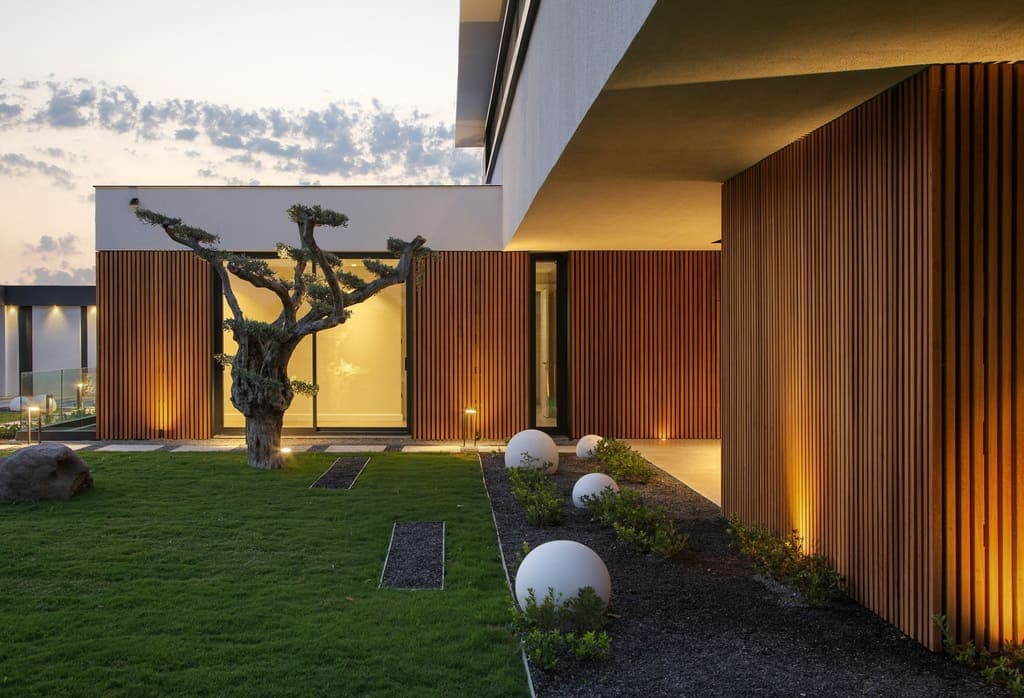
Understanding Thermally Modified Wood for Wall Applications
Thermally modified wood undergoes a high-heat treatment process that alters its cellular structure. This process aims to enhance the wood's stability and resistance to moisture absorption, making it a candidate for various exterior applications.
For covered patio walls, these properties can translate to a material that is less prone to warping or cupping compared to untreated wood, especially in areas where temperature and humidity fluctuations, even if indirect, are present. This modification is achieved without chemicals, relying solely on heat and steam.
Selecting the Right Profile and Species
Thermally modified wood is available in various profiles, including tongue-and-groove, shiplap, and square edge. The choice of profile influences the final aesthetic and the ease of installation. Tongue-and-groove or shiplap profiles often provide a cleaner, more continuous appearance with defined shadow lines, which can be desirable for a covered patio wall.
Common species for thermal modification include spruce, pine, and ash. Each species offers a unique grain pattern and color, which can be further enhanced or altered with finishes. Consider the overall design of your patio and adjacent structures when selecting a species and profile to ensure visual harmony. The NORX brand offers a selection of thermally modified wood profiles suitable for wall applications.
For a contemporary look, a clear vertical grain thermally modified spruce can provide a clean, uniform appearance. If a more rustic or textured feel is desired, a thermally modified pine with its more pronounced knot structure might be suitable. Always verify that the chosen profile and species are approved for vertical wall applications.
Finish Options and Maintenance for Covered Walls
While thermally modified wood is designed for enhanced durability, applying a finish can protect its appearance and offer an additional layer of defense against environmental factors, even in a covered setting. Finishes can range from clear sealers that highlight the natural wood tone to semi-transparent stains that introduce color while allowing the grain to show through.
In San Diego's climate, even covered areas can experience UV exposure and ambient humidity. A finish can help mitigate the effects of these elements, reducing the natural graying process that occurs with unfinished wood. Regular cleaning and reapplication of finish, as recommended by the manufacturer, will help maintain the desired look over time. For those seeking a low-maintenance option that embraces natural weathering, leaving thermally modified wood unfinished is also an option, understanding that it will gradually develop a silver-gray patina.
The specific finish chosen should be compatible with thermally modified wood and suitable for exterior use, even if sheltered. Always follow the finish manufacturer's instructions for application and maintenance.
Installation Considerations for Covered Patio Walls
Proper installation is crucial for the longevity and appearance of thermally modified wood walls. While covered, these walls still require attention to detail regarding ventilation, fastening, and clearance. A small air gap behind the wood, achieved through furring strips, can promote airflow and help manage moisture. This is especially relevant in coastal areas where humidity can be higher.
Fastening methods should be selected based on the specific profile and manufacturer recommendations. Hidden fasteners can create a seamless look, while visible fasteners can add a design element. Stainless steel fasteners are generally recommended for exterior applications to prevent staining and corrosion.
Ensure adequate clearance from the ground or any adjacent paving to prevent moisture wicking into the wood. Even under a cover, splashing rain or irrigation can occur. Planning for expansion and contraction is also important, though thermally modified wood exhibits reduced movement compared to untreated wood. Consult the product's installation guidelines for specific spacing requirements.
Consider the substructure for your patio wall. It must be sound, plumb, and adequately prepared to receive the thermally modified wood. This may involve waterproofing membranes depending on the overall wall assembly and local building practices.
Worked Example: Designing a 10-foot Covered Patio Wall
Let's consider a hypothetical covered patio wall measuring 10 feet wide by 8 feet high. We'll use NORX Thermally Modified Spruce, 1x6 (nominal) shiplap profile, which has an actual coverage width of 5.125 inches. The goal is a uniform appearance with minimal visible fasteners.
First, calculate the linear feet needed for coverage: 10 feet (width) * 12 inches/foot = 120 inches. Divide by the coverage width: 120 inches / 5.125 inches/board = 23.41 boards. Since you can't buy partial boards, round up to 24 boards. Each board needs to be 8 feet long. So, you would need 24 boards, each 8 feet long, totaling 192 linear feet of material. It's always advisable to add a waste factor, typically 10-15%, for cuts and potential imperfections. For this project, a 10% waste factor would mean purchasing approximately 212 linear feet.
For installation, consider horizontal application of the shiplap. Hidden fasteners would be used at the tongue or lap of the shiplap profile, ensuring a clean face.
A semi-transparent exterior stain in a natural wood tone could be chosen to protect the wood and enhance its color, with reapplication every 2-3 years depending on exposure and product specifications. This example assumes a straightforward rectangular wall; complex geometries or openings would require more detailed planning and potentially a higher waste factor.
Before you order
- Verify local building codes and any HOA requirements for exterior wall materials in San Diego.
- Confirm the specific thermally modified wood species and profile are approved for vertical wall applications.
- Evaluate the desired aesthetic: natural weathering vs. maintained finish.
- Select a compatible exterior finish, if desired, and understand its maintenance schedule.
- Plan for adequate ventilation behind the wall cladding using furring strips.
- Choose appropriate fasteners (e.g., stainless steel) based on profile and manufacturer recommendations.
- Determine required ground clearance and detailing around any openings or corners.
- Calculate material quantities, including a waste factor, for your specific project dimensions.
- Consider the substructure and its readiness for the new cladding.
Confirm installation details, approved uses and warranty terms in the current instructions for the exact product and profile. Your installer should verify the substrate, structure and applicable project requirements.
This is a planning guide for projects in San Diego, CA. Ask our team to confirm availability, delivery to your ZIP code and which branch can support your order.
Questions to help you decide
Does thermally modified wood require a finish on a covered patio wall?
While thermally modified wood is enhanced for stability, applying a finish can help protect its appearance, especially from UV exposure and ambient humidity, even in a covered setting. A finish can also delay the natural graying process. If you prefer the natural silver-gray patina that develops over time, leaving it unfinished is an option, but be aware of the appearance change.
How does San Diego's climate affect thermally modified wood on a covered patio?
San Diego's coastal climate, with its moderate temperatures and occasional humidity, means that even covered patio walls can experience some moisture and UV exposure. Thermally modified wood's enhanced stability can help it perform well in these conditions, reducing the likelihood of warping or cupping. Proper ventilation behind the cladding remains important to manage any trapped moisture.
Can I use any thermally modified wood profile for a covered patio wall?
It's important to verify that the specific thermally modified wood profile and species you choose are explicitly approved for vertical wall cladding applications by the manufacturer. While many profiles are suitable, some might be designed primarily for decking or other uses. Always consult product documentation to ensure compatibility and proper installation methods for wall use.
Ready to Plan Your Thermally Modified Wood Patio Wall?
Request a material quote with your project dimensions, exact profile preferences, and ZIP code. We can help you confirm current availability and service options for your San Diego project. Explore our selection of thermally modified wood, siding and cladding, and products from NORX and Maximo Accoya.
Request a material quote →