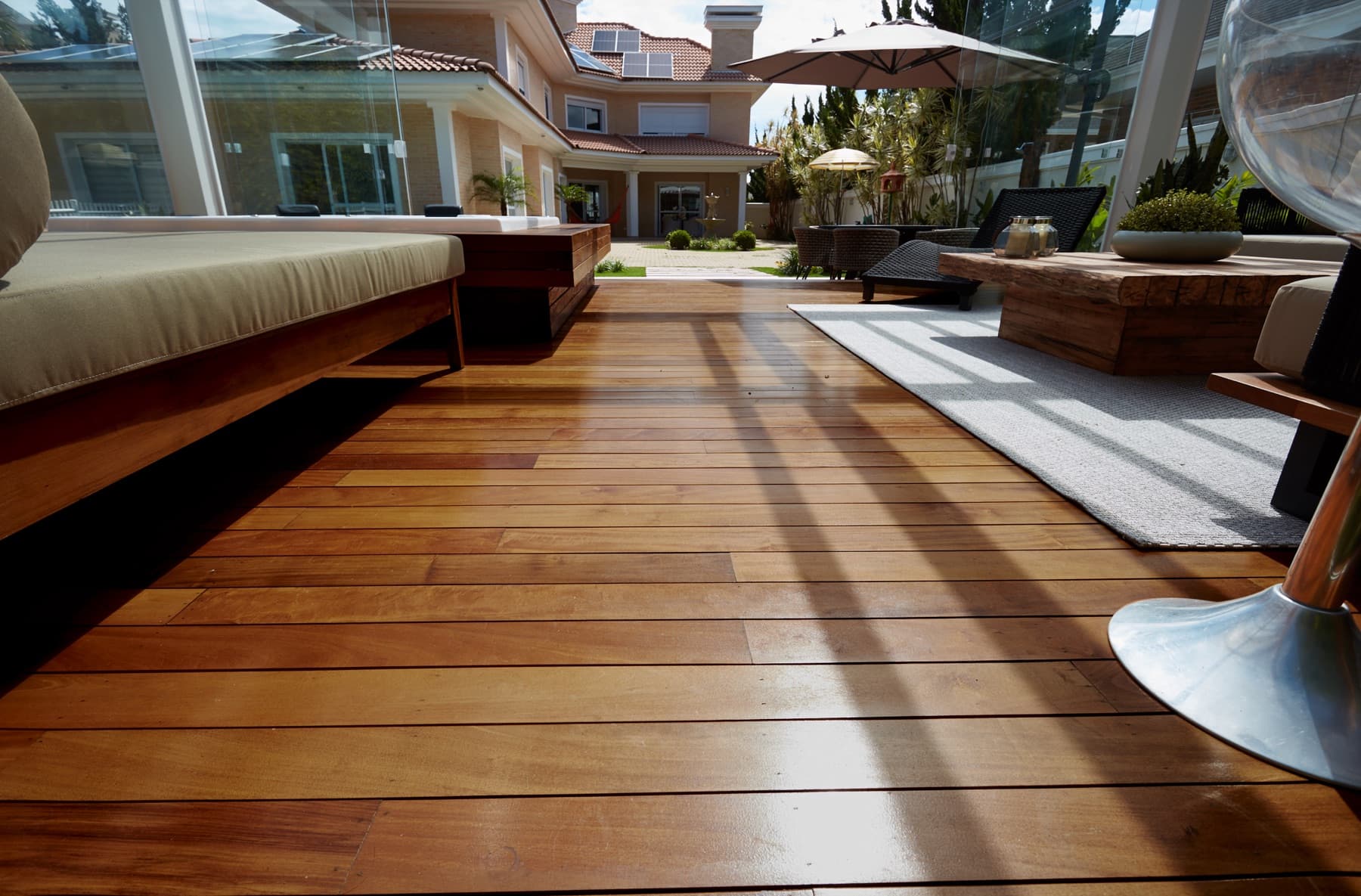
Assessing Your Existing Deck Framing for Hardwood
Before selecting new decking material, a thorough inspection of your existing deck frame is essential. Hardwood decking, particularly dense species like Ipe and Cumaru, is heavier than many other decking options. Your current joists, beams, and support posts must be in excellent condition and adequately sized to bear the increased load.
Check for any signs of rot, insect damage, or excessive deflection in the joists. Ensure that the joist spacing aligns with the recommendations for your chosen hardwood decking. If your existing joist spacing is wider, you may need to add blocking or additional joists, or consider a different decking profile to ensure structural integrity.
Verify that all fasteners and connections are secure and free from corrosion, especially in a coastal environment where salt air can accelerate degradation. Any compromised structural elements should be repaired or replaced before new decking is installed. This foundational review ensures the longevity and safety of your renovated deck.
Choosing Hardwood Species: Ipe vs. Cumaru for San Diego Projects
For San Diego's climate, two popular hardwood decking options are Ipe and Cumaru, both renowned for their durability and natural resistance. While both are excellent choices, they offer distinct characteristics.
Ipe (Handroanthus spp.), also known as Brazilian walnut, is often considered the benchmark for hardwood decking. Ipe is highly resistant to weather changes, mold, and termites, making it a robust option for outdoor use. Its minimal movement post-installation contributes to its long-term stability.
Cumaru (Dipteryx odorata) is another very durable tropical hardwood, often referred to as Brazilian Teak. Cumaru is also highly resistant to termites and weather changes. When worked, Cumaru can emit a scent of cinnamon and vanilla, a unique characteristic. Both species can be left untreated to weather to a silvery-gray patina or maintained with a UV-blocking sealer to preserve their original color.
When making your selection, consider the specific aesthetic you desire and the long-term maintenance commitment. Ipe is known for its deep, rich tones, while Cumaru offers a slightly lighter, warmer appearance. Both provide excellent performance in demanding outdoor conditions.
You can explore more about Ipe at: /decking/hardwood/ipe
Planning for Coastal Conditions in San Diego
San Diego's coastal environment presents unique challenges, including salt air exposure, humidity fluctuations, and intense sun. Hardwood decking species like Ipe and Cumaru are inherently well-suited to these conditions due to their natural density and oil content.
Ipe and Cumaru are frequently specified for marine-grade applications such as docks, boardwalks, and seawall caps, indicating their robust performance against salt air and spray. Their natural oils help protect the wood from cracking or warping, even with exposure to moisture and temperature changes. This inherent resistance means they do not require chemical pressure treatments to withstand coastal elements.
Proper ventilation beneath the deck is crucial in any climate, but especially in humid coastal areas. Adequate airflow helps prevent moisture buildup, which can contribute to mold or mildew growth on the underside of the deck boards and potentially impact the framing. Ensure there is sufficient clearance and open areas around the deck perimeter to allow for air circulation.
Worked Example: Deck Renovation Material Takeoff
Consider a hypothetical deck renovation project for a rectangular deck measuring 12 feet by 15 feet in San Diego.
The deck area is 12 feet * 15 feet = 180 square feet. We will use Ipe decking boards, typically available in 1x6 (actual dimensions approximately 0.75 inches x 5.5 inches) or 5/4x6 (actual dimensions approximately 1 inch x 5.5 inches) profiles. For this example, let's assume 5/4x6 Ipe decking, which has an effective coverage width of 5.5 inches per board.
To cover the 12-foot width of the deck, you would need 12 feet * 12 inches/foot / 5.5 inches/board = approximately 26.18 boards. Since you cannot purchase partial boards, you would need 27 boards for the width. For the 15-foot length, if you plan to run boards parallel to the 15-foot dimension, you would need boards that are at least 15 feet long. If you use standard 12-foot or 16-foot lengths, you'd need to plan for seams.
Let's assume you prefer a seamless look across the 15-foot dimension and opt for 16-foot long boards where possible. For the 12-foot width, you'd need 27 boards. Each board is 16 feet long. Total lineal footage: 27 boards * 16 feet/board = 432 lineal feet. To account for cuts, waste, and a small buffer, it's advisable to add 10-15% to this total. So, 432 lineal feet * 1.15 = 496.8 lineal feet. You would round up to the nearest full board length available, which might mean purchasing around 31 boards of 16-foot length.
Remember to also account for fascia boards for the perimeter. For a 12x15 deck, the perimeter is (12+15)*2 = 54 lineal feet. Adding a similar waste factor, you might need around 60-65 lineal feet of fascia material. Always confirm available lengths and profiles when ordering.
Finishing and Maintenance for Hardwood Decks
The maintenance requirements for hardwood decking are relatively straightforward, especially for species like Ipe and Cumaru. These woods are naturally resistant to rot, insects, and mold, reducing the need for harsh chemical treatments.
A simple annual wash is typically sufficient to keep the deck clean. If you prefer to preserve the original rich brown tones of Ipe or Cumaru, an annual application of a UV-blocking oil or sealer is recommended. If left untreated, both species will gradually weather to a silvery-gray patina, a natural process that does not compromise their structural integrity.
For coastal applications in San Diego, regular cleaning can help remove any accumulated salt residue. It's important to use cleaning products that are compatible with hardwood and follow manufacturer instructions to avoid damage. Occasional reapplication of a suitable finish will protect the wood from UV degradation and help maintain its color over time.
Before you order
- Inspect existing deck framing for rot, insect damage, and deflection.
- Confirm all fasteners and connections are secure and corrosion-free.
- Measure the total deck area and plan board direction for material takeoff.
- Consider Ipe for maximum durability and deep tones.
- Consider Cumaru for strong durability with a slightly warmer hue.
- Account for a 10-15% waste factor in material calculations.
- Plan for fascia boards and other trim elements.
- Ensure adequate under-deck ventilation for coastal humidity.
- Decide on a finish: natural silvering or UV-blocking oil for color retention.
Confirm installation details, approved uses and warranty terms in the current instructions for the exact product and profile. Your installer should verify the substrate, structure and applicable project requirements.
This is a planning guide for projects in San Diego, CA. Ask our team to confirm availability, delivery to your ZIP code and which branch can support your order.
Questions to help you decide
Can I use my existing deck frame for hardwood decking?
You can, provided your existing frame is in excellent structural condition and its joist spacing is adequate for the density and span requirements of hardwood decking. A professional inspection is recommended to assess its suitability for the increased weight and specific installation needs of hardwoods like Ipe or Cumaru.
How do Ipe and Cumaru perform in San Diego's coastal climate?
Both Ipe and Cumaru are highly suitable for coastal environments. Their natural density, oil content, and inherent resistance to rot, insects, and weather changes make them durable choices against salt air, humidity, and sun exposure. They are often used in marine applications due to their robust performance in demanding conditions.
What maintenance does hardwood decking require in San Diego?
Hardwood decking like Ipe and Cumaru is relatively low maintenance. An annual wash is generally sufficient to keep it clean. If you wish to preserve the wood's original color, an annual application of a UV-blocking oil or sealer is recommended. Otherwise, the wood will naturally weather to a silvery-gray patina without impacting its structural integrity.
Request a Material Quote for Your Hardwood Deck Renovation
Ready to upgrade your San Diego deck with durable hardwood? Request a material quote by providing your project dimensions, desired hardwood profile (e.g., Ipe 5/4x6), and your ZIP code. Our team can help confirm current availability and service options for your renovation project.
Request a material quote →