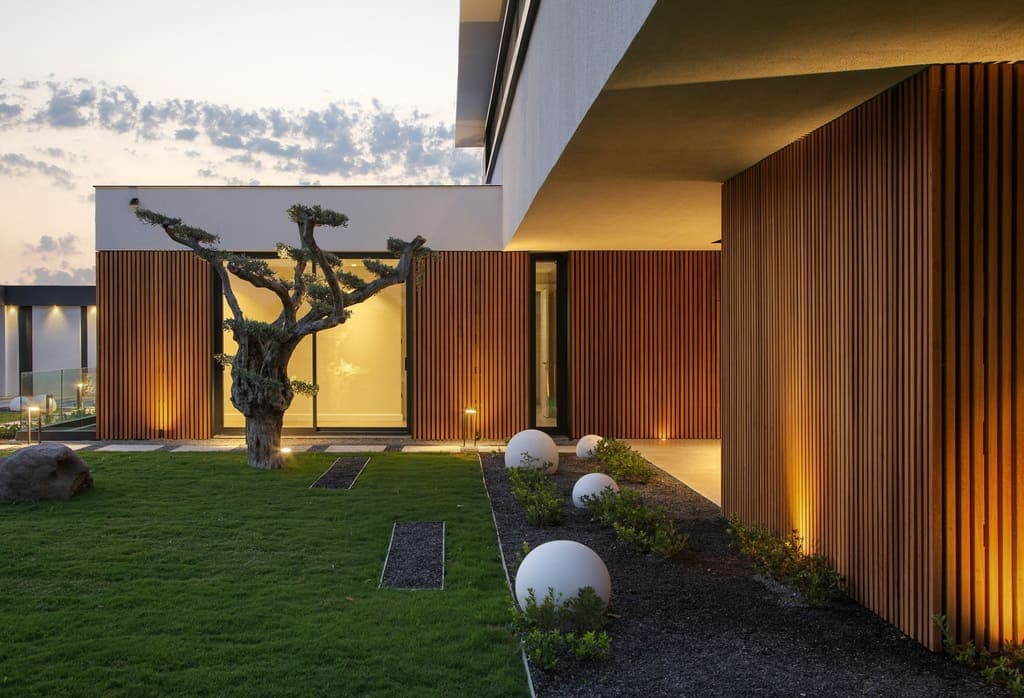
Understanding Thermally Modified Wood for Covered Walls
Thermally modified wood undergoes a high-temperature heat treatment process, which alters its cellular structure. This modification enhances its dimensional stability, making it less prone to shrinking and swelling due to changes in humidity. It also improves its resistance to decay and insect infestation. These properties are particularly beneficial for covered patio walls, where fluctuations in temperature and ambient moisture can still occur, even with overhead protection.
While covered walls are shielded from the harshest elements, they still experience environmental variations. The enhanced stability of thermally modified wood helps maintain a consistent appearance and reduces the likelihood of warping or cupping over time. This contributes to a more durable and lower-maintenance finish for your outdoor living area.
Consider NORX thermally modified wood, which is known for its consistent modification process, or Maximo Accoya, a high-performance modified wood product, for your project. These materials offer distinct aesthetic and performance characteristics.
Selecting the Right Profile and Species for Your Patio Wall
The profile of the thermally modified wood planks significantly impacts the visual texture and shadow lines of your covered patio walls. Common profiles include tongue-and-groove, shiplap, and board-and-batten. Each offers a distinct aesthetic.
Tongue-and-groove profiles create a tight, uniform surface, often used for a clean, contemporary look. Shiplap provides a more rustic or traditional feel with its overlapping planks and subtle shadow lines. Board-and-batten, while less common for covered walls, can offer a strong vertical element and architectural interest. When selecting a profile, consider the overall design of your home and patio.
Thermally modified wood is available in various species, such as Ash or Pine. Thermally modified Ash often presents a darker, richer tone with prominent grain patterns, while Pine offers a lighter appearance that can be stained to a desired color. The choice of species will influence the natural color and grain, which will be a key part of the final aesthetic, especially if a transparent or semi-transparent finish is chosen.
Finishing Options and Maintenance for Raleigh's Climate
While covered patio walls are protected, applying a suitable finish can further enhance the wood's longevity and appearance. For thermally modified wood, finishes can range from clear sealers that allow the natural wood color to show through, to semi-transparent stains that add color while revealing the grain, or opaque paints for a solid color.
In Raleigh's climate, which can experience both humid summers and cooler winters, a finish helps protect the wood from UV degradation and moisture absorption, even in a covered setting. If left unfinished, thermally modified wood will naturally weather to a silver-gray patina over time. This can be a desirable aesthetic for some, but a finish will preserve the initial color longer.
Regular cleaning with mild soap and water is generally sufficient for maintaining covered thermally modified wood walls. Inspect the finish periodically for signs of wear, especially in areas that might receive indirect sun or splashback, and reapply as needed to maintain protection and appearance. Always follow the finish manufacturer's instructions for application and maintenance.
Installation Considerations for Covered Patio Walls
Proper installation is crucial for the performance and appearance of thermally modified wood walls. Ensure the substructure is sound, plumb, and level. A rainscreen assembly, while often associated with fully exposed siding, can still be beneficial for covered walls by providing a drainage and ventilation gap behind the wood.
Fastening methods should be chosen based on the wood profile and desired aesthetic. Face fastening with corrosion-resistant screws or nails is common, but hidden fastening systems can provide a cleaner look. Always pre-drill pilot holes to prevent splitting, especially near board ends.
Allow for proper expansion and contraction. Even with enhanced stability, wood will experience some movement. Leave appropriate gaps at corners, around openings, and where planks meet other materials. Consult product-specific installation guides for exact spacing recommendations. For detailed information, refer to general siding and cladding resources, such as those for US4 products.
Worked Example: Designing a 10x8 Foot Covered Patio Wall
Let's consider a hypothetical covered patio wall in Raleigh, NC, measuring 10 feet wide by 8 feet high. The homeowner desires a modern aesthetic with subtle shadow lines, choosing a thermally modified Ash shiplap profile, where each board is 5.5 inches wide and available in 8-foot lengths.
First, calculate the total wall area: 10 feet x 8 feet = 80 square feet. Each shiplap board, with an effective coverage of 5.5 inches (0.458 feet) wide and 8 feet long, covers approximately 3.66 square feet (0.458 x 8).
To cover the 10-foot width, you'll need approximately 10 feet / 0.458 feet/board = 21.83 boards. As the wall height is 8 feet and the boards are 8 feet long, no vertical cuts are needed for length. Therefore, for this 10x8 foot wall, 22 boards of 8-foot length would be a starting point. It is prudent to add an overage of 10-15% for cuts, waste, and future repairs. For this example, 22 boards * 1.15 (15% waste) = 25.3, so purchasing 26 boards would be a reasonable estimate.
This calculation assumes a straightforward installation without complex cuts around windows or doors. Always measure your specific project dimensions accurately and factor in cut waste, especially for angled cuts or intricate patterns. For complementary materials, consider fasteners and a suitable finish. For example, a transparent UV-protective finish could be applied to enhance the Ash's natural beauty.
Before you order
- Determine the exact dimensions of your covered patio walls.
- Select a thermally modified wood species (e.g., Ash, Pine) based on desired color and grain.
- Choose a profile (e.g., tongue-and-groove, shiplap) that aligns with your aesthetic vision.
- Decide on a finish: natural weathering, clear sealer, semi-transparent stain, or opaque paint.
- Verify local building considerations for exterior wall coverings, even for covered areas.
- Plan for the substructure and ventilation behind the wood.
- Select appropriate corrosion-resistant fasteners.
- Calculate material quantities, including waste factor.
- Consider the skill level required for your chosen profile and fastening method.
Confirm installation details, approved uses and warranty terms in the current instructions for the exact product and profile. Your installer should verify the substrate, structure and applicable project requirements.
This is a planning guide for projects in Raleigh, NC. Ask our team to confirm availability, delivery to your ZIP code and which branch can support your order.
Questions to help you decide
Can thermally modified wood be painted?
Yes, thermally modified wood can be painted. While many choose to highlight its natural grain with stains or clear finishes, it accepts paint well. The enhanced stability of thermally modified wood can help the paint finish last longer by reducing movement that might lead to cracking or peeling.
How does Raleigh's humidity affect thermally modified wood on a covered patio?
Raleigh's humidity, particularly during summer, can still influence wood even on a covered patio. However, thermally modified wood's significant improvement in dimensional stability makes it much more resistant to swelling and shrinking compared to untreated wood. This means less likelihood of warping, cupping, or gapping in your patio walls.
Is a rainscreen assembly necessary for covered patio walls?
While not always strictly required for covered patio walls, a rainscreen assembly is still a beneficial practice. It creates a ventilation gap behind the wood, allowing any trapped moisture to dry out and promoting air circulation. This can further enhance the longevity of the wood and the overall wall system, even in a protected environment.
Ready to Enhance Your Raleigh Patio Walls?
Request a material quote for thermally modified wood. Provide your project dimensions, desired profile, and ZIP code to confirm current availability and service options for your Raleigh, NC project.
Request a material quote →