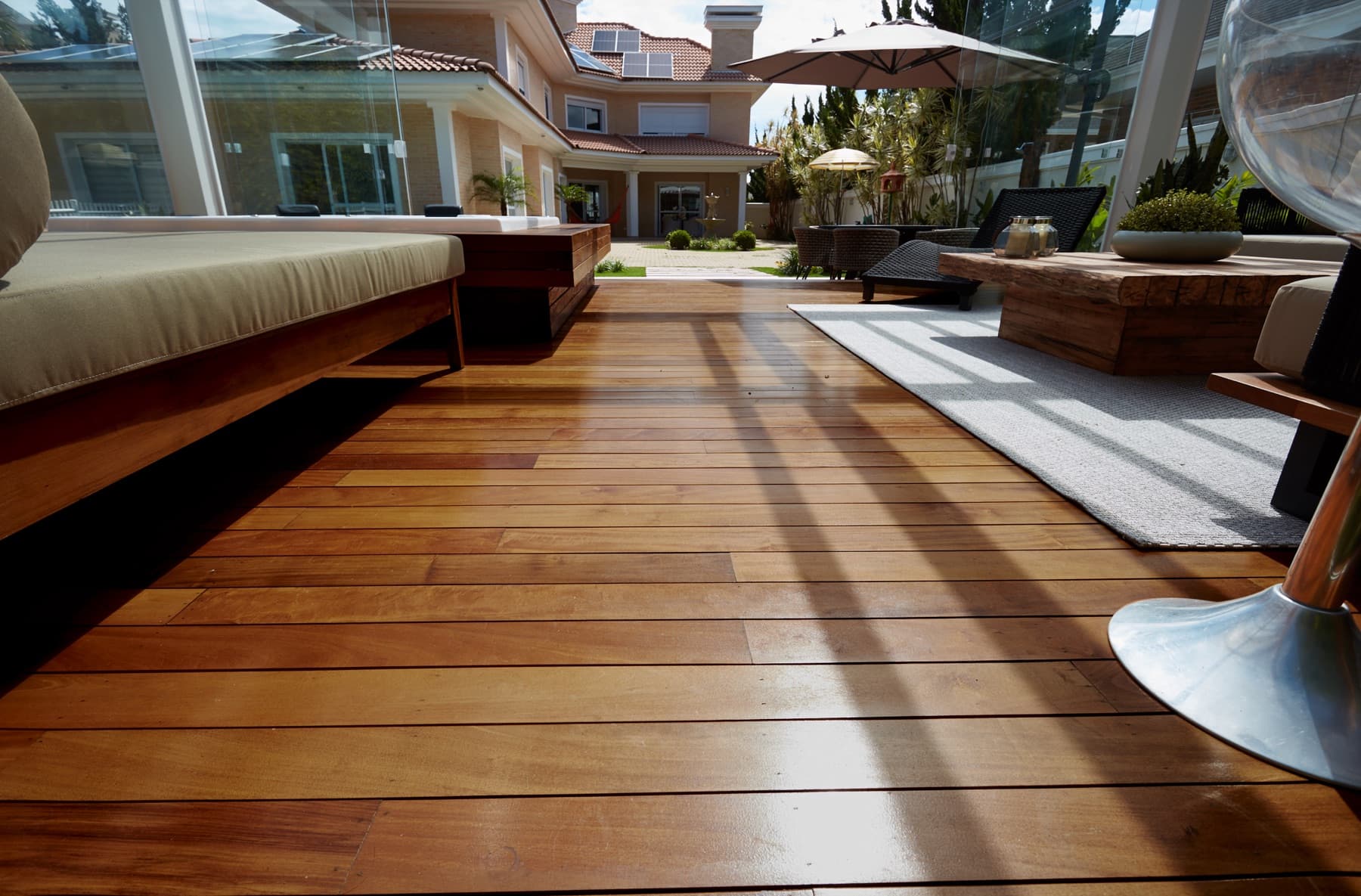
Evaluating Your Existing Deck Frame
The first step in any deck renovation involving a material change is to meticulously inspect your existing deck frame. This involves checking for signs of rot, insect damage, or structural weakness in joists, beams, and ledger boards. Pay close attention to areas where the frame connects to your home, as well as any parts that are consistently exposed to moisture or direct ground contact.
Consider the age and material of your current frame. If it's an older pressure-treated pine frame, it might still be robust enough, but a professional inspection is recommended. The integrity of your frame directly impacts the safety and longevity of your new hardwood deck. Any compromised elements must be repaired or replaced before new decking is installed. This initial assessment will determine if your renovation can proceed with just new decking, or if a more extensive structural overhaul is required.
Understanding Hardwood Decking Options for Raleigh Renovation
Lumber Plus offers a range of Brazilian hardwood decking species, each with distinct characteristics suitable for renovation projects. Ipe, Cumaru, Garapa, Tigerwood, Angelim, and Jatoba are among the options. These hardwoods are noted for their inherent density and natural resistance to rot, insects, and marine borers, often without requiring chemical treatments.
For a renovation where durability is a top priority, Ipe (Handroanthus spp.) is frequently considered the benchmark. It is known for its exceptional strength, minimal movement post-installation, and natural resistance to weather changes, mold, and termites. Ipe wood ranges from reddish-brown to olive-brown. Cumaru (Dipteryx odorata) is another very durable tropical hardwood, resistant to termites and weather changes, with a scent of cinnamon and vanilla when worked. It offers stiffness, strength, and extreme hardness. Garapa is often a value pick with a golden tone, while Tigerwood offers a dramatic figure. These species generally require only a wash once a year for maintenance, with an optional annual oil application to retain their original color; otherwise, they will weather to a silvery-gray patina.
For coastal areas, Ipe and Cumaru are considered marine-grade standards and are frequently specified for docks, boardwalks, and seawall caps due to their resistance to salt air and spray. While Raleigh is inland, understanding the resilience of these hardwoods underscores their suitability for various outdoor conditions.
Comparing Ipe and Cumaru for Your Project
When selecting hardwood for a renovation, Ipe and Cumaru are two prominent choices known for their performance. It is highly resistant to rot, insects, and mold, and its natural oils protect it from cracking or warping. Its color typically ranges from reddish-brown to olive-brown.
It shares many of Ipe's advantages, including resistance to termites, rot, and fungi, and also carries a Class A fire resistance rating. Cumaru presents a slightly different aesthetic, often featuring a reddish-brown to golden-brown hue. While Ipe is often considered the premium option, Cumaru provides comparable durability and resistance at a different price tier, making it a strong alternative for many renovation budgets.
Both species resist warping after moisture exposure and are suitable for demanding outdoor applications. The choice between them often comes down to specific aesthetic preferences and budget considerations, as both offer long-term performance.
Calculating Material Needs for a Hardwood Deck Renovation
Accurate measurements are essential for ordering the correct quantity of hardwood decking. Begin by measuring the total area of your deck in square feet. For a renovation, it's often best to measure each section or board length individually to minimize waste and plan for cuts.
Consider a hypothetical project: a rectangular deck in Raleigh, NC measuring 12 feet by 18 feet, for a total area of 216 square feet. If you plan to use 1x6 (nominal size, actual dimensions typically 3/4 inch x 5 1/2 inch) hardwood decking boards, each linear foot of a 1x6 board covers approximately 0.458 square feet (5.5 inches / 12 inches per foot). To cover 216 square feet, you would need approximately 471.6 linear feet of board (216 sq ft / 0.458 sq ft/linear ft).
However, this is a theoretical calculation. You must account for waste due to cuts, end-matching, and potential board imperfections. A common practice is to add 10-15% to your linear footage estimate for waste. For this example, adding 15% waste brings the total to approximately 542 linear feet. Hardwood decking is often sold in varied lengths (e.g., 3-24 ft for Ipe). You would then select the most efficient combination of available lengths to meet this total, considering your specific deck layout to minimize offcuts and ensure structural integrity. Always confirm current profiles and lengths with a Lumber Plus representative.
Remember that fascia boards, stair treads, and railing components will require separate calculations based on their specific dimensions and quantities.
Installation Considerations for Hardwood Decking
Installing hardwood decking requires specialized tools and techniques due to the material's density. Professional installation is often recommended to ensure proper fastening and alignment. Hardwood decking typically requires pre-drilling before fastening to prevent splitting. Hidden fastener systems are popular for a clean, screw-free surface, but face-fastening with visible screws is also an option.
Proper ventilation beneath the deck is crucial for hardwood longevity. Ensure there is adequate airflow to prevent moisture buildup, which can lead to issues like warping or cupping. Board spacing is also important; follow the exact product guide for the specific hardwood species you choose, as expansion and contraction rates can vary slightly.
While Ipe and Cumaru are known for their minimal movement post-installation, correct spacing allows for natural wood movement and drainage. Consult manufacturer guidelines for the recommended gap between boards for your chosen profile and expected climate conditions in Raleigh.
Before you order
- Inspect the existing deck frame thoroughly for structural integrity, rot, or insect damage.
- Determine if the existing frame can support the new hardwood decking or if repairs/replacements are needed.
- Measure your deck's dimensions accurately, accounting for waste (add 10-15% to linear footage).
- Compare hardwood species like Ipe and Cumaru based on durability, aesthetics, and budget.
- Consider the desired finished appearance: natural weathering to gray or maintaining original color with oil.
- Plan for professional installation due to hardwood density and specialized fastening requirements.
- Ensure adequate under-deck ventilation is in place or can be created.
- Confirm board profiles, lengths, and current availability with Lumber Plus.
Confirm installation details, approved uses and warranty terms in the current instructions for the exact product and profile. Your installer should verify the substrate, structure and applicable project requirements.
This is a planning guide for projects in Raleigh, NC. Ask our team to confirm availability, delivery to your ZIP code and which branch can support your order.
Questions to help you decide
Can I install hardwood decking over my existing deck frame?
You can, provided your existing deck frame is in excellent structural condition, free from rot, insect damage, or significant wear. A thorough inspection by a qualified professional is recommended to assess its suitability before installing new hardwood decking.
What is the typical lifespan of hardwood decking like Ipe or Cumaru?
With proper care and installation, Ipe decking can last up to 75 years, while Cumaru can last over 25 years. These lifespans significantly exceed many other decking materials due to their natural density and resistance to environmental factors.
How much maintenance does hardwood decking require in Raleigh, NC?
Hardwood decking is relatively low maintenance. A wash once a year is generally sufficient. If you wish to preserve the original reddish-brown or olive-brown color, an annual application of a UV-blocking oil is recommended. Without oil, the wood will naturally weather to a silvery-gray patina, which does not affect its structural integrity.
Request a Hardwood Decking Quote for Your Raleigh Renovation
Ready to revitalize your deck? Provide your project dimensions, desired hardwood profile, and ZIP code to request a material quote. We'll help you confirm current availability and service options for your renovation project.
Request a material quote →