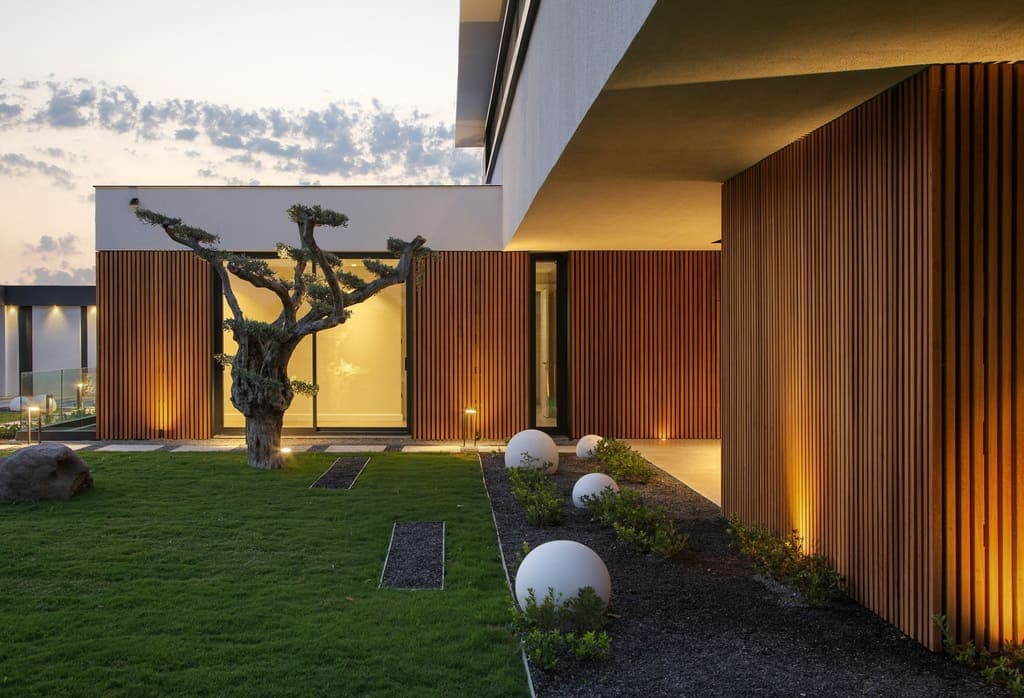
Understanding Covered Patio Wall Exposure
Covered patio walls, while protected from direct rain and intense sun, still experience ambient humidity and temperature changes. In Providence, RI, seasonal variations mean these walls will encounter everything from humid summer air to drier, cooler conditions in winter. This nuanced exposure differs significantly from fully exposed siding or interior walls.
The primary benefit of thermally modified wood in this context is its enhanced dimensional stability. The thermal modification process reduces the wood's ability to absorb moisture, which minimizes expansion and contraction. This stability helps maintain the integrity and appearance of the wall surface over time, reducing the likelihood of gaps forming or boards twisting, even with seasonal shifts in humidity. While the wood is durable, applying a finish can help protect against UV degradation and maintain its color.
Selecting Thermally Modified Wood Profiles for Walls
Thermally modified wood is available in various profiles, each offering a distinct aesthetic and installation characteristic for covered patio walls. Common profiles include tongue-and-groove, shiplap, and square-edge boards. The choice of profile influences the shadow lines, overall texture, and how water might shed from the surface, even in a covered setting.
Tongue-and-groove profiles create a tight, interlocking fit, offering a smooth and continuous appearance with minimal gaps. This can be ideal for a refined look on a covered patio wall. Shiplap profiles, with their overlapping edges, create distinct shadow lines and a slightly more rustic or contemporary feel, depending on the reveal. Square-edge boards, when installed with a gap, offer a modern, open-joint aesthetic, though careful consideration of the substructure and potential for moisture accumulation behind the boards is important even in covered applications. Consult the specific product documentation for approved wall applications.
Lumber Plus offers a range of thermally modified wood products, including options that can be suitable for wall applications. For example, explore our general selection of Thermally Modified Wood, or specific brands like NORX and Maximo Accoya, which may offer profiles suitable for your project. Consider the desired visual effect and the manufacturer's recommendations for each profile when making your selection.
Related Product Link: [Thermally Modified Wood](/thermally-modified-wood)
Related Product Link: [NORX](/brands/norx)
Related Product Link: [Maximo Accoya](/products/maximo-accoya)
Finishing Options for Covered Patio Walls
While thermally modified wood is inherently durable, applying a finish can enhance its appearance and offer additional protection. For covered patio walls in Providence, a finish can help preserve the wood's color against UV exposure, even indirect, and provide an extra layer of defense against ambient moisture.
Finishes range from clear sealers that allow the wood's natural tones to shine through, to semi-transparent stains that add color while still revealing the grain, or opaque stains for a solid color look. The choice of finish affects maintenance requirements and the long-term appearance. Unfinished thermally modified wood will naturally weather to a silver-gray patina over time, a look many find appealing. If maintaining the original color is desired, regular reapplication of a UV-protective finish will be necessary. Always check the finish manufacturer's compatibility with thermally modified wood and follow their application guidelines.
Attachment Methods and Substructure Considerations
Proper attachment and substructure are crucial for the longevity and appearance of thermally modified wood walls. Even on a covered patio, the substructure needs to be sound, plumb, and provide adequate ventilation. Typically, furring strips or a rainscreen system are used to create an air gap behind the wood cladding, allowing for air circulation and moisture evaporation, which is beneficial even in protected areas.
Fasteners should be corrosion-resistant, such as stainless steel screws, to prevent staining and ensure a secure hold. Hidden fastening systems, often used with tongue-and-groove or specific shiplap profiles, can provide a clean, fastener-free appearance. Face fastening is also an option, particularly with square-edge profiles, where the fasteners become part of the aesthetic. Always pre-drill holes to prevent splitting, especially near board ends. Consult the specific product manufacturer's installation instructions for recommended fastening types and spacing.
Related Product Link: [Siding and Cladding](/siding-and-cladding)
Example Project: A Covered Patio Wall in Providence
Consider a hypothetical covered patio in Providence with a wall measuring 10 feet wide by 8 feet high. The homeowner desires a modern aesthetic with subtle shadow lines, opting for a thermally modified wood shiplap profile with a 5-inch exposed face (or 'reveal').
First, calculate the total wall area: 10 ft * 8 ft = 80 square feet.
Next, determine the linear footage of shiplap needed. With a 5-inch reveal, each linear foot of board covers approximately 5 inches in height. To cover 8 feet (96 inches) in height, you'd need 96 inches / 5 inches/board = 19.2 boards high. Since boards are typically sold in fixed lengths (e.g., 8 ft, 10 ft, 12 ft, 16 ft), and the wall is 10 ft wide, using 10 ft long boards would minimize cuts.
For a 10 ft wide wall, and 19.2 boards high (round up to 20 boards to be safe for cuts and waste), you would need 20 boards * 10 ft/board = 200 linear feet of shiplap. Always add 10-15% for waste, cuts, and future repairs. So, 200 linear feet * 1.15 = 230 linear feet.
Each strip would be 8 ft long. So, 9 strips * 8 ft/strip = 72 linear feet of furring strips.
This example illustrates the importance of detailed measurements and accounting for waste when planning your material order. Always confirm the exact profile dimensions and manufacturer's recommended waste factor.
Before you order
- Confirm the specific thermally modified wood species and profile are approved for wall applications.
- Evaluate the level of protection offered by the patio cover against direct rain and intense sun.
- Decide on a desired aesthetic: natural weathering, clear coat, semi-transparent, or opaque finish.
- Verify compatibility of chosen finish with thermally modified wood.
- Plan for a suitable substructure (e.g., furring strips) to ensure proper ventilation behind the wall.
- Select corrosion-resistant fasteners appropriate for the chosen profile and exposure.
- Calculate material quantities accurately, including waste factor, for both wood and substructure.
- Consider the long-term maintenance commitment for your chosen finish, if any.
Confirm installation details, approved uses and warranty terms in the current instructions for the exact product and profile. Your installer should verify the substrate, structure and applicable project requirements.
This is a planning guide for projects in Providence, RI. Ask our team to confirm availability, delivery to your ZIP code and which branch can support your order.
Questions to help you decide
Does thermally modified wood require a finish for covered patio walls?
While not strictly required for durability in a covered setting, applying a finish can help preserve the wood's original color and offer additional protection against ambient moisture and indirect UV exposure. Without a finish, the wood will naturally weather to a silver-gray patina over time.
Can I install thermally modified wood directly over existing siding on a covered patio?
It is generally recommended to remove existing siding and install furring strips or a rainscreen system to create an air gap behind the new thermally modified wood. This promotes ventilation and helps manage moisture, even in a covered application, contributing to the longevity of the wall. Always consult manufacturer guidelines for specific installation requirements.
How do I clean thermally modified wood on a covered patio wall?
For routine cleaning, a soft brush or cloth with mild soap and water is typically sufficient. Avoid harsh chemicals or high-pressure washers, as these can damage the wood or finish. For more stubborn dirt or mildew, use a cleaner specifically formulated for wood, following the product instructions carefully.
Plan Your Thermally Modified Wood Covered Patio Walls
Ready to enhance your Providence, RI covered patio with thermally modified wood? Request a material quote today. Provide your project dimensions, desired profile, and ZIP code to confirm current availability and service options. Our team can assist with material selection and quantity estimates.
Request a material quote →