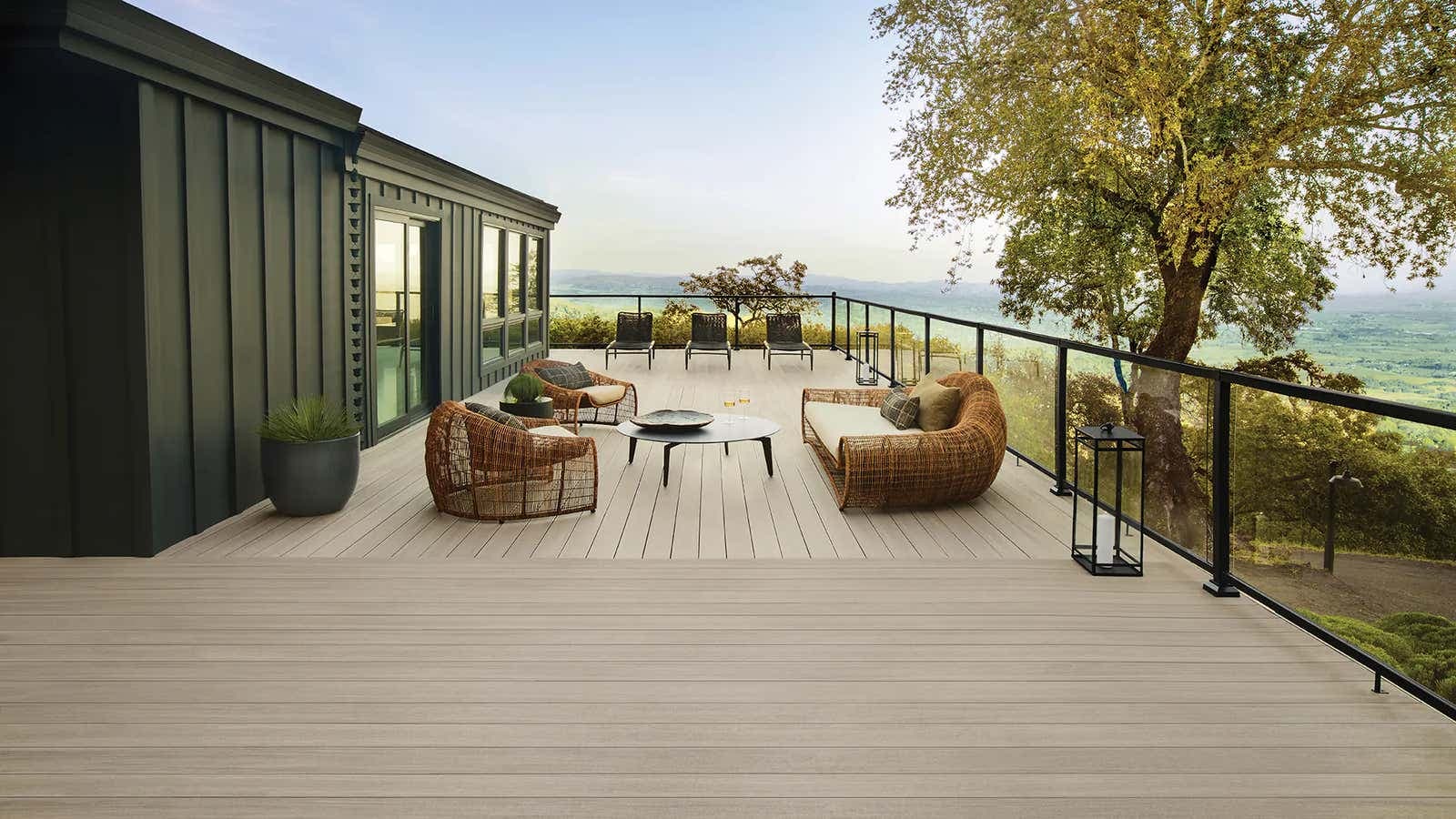
Maximizing Usable Space with Decking Layouts
For compact outdoor areas, the layout of your composite decking can significantly impact the perception and utility of the space. Straight board layouts, running parallel to the longest dimension, can make a narrow area appear longer. Conversely, installing boards perpendicular to the main sightline can make a space feel wider.
Consider diagonal patterns for a dynamic look that can also make a small area feel more expansive by drawing the eye across the space. While diagonal layouts may involve more cuts and potentially more material waste, the visual effect can be worthwhile for aesthetic impact in a prominent compact area. A picture-frame border can also define the space, creating a clean edge and a finished look, which is particularly effective in smaller designs.
When planning, account for furniture placement and circulation paths. Even in a compact space, ensuring adequate room for movement around seating or planters is crucial for functionality. Think about multi-functional furniture or built-in seating that can save space.
Choosing the Right Composite Decking Profile
Composite decking is available in various profiles, including solid and hollow core, and different board widths and lengths. For compact spaces, the choice of profile can influence both appearance and installation. Wider boards can reduce the number of visible seams, potentially creating a less cluttered look in a small area. However, very wide boards might feel out of proportion in an extremely narrow space.
Solid core boards offer a substantial feel and excellent durability, often preferred for their stability. Hollow core boards can be lighter, which might be a consideration for certain balcony or rooftop applications where weight limits are a factor. Always consult an engineer or structural professional to verify load-bearing capacity for your specific project before selecting any decking material.
Lumber Plus offers composite decking from brands like Trex, TimberTech, and Fiberon, each with collections featuring different profiles and finishes. For instance, Trex offers options with up to 95% recycled content, combining sustainability with performance. These brands also provide capped composite options, which feature a protective polymer shell that can help resist moisture, a benefit in any outdoor setting.
The specific profile you choose should also align with the fastening system. Hidden fasteners create a smooth, uninterrupted surface, which can enhance the clean lines of a compact deck. Face fastening, while visible, can be a secure option depending on the board profile and manufacturer recommendations.
Aesthetic Considerations: Color and Finish
The color and finish of your composite decking play a significant role in how a compact outdoor space feels. Lighter colors can reflect more light, making a small area appear brighter and more open. They can also feel cooler underfoot in direct sun, which can be a practical benefit.
Darker colors can create a sense of intimacy and sophistication, but they may absorb more heat. Manufacturers like Trex, TimberTech, and Fiberon offer a wide spectrum of colors and wood grain patterns. Some collections even feature multi-tonal boards that mimic the natural variation of real wood without the need for annual oiling or staining.
Consider how the decking color will complement existing elements such as exterior siding, railings, or planters. A consistent aesthetic helps to unify the space and prevent it from feeling disjointed, especially where space is limited. The consistent color and grain of composite boards, board after board, ensure a predictable final appearance without surprises.
Installation and Site Access for Compact Projects
Compact outdoor spaces, such as small backyards or balconies, often come with unique installation challenges related to site access. Materials may need to be transported through narrow gates, stairwells, or elevators. This can influence the practical board lengths you can order and how materials are delivered and stored on site.
Planning for efficient material handling is crucial. Shorter board lengths, if available in your chosen collection, might be easier to maneuver. Ensure there is adequate space for cutting and assembly. Proper ventilation beneath the deck is also important for composite materials; even in a compact space, air circulation helps maintain the integrity of the boards.
Always follow the manufacturer's specific installation guidelines regarding joist spacing, board gapping, and fastening methods. These details are critical for ensuring the longevity and performance of your composite deck, especially in varying weather conditions. For example, specific gap requirements accommodate thermal expansion and contraction.
Worked Example: A 6x10 Foot Balcony Deck
Let's consider a hypothetical 6-foot by 10-foot balcony, a common compact outdoor space. The goal is to maximize the visual length and create a functional area.
1. **Dimensions:** Balcony is 6 feet (72 inches) wide by 10 feet (120 inches) long.
2. **Decking Choice:** We select a composite decking board with a nominal width of 5.5 inches and available in 10-foot lengths. This choice minimizes cuts for the main deck surface and allows the boards to run the full length of the balcony, visually extending it.
3. **Layout:** We decide on a straight layout, with boards running parallel to the 10-foot dimension. This emphasizes the length of the balcony.
4. **Calculation:** To cover the 6-foot width with 5.5-inch boards, we calculate: 72 inches (width) / 5.5 inches (board width) = 13.09 boards. Since we need full boards, we would need 14 boards (13 full boards plus one board cut to size for the remaining width, with a small offcut). Each board is 10 feet long.
5. **Material Quantity:** This project would require 14 boards, each 10 feet long, of the chosen composite decking. This covers the main area. If a picture-frame border is desired, additional boards would be needed for the perimeter, factoring in mitered corners and specific border width.
This example illustrates how selecting appropriate board lengths can simplify installation and optimize material usage for compact spaces, reducing waste and labor.
Before you order
- Measure the exact dimensions of your compact outdoor space, including any irregular angles or obstructions.
- Consider how the decking layout (straight, diagonal) will influence the perception of space.
- Research different composite decking profiles (solid vs. hollow, board width) to suit your project's structural and aesthetic needs.
- Select a color and finish that complements your home's exterior and desired ambiance, considering heat absorption and light reflection.
- Verify site access for material delivery and storage, planning for any constraints.
- Review manufacturer installation guidelines for joist spacing, gapping, and fastening for your chosen composite product.
- Determine if a picture-frame border or fascia boards are desired to complete the look of your compact deck.
- Calculate the required quantity of decking boards, accounting for cuts and potential waste, especially for diagonal layouts.
Confirm installation details, approved uses and warranty terms in the current instructions for the exact product and profile. Your installer should verify the substrate, structure and applicable project requirements.
This is a planning guide for projects in Providence, RI. Ask our team to confirm availability, delivery to your ZIP code and which branch can support your order.
Questions to help you decide
Can composite decking be installed over an existing concrete patio?
Yes, composite decking can often be installed over an existing concrete patio, but it requires a proper subframe or sleeper system to ensure adequate drainage and ventilation. The concrete must be in good condition, level, and allow for water runoff. Always refer to the specific manufacturer's installation instructions for approved methods and materials when installing over concrete.
How do I clean composite decking in a compact space?
Composite decking generally requires minimal maintenance. A simple soap-and-water wash is often sufficient for routine cleaning. For tougher stains, consult the manufacturer's cleaning guide, as specific products may be recommended or cautioned against. Regular cleaning helps prevent dirt and grime buildup, which is particularly noticeable in smaller, high-traffic areas. Unlike wood, composite decking does not require oiling, sanding, or staining.
Are there lighter-weight composite decking options for balconies with weight restrictions?
Some composite decking lines, particularly those with hollow core profiles, can be lighter than solid core options or traditional lumber. If your balcony has specific weight restrictions, it is crucial to consult with a structural engineer to determine the maximum allowable load. Once confirmed, you can compare the weights of different composite decking products and their supporting structures to ensure compliance. Always prioritize safety and structural integrity.
Ready to Plan Your Compact Composite Deck?
Contact us with your project dimensions, desired composite decking profile, and ZIP code to request a material quote. Our team can help confirm current availability and service options for your project.
Request a material quote →