Assess Your Existing Deck Frame and Substructure
Before selecting any new decking material, a thorough inspection of your existing deck frame is crucial. The condition of joists, beams, and support posts will dictate whether they can safely support new hardwood decking. Hardwoods like Ipe and Cumaru are significantly denser than many common decking materials, meaning they will exert more weight on the substructure. A structural engineer or experienced contractor can evaluate if your current framing meets local building codes and can bear the additional load, especially in an area like Providence where structures may be subject to various weather conditions over time.
Check for any signs of rot, insect damage, or excessive deflection in the existing frame. Ensure all fasteners are secure and that the ledger board attachment to your home is sound. If the substructure is compromised, it may need repair or full replacement before new decking can be installed. This initial assessment can prevent costly issues down the line and ensure the longevity of your renovated deck.
Consider Providence's Climate and Environmental Factors
Providence, RI, experiences a range of seasons, from humid summers to cold, snowy winters. These environmental factors should influence your hardwood decking choice. Hardwoods like Ipe and Cumaru are known for their natural resistance to rot, insects, and weather changes, making them suitable for such conditions. Their density helps them resist warping and cracking from moisture exposure and temperature fluctuations.
For coastal properties near Narragansett Bay, salt air and spray are additional considerations. Ipe and Cumaru are often used in marine environments, proving their resilience against salt exposure. This natural durability means less reliance on chemical treatments, which can be a significant advantage for long-term outdoor use.
Adequate ventilation beneath the deck is also important to prevent moisture buildup, regardless of the decking material. Ensure your deck design allows for proper airflow, especially in renovation projects where existing structures might limit this.
Comparing Hardwood Decking Species for Your Renovation
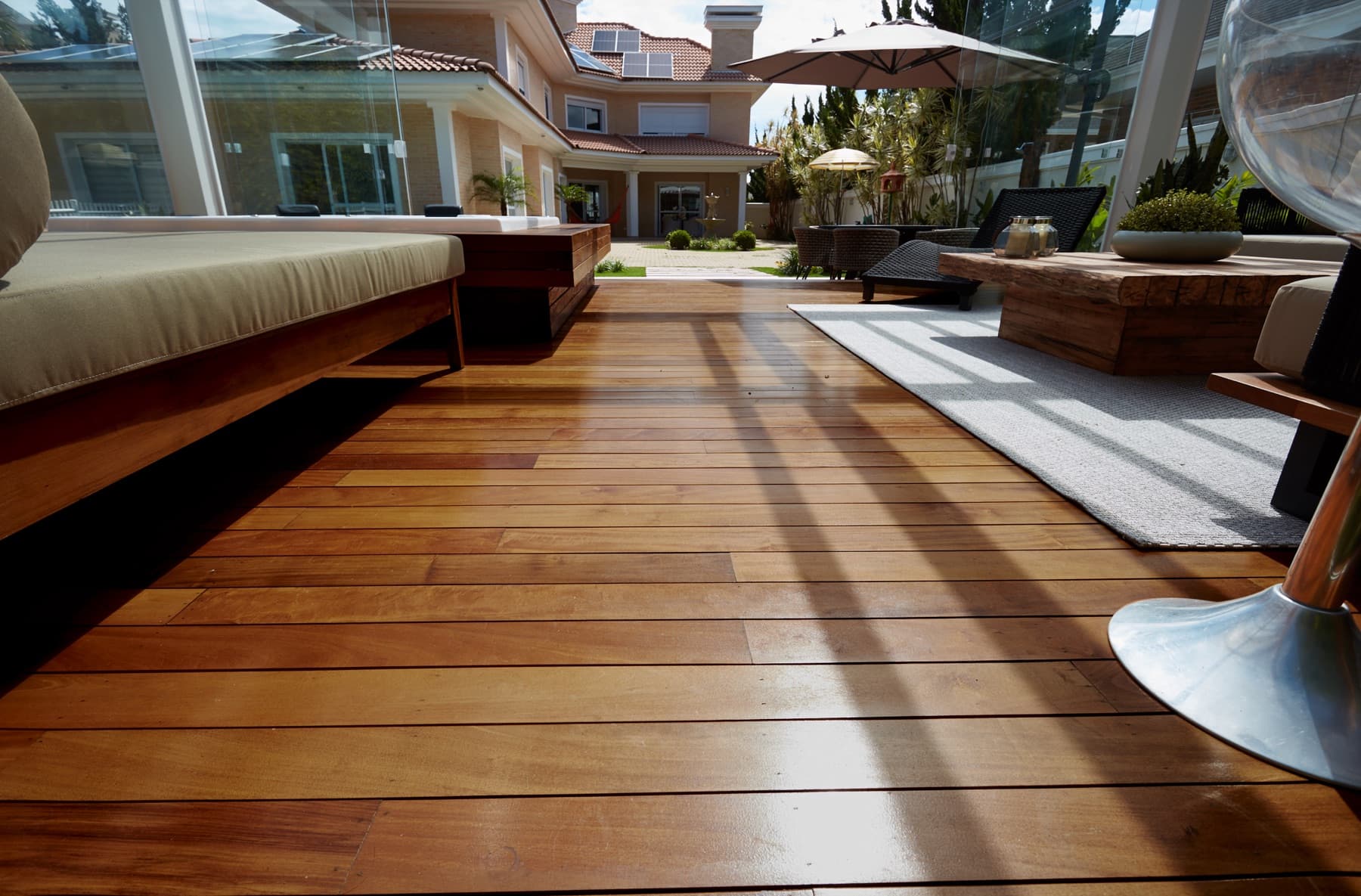
When choosing hardwood for your deck renovation, consider species like Ipe and Cumaru, which offer distinct advantages. Ipe, also known as Brazilian walnut, is a benchmark hardwood known for its exceptional durability and minimal movement post-installation. Its color ranges from reddish-brown to olive-brown.
Cumaru is another very durable tropical hardwood. Cumaru is resistant to termites and weather changes, and it can give off a subtle scent of cinnamon and vanilla when worked. Both species can last for decades with proper care, and they naturally resist rot, insects, and fungi, making them excellent choices for demanding outdoor applications.
For those seeking a golden tone, Garapa offers a value pick, while Tigerwood provides a dramatic grain figure. The choice often comes down to aesthetic preference, budget, and specific performance requirements for your Providence renovation.
Worked Example: Renovating a 10' x 12' Deck in Providence
Let's consider a hypothetical deck renovation project in Providence for a 10-foot by 12-foot deck (120 square feet).
The homeowner decides on Ipe hardwood decking for its longevity and rich appearance. Standard Ipe decking boards are often available in profiles like 1x6 (nominal 3/4" x 5.5" actual). To calculate the required quantity, we'll consider the deck area and account for typical waste and board lengths. For a 10' x 12' deck, we need approximately 120 square feet of coverage.
A 1x6 Ipe board covers 0.458 square feet per linear foot (5.5 inches / 12 inches per foot). So, for 120 square feet, approximately 262 linear feet of Ipe boards would be needed without accounting for waste or specific board lengths. Considering common board lengths (e.g., 12-foot or 16-foot) and a typical 10-15% waste factor for cuts and selective board use, the purchase quantity would be higher. For instance, if using 12-foot boards, 22 boards would provide 264 linear feet. Adding 15% for waste, we might round up to 26 boards (312 linear feet) to ensure sufficient material for cuts and any unexpected issues. This calculation is a starting point, and exact project dimensions and a cutting plan are essential for a precise order.
The homeowner also plans to use matching Ipe fascia boards for the deck perimeter and a compatible hidden fastening system to maintain a clean surface aesthetic. This detailed planning ensures all necessary components are ordered simultaneously.
Installation Considerations for Hardwood Decking
Installing hardwood decking, especially dense species like Ipe or Cumaru, requires specific tools and techniques. Due to their hardness, pre-drilling pilot holes for fasteners is often necessary to prevent splitting. Specialized carbide-tipped saw blades are recommended for cutting. Many installers prefer hidden fastening systems to create a smooth, fastener-free surface, which also helps with the longevity of the boards.
Proper board spacing is critical to allow for natural expansion and contraction of the wood, as well as for drainage. Always refer to the specific manufacturer's guidelines for the exact product you are installing. Professional installation is often recommended for these dense hardwoods to ensure proper technique and a durable, aesthetically pleasing result.
Maintenance and Long-Term Care
Hardwood decking, particularly Ipe and Cumaru, is known for being low maintenance. A simple wash once a year is typically sufficient to keep the deck clean. If you prefer to maintain the wood's original reddish-brown or olive-brown color, an annual application of a UV-blocking sealer or oil is recommended. Without this, the wood will naturally weather to a silvery-gray patina, which many homeowners find equally appealing. This color change does not affect the structural integrity or durability of the wood.
Regularly clear debris from between boards and ensure the area under the deck remains free of obstructions to promote good airflow. This minimal maintenance regimen contributes to the long lifespan of hardwood decks, often lasting decades longer than many alternative decking materials.
Before you order
- Have I assessed the structural integrity of my existing deck frame for hardwood decking?
- Does my existing substructure meet local building codes for the new material's weight?
- Have I considered how Providence's climate (humidity, winter snow, potential salt air) will impact my material choice?
- Which hardwood species (Ipe, Cumaru, Garapa, Tigerwood) best fits my aesthetic and performance needs?
- Have I calculated the linear footage required, including a waste factor for cuts?
- Have I planned for appropriate fastening methods (hidden or face-fastened) and necessary tools?
- Do I understand the maintenance requirements to achieve my desired long-term appearance (original color vs. silver patina)?
- Have I obtained a material quote with exact profile, dimensions, and my project ZIP code?
Confirm installation details, approved uses and warranty terms in the current instructions for the exact product and profile. Your installer should verify the substrate, structure and applicable project requirements.
This is a planning guide for projects in Providence, RI. Ask our team to confirm availability, delivery to your ZIP code and which branch can support your order.
Questions to help you decide
Can I use my existing deck frame with new hardwood decking?
It depends on the condition and structural capacity of your existing frame. Hardwood decking is denser and heavier than many other materials. A professional inspection is essential to ensure your joists, beams, and supports can safely bear the additional load and meet current building codes. Any signs of rot or damage would require repair or replacement.
How do Ipe and Cumaru perform in Providence's weather?
Ipe and Cumaru are well-suited for Providence's climate. They are naturally dense and resistant to rot, insects, and weather changes, including humidity and winter conditions. Their natural oils help protect them from cracking or warping, making them a durable choice for outdoor projects exposed to varying seasons and potentially salt air near coastal areas.
What maintenance does hardwood decking require?
Hardwood decking requires minimal maintenance. A yearly cleaning with soap and water is generally sufficient. If you wish to preserve the original rich color, apply a UV-blocking sealer or oil annually. If left untreated, the wood will naturally weather to an attractive silvery-gray patina, which does not affect its structural integrity.
Ready to Renovate Your Deck with Hardwood?
Request a material quote today. Provide your project dimensions, desired hardwood profile, and ZIP code to confirm current availability and service options for your Providence, RI, renovation.
Request a material quote →