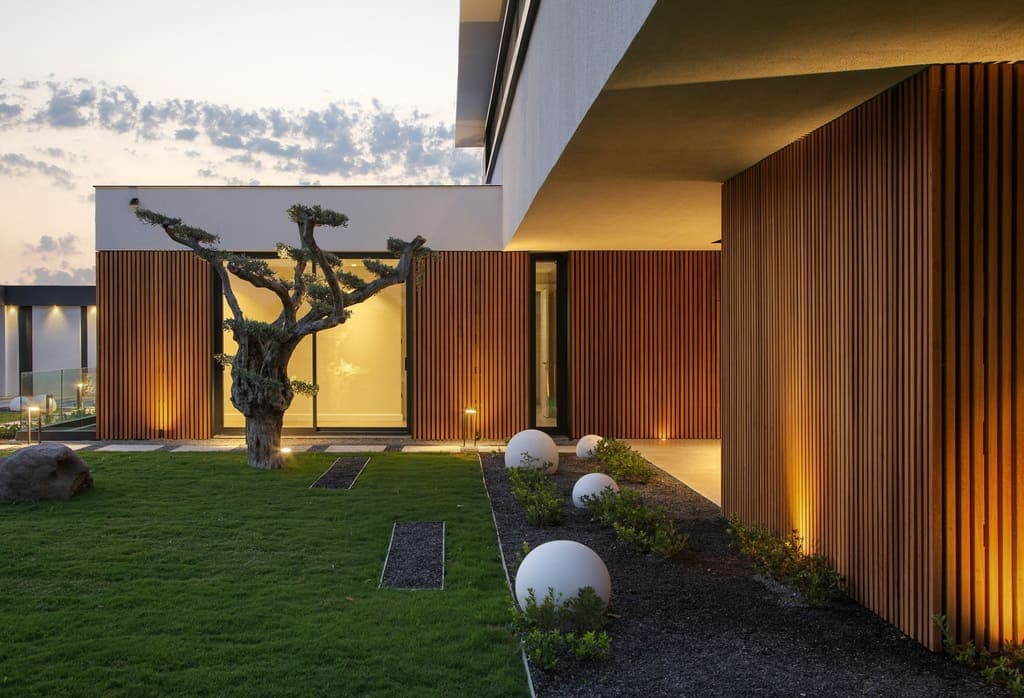
Why Thermally Modified Wood for Covered Patio Walls?
Thermally modified wood undergoes a high-heat treatment process that alters its cellular structure. This process aims to enhance dimensional stability, which means the wood is less prone to expanding, contracting, or warping due to changes in moisture and temperature. For covered patio walls, where conditions can still fluctuate, this stability is a significant advantage.
The modification process also generally reduces the wood's ability to absorb moisture, which can be beneficial in humid environments. While not intended for constant direct exposure to the elements, the enhanced stability of thermally modified wood makes it a robust choice for areas that receive partial protection.
Aesthetically, thermally modified wood often develops a rich, uniform brown tone throughout the material, which can be maintained with a finish or allowed to gradually weather to a silver-gray patina. This consistent color can be a desirable feature for creating a cohesive look on a patio wall.
Selecting the Right Profiles and Species
For covered patio walls, a variety of thermally modified wood profiles can be considered, depending on the desired aesthetic and installation method. Common profiles include tongue-and-groove, shiplap, and square-edge boards. Tongue-and-groove and shiplap profiles offer a clean, interlocking fit that can conceal fasteners and create distinct shadow lines.
Square-edge boards, when installed with a gap, can create an open-joint look, which may require a backing material for a finished appearance. The choice of profile influences both the visual texture of the wall and the complexity of installation.
Lumber Plus offers thermally modified wood options such as NORX thermally modified wood. Species like ash and pine are commonly used for thermal modification. NORX thermally modified ash, for example, is known for its durability and attractive grain, while NORX thermally modified pine offers a more economical option with good stability. Maximo Accoya is another option, though it is acetylated wood, not thermally modified, it shares some enhanced stability characteristics for exterior use.
Consider the desired visual effect and the overall design of your patio when selecting the profile and species. For a modern look, a clean shiplap might be preferred, while a more rustic aesthetic could benefit from square-edge boards with visible spacing.
Finishing and Maintenance for Covered Walls
While thermally modified wood is naturally more stable, applying a finish can help preserve its color and offer additional protection. For covered patio walls, a UV-protective oil or stain can maintain the wood's original warm tones and provide some defense against incidental moisture or splashes.
If a weathered, silver-gray appearance is desired, the wood can be left unfinished. However, even in covered areas, some degree of weathering will occur over time. Regular cleaning to remove dust, pollen, and cobwebs will help keep the walls looking their best.
It's important to follow the finish manufacturer's instructions for application and reapplication. For covered applications, the reapplication frequency may be less than for fully exposed siding, but periodic inspection is still recommended to assess the finish's condition. Avoid harsh chemical cleaners that could damage the wood or its finish.
Installation Considerations for Covered Patios
Proper installation is key to the longevity and appearance of thermally modified wood on covered patio walls. Even though the walls are protected, it's advisable to ensure good ventilation behind the cladding. This can be achieved by installing a furring strip system, which creates an air gap between the wood and the underlying structure.
Using stainless steel fasteners is recommended to prevent staining and ensure long-term holding power. Fasteners should be chosen based on the wood profile and intended exposure. For face-fastened applications, pre-drilling can help prevent splitting, especially near board ends.
Ensure adequate clearance from the ground or patio surface to prevent moisture wicking into the bottom edges of the wood. A minimum of 6 inches is often recommended, though specific project conditions and local building practices should always be consulted. Consider how the wall will terminate at corners and where it meets adjacent materials or structures. Use appropriate trim details to create a neat and weather-resistant junction.
Worked Example: Designing a Covered Patio Wall in Norfolk, VA
Let's consider a hypothetical covered patio in Norfolk, VA, with a wall section measuring 10 feet wide and 8 feet high. The homeowner desires a modern, clean look and chooses NORX thermally modified ash shiplap siding, which typically comes in 5.5-inch (nominal) wide boards. This profile allows for a concealed fastening system.
The total area to cover is 80 square feet (10 ft x 8 ft). Each shiplap board, with a typical 5-inch exposed face, covers approximately 0.417 square feet per linear foot (5 in / 12 in/ft). To cover the 10-foot width, approximately 24 boards (10 ft / (5 in / 12 in/ft)) would be needed for each 8-foot height section.
For the 8-foot height, 24 boards of 8-foot length would be needed. This translates to 192 linear feet (24 boards x 8 ft/board). To account for cuts, waste, and potential board imperfections, it's prudent to add 10-15% to the linear footage, bringing the estimate to roughly 210-220 linear feet. If boards are typically sold in 10-foot or 12-foot lengths, this would mean purchasing twenty-two 10-foot boards or eighteen 12-foot boards, allowing for cuts and potential waste.
Installation would involve vertical furring strips, spaced at 16 or 24 inches on center, attached to the existing structural wall. The NORX thermally modified ash shiplap boards would then be fastened to these furring strips, ensuring each board is level and plumb. A clear, UV-protective oil would be applied to maintain the wood's color and offer protection against the humid Norfolk air.
Before you order
- Verify local building codes for covered patio wall cladding.
- Measure the exact dimensions of your patio walls, accounting for all openings and transitions.
- Select a thermally modified wood species and profile (e.g., shiplap, tongue-and-groove, square-edge) that aligns with your design aesthetic.
- Determine the desired finish: natural weathered look or maintained color with a UV-protective oil/stain.
- Plan for proper ventilation behind the cladding using furring strips.
- Choose appropriate fasteners (e.g., stainless steel) for the chosen profile and installation method.
- Consider trim details for corners, edges, and transitions to other materials.
- Calculate the required material quantities, adding a waste factor (typically 10-15%).
- Review maintenance requirements for your chosen finish and exposure level.
Confirm installation details, approved uses and warranty terms in the current instructions for the exact product and profile. Your installer should verify the substrate, structure and applicable project requirements.
This is a planning guide for projects in Norfolk, VA. Ask our team to confirm availability, delivery to your ZIP code and which branch can support your order.
Questions to help you decide
Can thermally modified wood be painted for covered patio walls?
While thermally modified wood can be painted, it is often chosen for its natural wood appearance and enhanced stability. If painting is desired, ensure the wood is clean and properly primed with a product compatible with thermally modified wood. However, many choose to oil or stain it to enhance its natural color and grain.
How does the Norfolk, VA climate affect thermally modified wood on a covered patio?
Norfolk's humidity and seasonal temperature fluctuations mean that even covered areas experience some environmental changes. The thermal modification process helps the wood resist these changes, reducing swelling and shrinking. While protected from direct rain, the wood will still benefit from good ventilation and a suitable finish to maintain its appearance.
Is thermally modified wood suitable for structural use on a patio?
No, thermally modified wood is primarily used for cladding, siding, and decking surfaces, not for structural support. For load-bearing elements of your patio, you should use appropriately rated structural lumber or other engineered materials specified by a qualified professional.
Ready to Plan Your Thermally Modified Wood Patio Walls?
Request a material quote with your project dimensions, exact profile preferences, and ZIP code. We can help you confirm current availability and service options for your Norfolk, VA project.
Request a material quote →