Evaluating Your Existing Deck Frame
Before selecting any new decking material, the most critical first step is to assess the condition of your existing deck frame. Hardwood decking, known for its density and durability, is heavier than many common decking materials. Your frame must be structurally sound and capable of supporting the increased weight.
Inspect all joists, beams, and support posts for signs of rot, insect damage, or significant warping. Pay close attention to areas where wood meets the ground or is consistently exposed to moisture. Even minor damage can compromise the integrity of your new deck. If there are any doubts about the frame's condition, consult with a qualified builder or structural engineer to determine if repairs or reinforcements are necessary. This initial evaluation is crucial to ensure safety and longevity for your renovation.
Choosing Hardwood Species for Norfolk's Climate
Norfolk, VA, presents unique challenges for outdoor construction, including humidity, salt air exposure, and seasonal temperature fluctuations. Selecting a hardwood species that can naturally resist these conditions is key to a long-lasting deck. Tropical hardwoods are often chosen for their inherent density and resistance to rot, insects, and moisture.
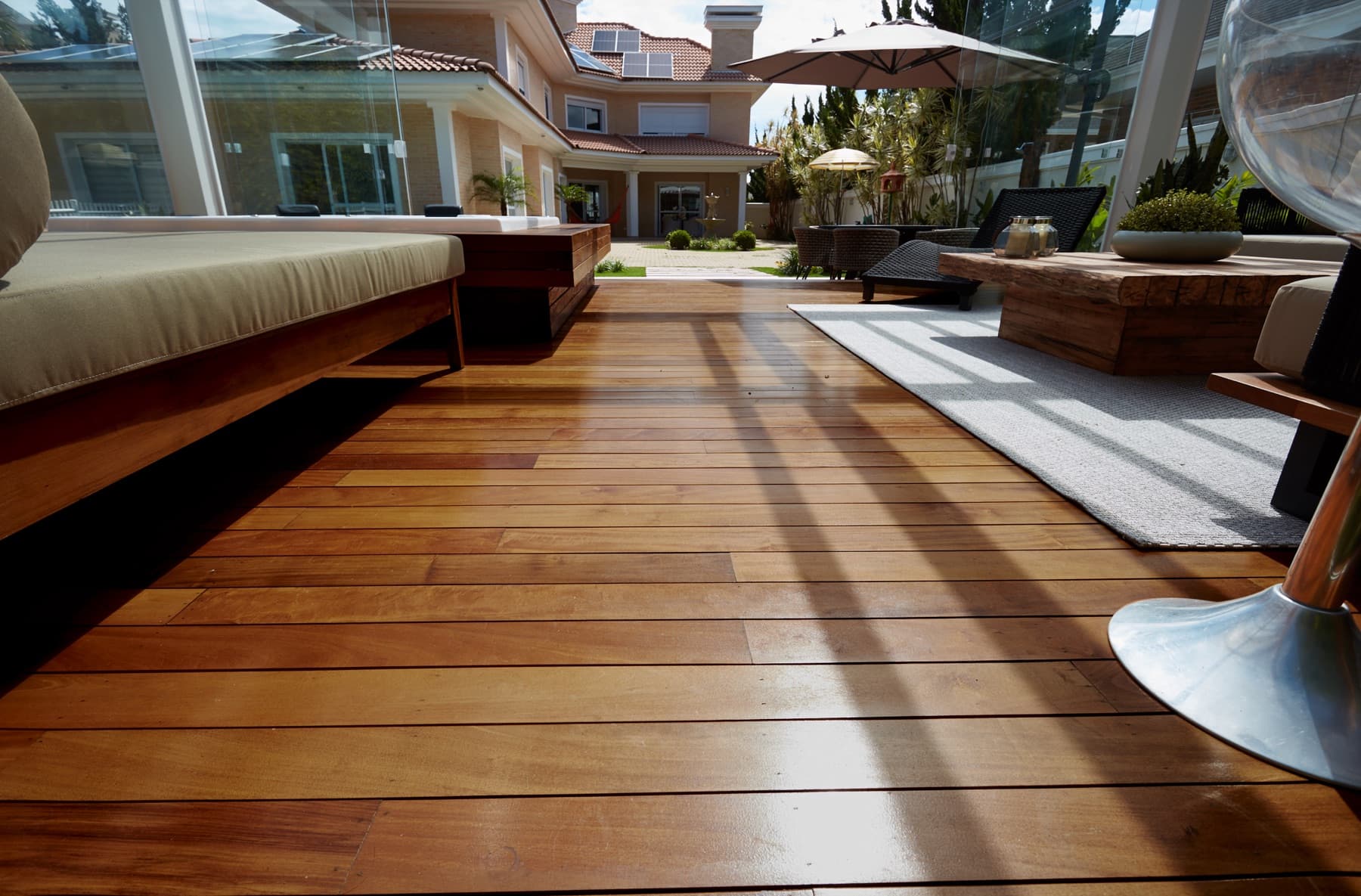
Ipe, also known as Brazilian walnut, is a benchmark choice for demanding outdoor applications. It is known for its exceptional density and natural resistance to rot, insects, and mold. Ipe resists warping after moisture exposure and its natural oils protect it from cracking or warping, making it suitable for coastal environments. With proper care, Ipe decking can last for decades. Its color ranges from reddish-brown to olive-brown.
Cumaru is another durable tropical hardwood that offers stiffness, strength, and extreme hardness. It is resistant to termites and weather changes, and like Ipe, it performs well in humid and coastal settings. Both Ipe and Cumaru are considered marine-grade standards for docks and boardwalks, indicating their suitability for salt air and spray exposure. Other hardwood options include Garapa, known for its golden tone, and Tigerwood for its dramatic grain figure, each offering distinct aesthetic and performance characteristics.
Understanding Hardwood Profiles and Lengths
Hardwood decking is available in various profiles and lengths, which will impact your design and installation. Common profiles include standard decking boards, often with eased edges for a comfortable feel. The dimensions of the boards, such as 1x4, 1x6, or 5/4x6, refer to their thickness and width. Thicker boards generally offer greater stability and a more substantial appearance.
Lengths can vary significantly, typically ranging from 3 to 24 feet. Longer boards can reduce the number of visible seams, creating a more continuous look, but may require more careful handling during installation. When planning your renovation, consider how board lengths align with your deck's dimensions to minimize waste and optimize the visual flow of the decking. Some species like Ipe are available in a wide range of dimensions from 1"x2" through 6"x6". Always confirm current availability of profiles and lengths before finalizing your project plan.
Planning for Installation and Fastening
Hardwood decking, particularly dense species like Ipe and Cumaru, requires specific installation techniques. Due to their hardness, pre-drilling is often necessary for fasteners to prevent splitting.
Face-fastening involves screwing directly through the face of the board into the joists. This method is straightforward and provides a strong hold, though the screw heads will be visible. Hidden fastening systems, on the other hand, create a smooth, unblemished deck surface by securing boards from the sides or underneath. While more labor-intensive, hidden fasteners can enhance the aesthetic appeal of your deck.
Regardless of the method chosen, ensure you use corrosion-resistant fasteners, such as stainless steel, to withstand Norfolk's humid and potentially salty environment. Proper board spacing is also critical to allow for natural expansion and contraction of the wood, as well as adequate drainage and ventilation beneath the deck. Always follow the manufacturer's specific installation guidelines for the chosen product.
Maintenance Considerations for Hardwood Decks
One of the advantages of dense hardwoods like Ipe and Cumaru is their relatively low maintenance requirements. They are naturally resistant to many issues that plague other wood species. For these woods, a simple wash once a year is often sufficient to keep the deck clean.
If you prefer to maintain the original rich brown tones of Ipe or Cumaru, an annual application of a UV-blocking sealer or oil is recommended. Without this treatment, the wood will naturally weather to a beautiful silvery-gray patina, which many homeowners find appealing. Structurally, the deck remains sound whether it is oiled or allowed to silver. This natural weathering does not compromise the wood's integrity or lifespan. Understanding this aesthetic choice upfront helps in planning your long-term maintenance approach.
Worked Example: Renovating a 10x12 Foot Deck
Let's consider a hypothetical deck renovation project in Norfolk for a 10-foot by 12-foot existing deck frame. We will assume the frame is structurally sound and can support the weight of Ipe decking.
First, calculate the deck area: 10 ft x 12 ft = 120 square feet. For this example, we'll use 5/4" x 6" Ipe decking boards, which are approximately 5.5 inches wide. To cover the 12-foot length of the deck, we'll need boards that are at least 12 feet long. If we lay the boards across the 10-foot width, we need to calculate how many boards are needed.
To cover 120 inches (10 feet), you would need 120 inches / 5.625 inches/board = approximately 21.33 boards. Rounding up, you would need 22 boards for the width. Since each board is 12 feet long, the total linear footage would be 22 boards * 12 feet/board = 264 linear feet.
It's always recommended to add 10-15% for cuts, waste, and future repairs. For this project, adding 15% to 264 linear feet gives us 303.6 linear feet. Therefore, you would plan to purchase around 304 linear feet of 5/4" x 6" Ipe decking in 12-foot lengths. This would mean 26 boards (304 / 12 = 25.33, rounded up). This calculation is a starting point; always verify with a detailed material takeoff based on your exact deck dimensions and desired layout.
Before you order
- Inspect existing deck frame for rot, insect damage, and structural integrity.
- Determine if the existing frame can support the weight of hardwood decking.
- Choose a hardwood species suitable for coastal environments (e.g., Ipe, Cumaru).
- Select desired board profile (thickness and width) and plan for lengths to minimize waste.
- Decide on face-fastening or hidden fastening system, using corrosion-resistant fasteners.
- Plan for proper board spacing for drainage and ventilation.
- Decide on desired aesthetic: natural silvery-gray patina or maintained original color with oil/sealer.
- Calculate material quantities, adding 10-15% for waste and cuts.
Confirm installation details, approved uses and warranty terms in the current instructions for the exact product and profile. Your installer should verify the substrate, structure and applicable project requirements.
This is a planning guide for projects in Norfolk, VA. Ask our team to confirm availability, delivery to your ZIP code and which branch can support your order.
Questions to help you decide
Can I reuse my existing deck frame for hardwood decking?
You can, provided the frame is in excellent structural condition and designed to support the denser, heavier hardwood. A professional inspection for rot, insect damage, and overall integrity is highly recommended before proceeding with any renovation.
How do hardwood decks perform in Norfolk's coastal environment?
Hardwood species like Ipe and Cumaru are well-suited for coastal environments. Their natural density and oil content provide resistance to salt air, humidity, and moisture, making them durable choices for decks in Norfolk, VA. They are commonly used in marine applications.
What is the typical maintenance for a hardwood deck?
Hardwood decks require relatively low maintenance. A yearly cleaning with soap and water is generally sufficient. If you wish to preserve the original rich color, an annual application of a UV-blocking oil or sealer is recommended. Otherwise, the wood will naturally weather to a silvery-gray patina without impacting its structural integrity.
Ready to Plan Your Hardwood Deck Renovation?
Request a material quote with your project dimensions, desired hardwood profile, and ZIP code. We can confirm current availability and service options for your Norfolk, VA project.
Request a material quote →