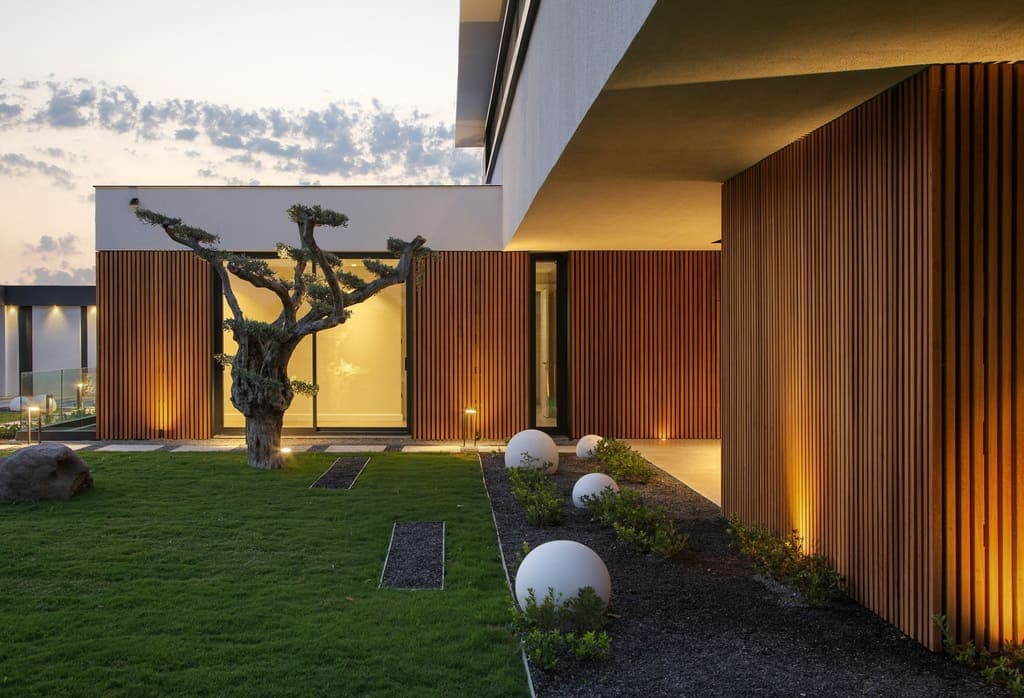
Understanding Thermally Modified Wood for Walls
Thermally modified wood undergoes a high-heat treatment process that alters its cellular structure, improving its stability and resistance to moisture and decay. This process makes it a robust choice for exterior applications, including covered patio walls where it may still encounter humidity and temperature fluctuations.
For wall applications, thermally modified wood is typically available in various profiles, such as tongue-and-groove, shiplap, or square-edge, which are designed to create different visual effects and installation methods. The choice of profile impacts both the appearance of the finished wall and the complexity of installation.
While thermally modified wood is durable, its performance on covered patio walls still benefits from proper installation and, in some cases, a protective finish. It's important to consider how much exposure your specific covered patio walls will receive to make informed decisions about sealing and maintenance.
Selecting the Right Profile and Species
The profile you choose for your covered patio walls will define the aesthetic of your outdoor space. Tongue-and-groove profiles create a tight, seamless look, often preferred for a more finished appearance. Shiplap offers a distinctive shadow line and can be installed horizontally or vertically for varied visual impact. Square-edge profiles, when installed with a gap, can create a more open, slatted design.
Thermally modified wood is available in various species, each offering unique grain patterns and natural coloration. Common options include thermally modified pine and spruce. Pine typically has a more pronounced grain, while spruce offers a finer, more uniform texture. The thermal modification process darkens the wood, providing rich, warm tones that can range from light brown to deep chocolate.
Consider the overall design of your patio and home when selecting a profile and species. A rustic aesthetic might benefit from a shiplap profile with a visible grain, while a modern design might lean towards a cleaner tongue-and-groove profile. You can explore options like NORX thermally modified wood for specific profiles and dimensions.
The NORX brand offers a range of thermally modified wood products suitable for cladding and siding applications, which can be adapted for covered patio walls. Reviewing their available profiles will help in visualizing the final appearance.
Planning for Installation and Substructure
Even for covered patio walls, a robust substructure is essential. This typically involves furring strips or battens installed over the existing wall surface, creating an air gap behind the thermally modified wood. This gap promotes ventilation, helps manage moisture, and contributes to the overall stability and longevity of the wall assembly.
The spacing of your furring strips will depend on the chosen profile and the length of your thermally modified wood boards. Generally, supports should be spaced to ensure that each board is adequately fastened, typically at 16 or 24 inches on center. Confirm manufacturer recommendations for specific profiles and fastening requirements.
Fastening methods are crucial. Stainless steel fasteners are generally recommended to prevent staining and ensure long-term durability, especially in coastal environments like Newport, RI. Face fastening or concealed fastening systems can be used depending on the profile. Concealed fasteners provide a cleaner look but may require specific board profiles.
Consider the layout of your boards. Horizontal installation can make a space feel wider, while vertical installation can add height. Diagonal patterns are also possible but may require more complex cuts and potentially more material. Plan your starting and ending points carefully to minimize waste and ensure a professional finish.
Finishing and Maintenance Considerations
Thermally modified wood can be left unfinished to weather naturally to a silver-gray patina, or it can be finished with a UV-protective oil or stain to preserve its initial color and provide additional protection. For covered patio walls in Newport, RI, where humidity and salt air are present, applying a finish can help maintain the wood's appearance and offer an extra layer of defense against environmental factors.
If you choose to finish the wood, select a product specifically designed for exterior wood applications. Reapplication will be necessary over time, with frequency depending on the product type, exposure to UV light, and local conditions. Even though the walls are covered, some indirect sunlight and moisture will still reach them.
Regular cleaning with a soft brush and mild soap solution can help remove dirt, dust, and mildew build-up. Avoid harsh chemical cleaners or pressure washers, which can damage the wood surface or remove the finish. Inspect your covered patio walls periodically for any signs of wear, damage, or finish degradation, and address them promptly.
Project Example: Covered Patio Wall in Newport, RI
Consider a hypothetical covered patio in Newport, RI, with a back wall measuring 12 feet wide by 8 feet high. The homeowner desires a modern look with horizontally installed thermally modified wood shiplap. They choose a NORX thermally modified spruce shiplap profile, which is 5.5 inches wide (nominal) and comes in 12-foot lengths.
First, calculate the wall area: 12 feet * 8 feet = 96 square feet. The nominal coverage per linear foot of the 5.5-inch shiplap is approximately 0.458 square feet (5.5 inches / 12 inches per foot). To cover 96 square feet, roughly 209 linear feet of shiplap would be needed (96 sq ft / 0.458 sq ft/linear foot).
Since the boards are 12 feet long, no cuts are needed for the width. For the height, 8 feet, we need to determine how many courses of shiplap are required. With a nominal 5.5-inch width, approximately 17 courses are needed (8 feet * 12 inches/foot / 5.5 inches/course = 17.45 courses, rounded up to 18 to ensure full coverage and account for overlap).
Therefore, 18 boards of 12-foot length would be purchased: 18 boards * 12 linear feet/board = 216 linear feet. This provides a small buffer for potential cuts or waste. The homeowner also plans for a rainscreen assembly using 1x3 pressure-treated furring strips spaced 24 inches on center, installed vertically, requiring approximately 60 linear feet of furring strips for the 12-foot width (6 furring strips * 8 feet high = 48 linear feet, plus extra for cuts and blocking).
Stainless steel trim head screws would be used for face fastening, ensuring durability in the coastal environment. The homeowner also decided on a transparent UV-protective oil finish to maintain the natural color of the spruce and provide additional protection against the humid air.
Before you order
- Determine the exact dimensions of your covered patio walls.
- Choose a thermally modified wood species (e.g., pine, spruce) based on desired grain and color.
- Select a profile (tongue-and-groove, shiplap, square-edge) that complements your aesthetic.
- Plan your substructure, including furring strip spacing and material.
- Decide on fastening methods (face or concealed) and select appropriate stainless steel fasteners.
- Consider whether to apply a finish or allow the wood to weather naturally.
- Factor in maintenance requirements based on your finishing choice and local conditions.
Confirm installation details, approved uses and warranty terms in the current instructions for the exact product and profile. Your installer should verify the substrate, structure and applicable project requirements.
This is a planning guide for projects in Newport, RI. Ask our team to confirm availability, delivery to your ZIP code and which branch can support your order.
Questions to help you decide
Can thermally modified wood be used in a coastal environment like Newport, RI?
Yes, thermally modified wood is well-suited for coastal environments. The thermal modification process enhances its stability and resistance to moisture and decay, which are beneficial properties in humid, salt-air conditions. Using stainless steel fasteners is crucial to prevent corrosion and staining.
Does thermally modified wood require a finish for covered patio walls?
While thermally modified wood can be left unfinished to weather to a silver-gray, applying a UV-protective oil or stain is often recommended for covered patio walls. A finish can help preserve the wood's original color, offer additional protection against humidity and indirect sun exposure, and simplify cleaning.
What is the best way to clean thermally modified wood walls?
For routine cleaning, use a soft brush or cloth with a mild soap and water solution. Rinse thoroughly with clean water. Avoid using harsh chemical cleaners, abrasive pads, or high-pressure washers, as these can damage the wood surface or strip any applied finish.
Ready to Transform Your Covered Patio Walls?
Request a material quote for thermally modified wood. Provide your project dimensions, desired profile, and ZIP code to confirm current availability and service options for your Newport, RI project.
Request a material quote →