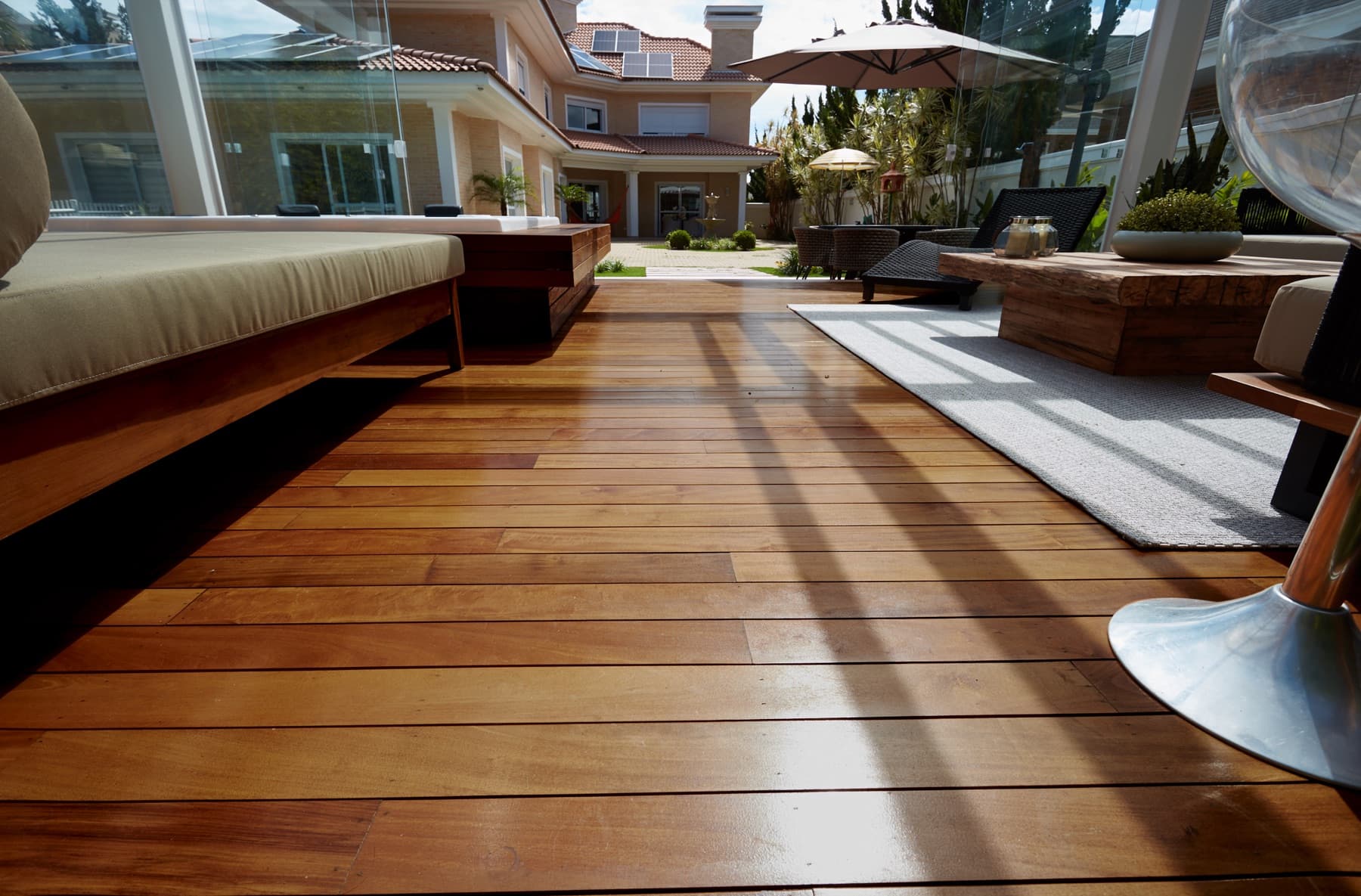
Assessing Your Existing Deck Frame for Hardwood
Before selecting any new decking material, a thorough inspection of your current deck frame is essential. Hardwood decking, particularly dense species like Ipe and Cumaru, can be heavier than some alternative materials. You need to verify that your existing joists, beams, and posts are structurally sound and capable of supporting the increased load, if any.
Check for any signs of rot, insect damage, or excessive deflection in the joists. Ensure that all fasteners are secure and that the ledger board is properly attached to your home. If there are any concerns about the frame's integrity, consult with a qualified builder or engineer. Upgrading or reinforcing parts of the frame may be necessary to meet current building codes and ensure safety and longevity for your new hardwood deck.
Choosing Your Hardwood Species: Ipe vs. Cumaru
Lumber Plus offers a range of Brazilian hardwood decking species, with Ipe and Cumaru being popular choices for their durability and aesthetic qualities. Each has distinct characteristics that can influence your renovation project.
Ipe, also known as Brazilian walnut, is a benchmark hardwood. Ipe typically ranges from reddish-brown to olive-brown and can last up to 75 years with proper care. It also holds a Class A fire rating, comparable to concrete and steel. Its minimal movement post-installation makes it a stable choice for demanding environments like Newport's coastal air. You can learn more about Ipe here: https://lumberplus.com/decking/hardwood/ipe
Cumaru is another very durable tropical hardwood, often considered a close alternative to Ipe. Cumaru is resistant to termites and weather changes, and its natural oils protect it from cracking or warping. Cumaru offers a rich, warm tone that can complement many home styles. You can explore Cumaru further here: https://lumberplus.com/decking/hardwood
Coastal Considerations for Hardwood Decking in Newport
Newport's coastal environment presents unique challenges for outdoor materials, including exposure to salt air and humidity. Hardwood decking, particularly Ipe and Cumaru, is well-suited for these conditions.
These species are naturally dense and resistant to marine borers, making them a marine-grade standard for docks, boardwalks, and seawall caps in coastal areas. Salt air and spray do not typically compromise their structural integrity. While they can withstand harsh weather, understanding how they weather and what maintenance they require in a coastal setting is important. Both Ipe and Cumaru will silver to a driftwood grey patina if left untreated, a process that is accelerated by sun and salt exposure. Applying a UV-blocking sealer can help preserve their original color.
Planning Your Decking Layout and Dimensions
Once your frame is verified and your hardwood species chosen, planning the decking layout is the next step. Consider the board widths and lengths that will best suit your deck's dimensions to minimize waste and create a visually appealing pattern. Common profiles for Ipe and Cumaru range from 1"x2" to 6"x6" dimensions, with lengths available from 3 to 24 feet.
For renovation projects, you might be working with existing joist spacing. Ensure your chosen hardwood decking profile is appropriate for this spacing to prevent excessive deflection between joists. While hardwood is robust, proper support is still crucial. Discuss available profiles and lengths with your Lumber Plus representative to find the best fit for your project and optimize material usage. This also includes planning for fascia, trim, and any picture-frame borders.
Worked Example: Renovating a 12'x16' Deck in Newport
Let's consider a hypothetical deck renovation project for a 12-foot by 16-foot existing deck in Newport, RI. The homeowner wants to replace the old decking with Ipe, aiming for a consistent, long-lasting surface.
First, we confirm the existing frame is sound. For a 12'x16' deck, the total area is 192 square feet.
To cover the 12-foot width of the deck: 12 feet / 0.458 feet/board = approximately 26.2 boards. Since we can't buy fractional boards, we'll need 27 boards. Each board is 16 feet long. So, the initial estimate is 27 boards x 16 feet/board = 432 linear feet of Ipe decking. This does not include waste for cuts or any fascia boards.
For fascia, let's assume a single board along the 16-foot and two 12-foot sides (not against the house). This would require one 16-foot board and two 12-foot boards. Depending on the profile chosen for fascia (e.g., matching 1x6), this would add to the linear footage. This example illustrates a basic material takeoff; a detailed plan would account for precise cuts, potential waste, and specific fastening methods. Always add a percentage for waste, typically 5-10%, especially for custom cuts or specific patterns.
Before you order
- Inspect existing deck frame for structural integrity (joists, beams, posts, ledger board).
- Determine if frame reinforcement or repair is necessary for the new decking material.
- Choose hardwood species (e.g., Ipe or Cumaru) based on durability, appearance, and budget.
- Verify compatibility of chosen decking profile with existing joist spacing.
- Measure deck dimensions accurately for material takeoff, including waste factor.
- Plan for fascia and trim boards, considering their dimensions and attachment.
- Decide on desired weathering (silver patina vs. maintained original color) and associated maintenance plan.
- Consider fastening methods (hidden vs. face fasteners) and ensure compatibility with chosen hardwood.
- Confirm current availability of desired profiles and lengths with Lumber Plus.
Confirm installation details, approved uses and warranty terms in the current instructions for the exact product and profile. Your installer should verify the substrate, structure and applicable project requirements.
This is a planning guide for projects in Newport, RI. Ask our team to confirm availability, delivery to your ZIP code and which branch can support your order.
Questions to help you decide
Can I reuse my existing deck frame for hardwood decking?
You can, provided the existing frame is structurally sound and can support the weight of the new hardwood decking. Hardwoods like Ipe and Cumaru are dense, so it's critical to inspect joists, beams, and posts for rot, damage, or excessive deflection. Reinforcement may be needed if the frame shows signs of wear or if the new decking is significantly heavier than the old.
How does hardwood decking perform in Newport's coastal climate?
Hardwood species such as Ipe and Cumaru are highly suitable for coastal climates. They are naturally resistant to rot, insects, and marine borers, and their density helps them withstand salt air and humidity without significant structural impact. They will naturally weather to a silvery-gray patina; applying a UV-blocking sealer can help maintain their original color.
What maintenance does hardwood decking require after renovation?
Hardwood decking is generally low maintenance. A yearly wash with soap and water is typically sufficient. If you prefer to keep the original reddish-brown or olive-brown color of Ipe or Cumaru, an annual application of a UV-blocking oil or sealer is recommended. Without this, the wood will naturally silver to a driftwood grey, which does not affect its structural integrity.
Ready to Transform Your Newport Deck?
Request a material quote with your project dimensions, exact profile, and ZIP code to confirm current availability and service options for your hardwood decking renovation.
Request a material quote →