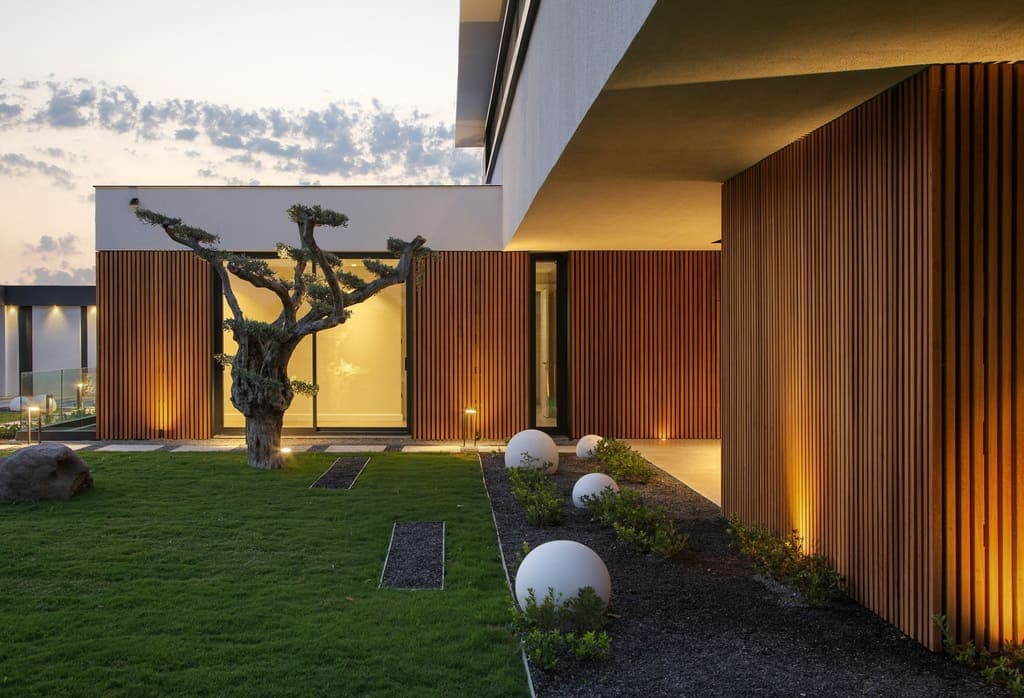
Understanding Thermally Modified Wood for Wall Applications
Thermally modified wood undergoes a high-heat treatment process that alters its cellular structure. This process enhances the wood's dimensional stability, making it less prone to expansion and contraction due to changes in humidity. For covered patio walls, this stability is advantageous as it helps maintain the installed appearance over time.
While thermally modified wood is known for its durability in outdoor settings, its application on covered walls means it is shielded from the most intense elements, such as direct rain and harsh UV exposure. This allows for broader design choices regarding finishes and profiles, as the material is not constantly battling direct weather.
Common species used for thermal modification include spruce, pine, and ash, each offering distinct grain patterns and characteristics after treatment. The modification process typically results in a darker, more uniform color throughout the wood.
Selecting Profiles and Dimensions for Covered Walls
Thermally modified wood is available in various profiles suitable for wall applications, including tongue-and-groove, shiplap, and square-edge boards. The choice of profile influences the visual effect of the wall, from seamless continuity to distinct shadow lines.
Tongue-and-groove profiles offer a tight, interlocking fit, which can create a smooth, continuous surface. Shiplap profiles, with their overlapping edges, create a distinct shadow line that adds depth and texture to the wall. Square-edge boards can be installed with a visible gap between them for an open-joint aesthetic, requiring a suitable backing material.
Dimensions also play a role. Wider boards can make a space feel more expansive, while narrower boards might be used for a more intricate or detailed appearance. Consider the overall scale of your covered patio and the desired visual impact when selecting width and thickness. For example, a common profile for wall applications might be a 1x6 (nominal) shiplap, offering a good balance of coverage and visual interest.
Finishing Options and Appearance Over Time
Thermally modified wood can be left unfinished, allowing it to naturally weather to a silver-gray patina over time. This is a popular choice for those seeking a low-maintenance, natural aesthetic. The rate of weathering will be slower on a covered patio wall compared to a fully exposed facade due to reduced UV and moisture exposure.
Alternatively, various finishes can be applied to maintain or alter the wood's initial color. Transparent or semi-transparent stains can enhance the natural wood tones while providing some UV protection. Solid stains or paints can be used to achieve a specific color scheme, though these will obscure the wood grain. Always ensure any chosen finish is compatible with thermally modified wood and suitable for outdoor, albeit covered, applications.
Regular cleaning of the wall surface can help prevent dirt and mildew buildup, regardless of whether a finish is applied. For finished surfaces, periodic reapplication according to the manufacturer's recommendations will be necessary to maintain the desired appearance and protection.
Attachment Methods and Substructure Considerations
Proper attachment is crucial for the longevity and appearance of thermally modified wood patio walls. The choice of fastening method depends on the chosen profile and desired aesthetic.
For tongue-and-groove or shiplap profiles, concealed fastening methods are often preferred to achieve a clean, fastener-free surface. This typically involves fastening through the tongue or the overlap, allowing the next board to cover the fastener. Face fastening, where screws or nails are driven directly through the face of the board, is also an option, particularly for square-edge profiles or when a more rustic look is desired. When face fastening, consider using stainless steel fasteners to prevent staining and ensure durability.
The substructure behind the thermally modified wood must be sound and provide adequate support. This typically involves vertical furring strips or blocking installed over the existing wall framing. These furring strips create an air gap behind the wood, which can aid in moisture management and ventilation, even in a covered application. Ensure the furring strips are spaced appropriately to align with the fastening points of your chosen thermally modified wood profile.
Example Project: Covered Patio Wall in Newport Beach
Consider a covered patio in Newport Beach with an existing stucco wall that needs a refresh. The homeowner desires a warmer, more natural aesthetic using thermally modified wood. The wall measures 12 feet wide by 8 feet high. They choose a NORX Thermally Modified Spruce 1x6 (nominal 3/4" x 5 1/2" actual) shiplap profile, which offers a distinct shadow line and a rich, dark brown tone.
First, the existing stucco wall would be prepared, ensuring it is clean and sound. This provides a fastening surface for the shiplap and creates a small ventilation gap.
For the 12-foot wide wall, each 5.5-inch wide board (actual coverage) would require approximately 27 boards (12 feet * 12 inches/foot / 5.5 inches/board = 26.18, rounded up to 27 boards). Since the wall is 8 feet high, 8-foot length boards would be suitable, minimizing cuts. The boards would be installed horizontally, starting from the bottom, with each board's overlap concealing the fasteners of the board below. Stainless steel trim screws would be used for fastening.
The homeowner decides to apply a semi-transparent UV-protective stain to maintain the initial rich color, which will be reapplied as needed, likely every 2-3 years given the covered exposure. The total area is 96 square feet, and with some allowance for cuts and waste, approximately 100-110 linear feet of 1x6 shiplap (or 27 pieces of 8-foot boards plus a few extra for waste) would be needed for purchase. This approach transforms the stucco wall into an inviting feature, enhancing the covered patio's appeal.
Before you order
- Verify local building codes and any HOA requirements for exterior wall coverings.
- Measure the precise dimensions of your covered patio walls, accounting for windows, doors, and transitions.
- Choose a thermally modified wood species (e.g., spruce, pine, ash) and profile (tongue-and-groove, shiplap, square-edge) that aligns with your design vision.
- Decide on a finish: natural weathering (silver-gray patina) or applied stain/paint for color retention or change.
- Plan for the substructure: furring strip material, spacing, and attachment to the existing wall.
- Select appropriate fasteners (e.g., stainless steel trim screws) compatible with thermally modified wood and your chosen attachment method.
- Consider the direction of board installation (horizontal or vertical) and its impact on the aesthetic.
- Account for waste factor (typically 10-15%) when calculating material quantities.
- Review maintenance requirements for your chosen finish and wood type.
- Explore complementary materials for trim, corners, and transitions, such as matching thermally modified wood trim or contrasting metal accents.
Confirm installation details, approved uses and warranty terms in the current instructions for the exact product and profile. Your installer should verify the substrate, structure and applicable project requirements.
This is a planning guide for projects in Newport Beach, CA. Ask our team to confirm availability, delivery to your ZIP code and which branch can support your order.
Questions to help you decide
Does thermally modified wood require a finish for covered patio walls?
No, thermally modified wood does not strictly require a finish for covered patio walls. It can be left unfinished to weather naturally to a silver-gray patina. However, applying a finish can help maintain the wood's original color, offer some UV protection, and make cleaning easier. The choice depends on your desired aesthetic and maintenance preferences.
How do I clean thermally modified wood on a covered patio wall?
For routine cleaning, simply use a soft brush or cloth with a mild soap and water solution. Avoid high-pressure washers, which can damage the wood fibers. For stubborn stains or mildew, a specialized wood cleaner compatible with thermally modified wood can be used, following the product instructions carefully. Regular cleaning helps prevent buildup and keeps the wall looking its best.
Can thermally modified wood be installed directly over existing stucco?
It is generally recommended to install furring strips over existing stucco or other solid wall surfaces before attaching thermally modified wood. This creates a necessary air gap for ventilation and provides a secure, consistent fastening surface. This method also helps manage any moisture that might get behind the wood, even in a covered application, and allows for proper alignment of the wood panels.
Plan Your Covered Patio Wall Project
Ready to enhance your Newport Beach covered patio with thermally modified wood? Request a material quote by providing your project dimensions, desired profile, and ZIP code. Our team can help confirm current availability and service options for your project.
Request a material quote →