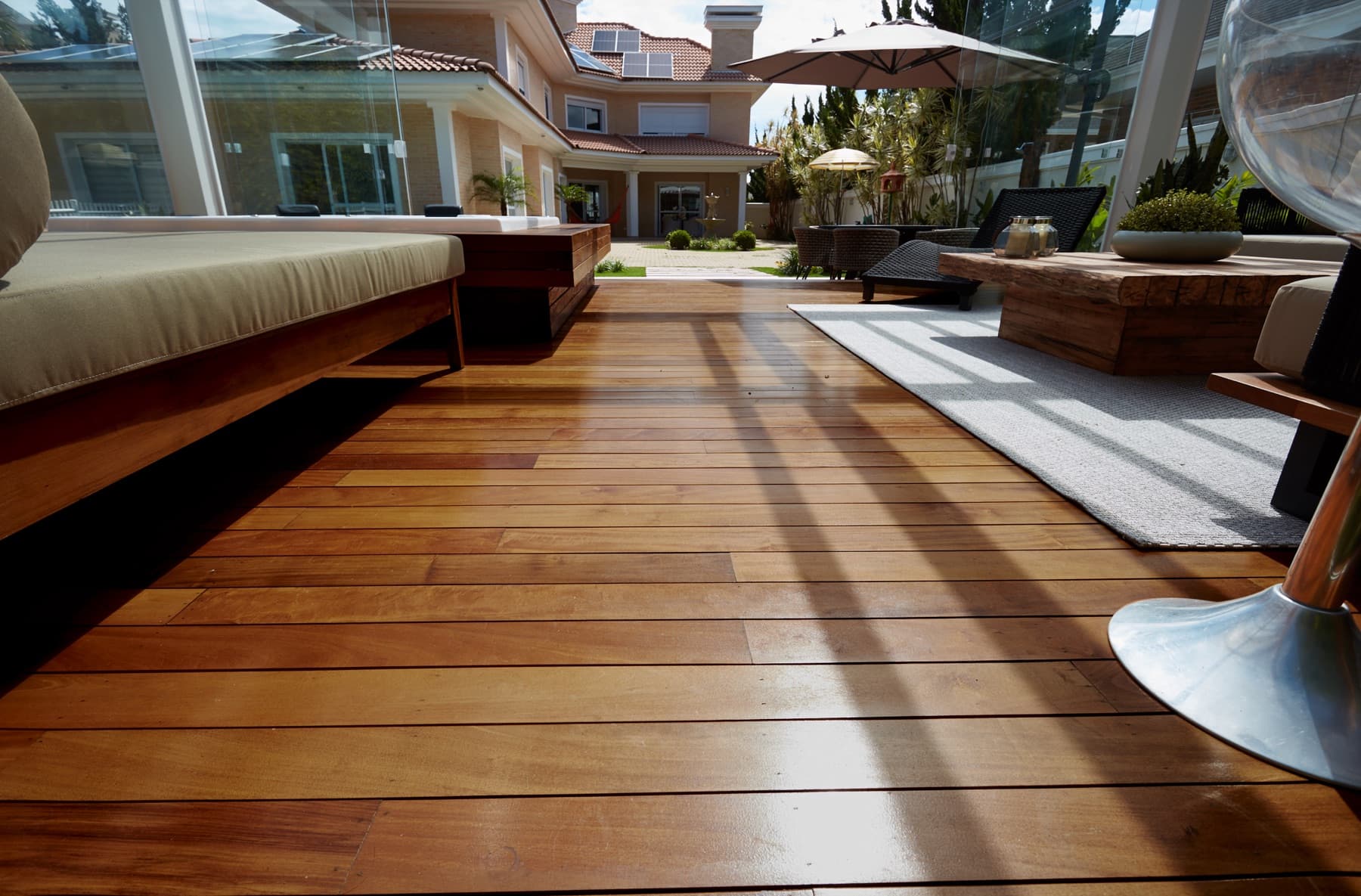
Evaluating Your Existing Deck Frame and Substructure
Before selecting new decking boards, a thorough inspection of your existing deck's frame and substructure is essential. Renovation projects often reveal underlying issues that need addressing. Check for any signs of rot, insect damage, or structural instability in joists, beams, and support posts. The integrity of the substructure directly impacts the safety and lifespan of your new deck.
Consider the spacing of your existing joists. Hardwood decking, especially denser species, may require specific joist spacing to ensure proper support and prevent movement. If your current joist spacing is wider than recommended for your chosen hardwood, you may need to add blocking or additional joists. This initial assessment helps prevent costly surprises later in the project and ensures compatibility with the new decking material.
Why Consider Hardwood for Coastal Environments
Coastal environments, like Newport Beach, present unique challenges for outdoor materials, including salt air, humidity, and strong sunlight. Hardwood species such as Ipe and Cumaru are recognized for their natural resilience to these conditions. Their inherent density makes them resistant to rot, insects, and marine borers, which are common concerns in waterfront or humid areas.
Unlike some other materials that might degrade or warp under constant exposure to salt spray and sun, these hardwoods maintain their structural integrity. They are often specified for marine-grade applications such as docks and boardwalks, demonstrating their suitability for coastal projects.
Ipe, also known as Brazilian walnut, is a dense and durable hardwood native to South America. It is notable for its minimal movement post-installation and natural resistance to weather changes, mold, and termites. Its color ranges from reddish-brown to olive-brown. (S1)
Cumaru is another very durable tropical hardwood. It offers stiffness, strength, and extreme hardness, along with natural resistance to insects, rot, and fungi. It is resistant to termites and weather changes. (S1)
Comparing Hardwood Species: Ipe vs. Cumaru
When choosing hardwood decking, Ipe and Cumaru are two prominent options, each with distinct characteristics:
Ipe: Often considered the benchmark for hardwood decking, Ipe boasts exceptional durability. With proper care, Ipe decking can last for decades. It is naturally resistant to rot, insects, and mold, requiring minimal chemical treatment. Ipe also carries a Class A fire rating. Its color ranges from reddish-brown to olive-brown. (S1)
Cumaru: A very durable tropical hardwood, Cumaru offers a strong alternative to Ipe. It is resistant to termites and weather changes, and provides stiffness, strength, and extreme hardness. Cumaru can give off a scent of cinnamon and vanilla when being worked. (S1)
Both species can be left untreated to weather to a silvery-gray patina, or they can be oiled annually to maintain their rich brown tones. The choice between them often comes down to specific project budget and desired aesthetic nuances.
Planning Your Deck Layout and Dimensions
Accurate measurements are crucial for a successful deck renovation. Measure the length and width of your existing deck area. Consider any unique shapes, angles, or features like built-in seating or planters that will impact board layout and cuts. Plan for board lengths that minimize waste and create an appealing flow.
Hardwood decking is available in various profiles and lengths. For example, Ipe can be found in dimensions from 1"x2" through 6"x6" and lengths from 3 to 24 feet. (S1) Carefully planning your layout can help you determine the most efficient board lengths to order, reducing cuts and material waste. Remember that board availability can vary, so confirming current profiles and lengths with your supplier is important.
Worked Example: Deck Renovation Material Takeoff
Let's consider a hypothetical deck renovation project in Newport Beach for an existing rectangular deck measuring 16 feet long by 10 feet wide. The homeowner decides on Ipe decking boards, with a nominal size of 1x6 (actual approximately 0.75 inches thick by 5.5 inches wide). They prefer to maintain the natural brown color, so an annual oil treatment is planned.
The total deck area is 16 ft * 10 ft = 160 square feet. To calculate the number of linear feet of 1x6 decking needed, we first find the coverage per linear foot. A 5.5-inch wide board covers 5.5/12 = 0.4583 square feet per linear foot. So, 160 sq ft / 0.4583 sq ft/linear ft = approximately 349 linear feet.
Assuming a preference for longer boards to minimize seams, and considering Ipe is available in lengths up to 24 feet, the homeowner could aim for 16-foot and 10-foot boards. For the 16-foot length, 10 ft / (5.5 in / 12 in/ft) = approximately 21.8 boards. Rounding up, 22 boards of 16 ft length would be 352 linear feet. This would cover the main deck area with minimal cuts across the width.
However, for accurate purchasing, you must account for waste due to cuts, end trimming, and potential board imperfections. A common practice is to add 10-15% to the linear footage calculation for waste. So, 349 linear feet * 1.15 (15% waste) = approximately 401 linear feet. This would translate to roughly 25 boards of 16-foot length (400 linear feet). Always confirm exact board lengths and profiles with your supplier and discuss a cutting plan to optimize material use.
This example simplifies the process; a real project would also consider fascia boards, stair treads, and any custom elements, each requiring its own material calculation.
Before you order
- Inspect existing deck frame for rot, insect damage, and structural integrity.
- Measure existing joist spacing and compare with recommended spacing for chosen hardwood.
- Determine total square footage of the deck area to be renovated.
- Select hardwood species (e.g., Ipe, Cumaru) based on durability, aesthetics, and maintenance preferences.
- Consider the coastal environment of Newport Beach and choose materials with appropriate resistance.
- Plan board layout to optimize lengths and minimize waste.
- Calculate linear footage needed, including a waste factor (10-15%).
- Confirm current availability of desired profiles and lengths with your supplier.
- Budget for any necessary substructure repairs or modifications.
- Decide on the desired finish: natural silvering or oiled to maintain color.
Confirm installation details, approved uses and warranty terms in the current instructions for the exact product and profile. Your installer should verify the substrate, structure and applicable project requirements.
This is a planning guide for projects in Newport Beach, CA. Ask our team to confirm availability, delivery to your ZIP code and which branch can support your order.
Questions to help you decide
How long does hardwood decking last in a coastal environment?
Hardwood species like Ipe and Cumaru are known for their exceptional longevity. Their natural density and resistance to rot, insects, and marine borers make them highly suitable for coastal areas like Newport Beach, where they withstand salt air and humidity effectively. (S1, S2)
Does hardwood decking require special maintenance in Newport Beach?
Hardwood decking requires minimal maintenance. A yearly wash is generally sufficient. If you prefer to maintain the original reddish-brown to olive-brown color of species like Ipe or Cumaru, an annual application of a UV-blocking oil or sealer is recommended. If left untreated, the wood will naturally weather to a beautiful silvery-gray patina, which does not affect its structural integrity. (S1, S2)
Can I install hardwood decking over my existing deck frame?
You may be able to, but a thorough inspection of your existing deck frame is crucial. The frame must be structurally sound, free from rot or significant damage, and its joist spacing needs to be appropriate for the density and dimensions of the new hardwood decking. In many cases, minor repairs or modifications to the substructure might be necessary to ensure proper support and longevity for your new hardwood deck.
Ready to Plan Your Hardwood Deck Renovation?
Request a material quote with your project dimensions, desired hardwood profile, and ZIP code. Our team can help you confirm current availability and service options for your Newport Beach project.
Request a material quote →