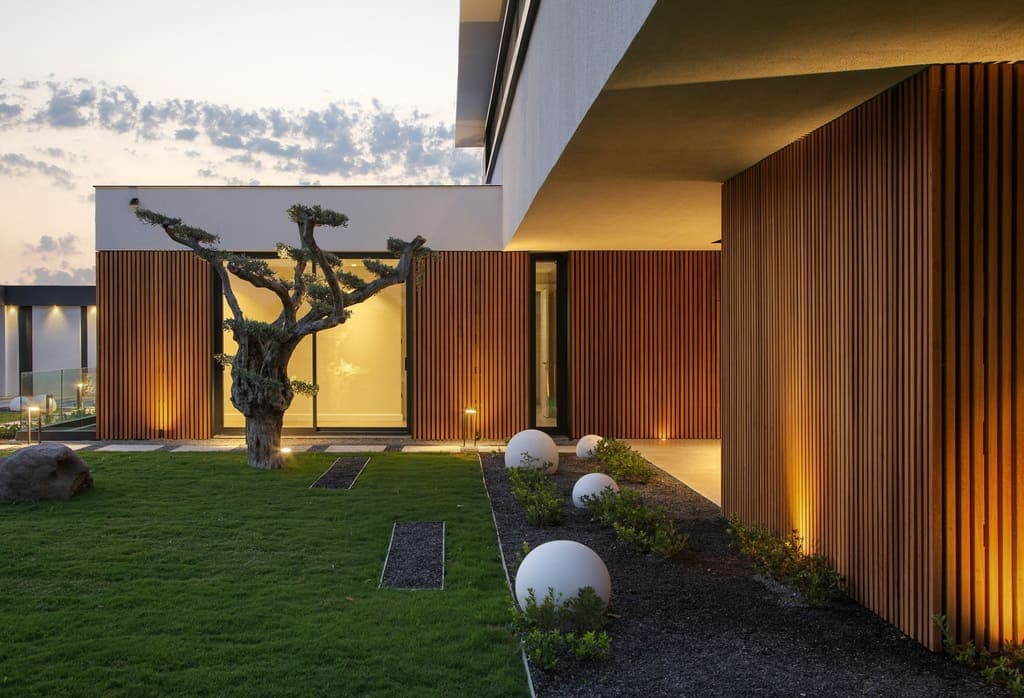
Why Thermally Modified Wood for Covered Patio Walls?
Thermally modified wood undergoes a high-heat treatment process that alters its cellular structure. This process enhances the wood's stability by reducing its tendency to swell and shrink with changes in humidity, a valuable characteristic for any outdoor application, even those with overhead protection. This inherent stability helps maintain a consistent appearance and can contribute to the longevity of the installation.
For covered patio walls, where the material is visible and often touched, the natural aesthetic of wood is a key draw. Thermally modified wood retains its original grain patterns and can develop a rich, consistent color. It can be left unfinished to gradually weather to a silver-gray patina, or a finish can be applied to preserve its initial tone or introduce a specific hue. This versatility allows it to complement various architectural styles common in Montpelier homes.
Selecting the Right Profiles and Species
When considering thermally modified wood for covered patio walls, specific profiles are often chosen for their visual effect and ease of installation. Tongue-and-groove profiles, such as those available in thermally modified spruce or pine, offer a clean, interlocking fit that creates a continuous surface. These are excellent for achieving a solid wall appearance with minimal visible fasteners.
Another popular option is a shiplap profile, which creates a distinct shadow line between boards, adding depth and texture to the wall. For a more contemporary look, square-edge profiles can be installed with a consistent gap to create a slatted or open-joint aesthetic, though this requires careful consideration of the sub-structure behind it. Always confirm that the selected thermally modified wood species and profile are approved for vertical wall applications. For example, NORX thermally modified spruce is available in various siding profiles suitable for covered vertical applications.
Finishing Options for Montpelier's Climate
Even in a covered patio setting, Montpelier's seasonal climate, with its humid summers and cold winters, means that the wood will still experience environmental fluctuations. You have two primary finishing approaches for thermally modified wood:
Natural Weathering: If left unfinished, thermally modified wood will gradually lighten and develop a silver-gray patina over time. This process is natural and does not compromise the wood's enhanced stability. For this approach, ensure consistent exposure to light and air across the entire wall surface to encourage even weathering.
Applied Finishes: To maintain the wood's initial color or to introduce a specific tone, a high-quality exterior-grade finish should be applied. These finishes, such as stains or oils, can help protect the surface from UV degradation and moisture absorption, preserving the desired aesthetic. It's important to choose products specifically formulated for exterior wood and to follow manufacturer recommendations for application and reapplication intervals. Regular inspection for wear and tear is advisable, especially in areas with higher humidity or occasional splash exposure.
Planning Attachment and Substructure
Proper attachment is crucial for the long-term performance of your thermally modified wood patio walls. For tongue-and-groove or shiplap profiles, concealed fastening methods are often preferred to maintain a clean appearance. This typically involves fastening through the tongue or the lap of the board into the substructure.
The substructure itself should be robust and designed to support the cladding. This usually consists of vertical furring strips or blocking, spaced according to the specific profile and board length. These strips not only provide attachment points but also create a ventilation gap behind the wood, allowing air to circulate and moisture to dissipate. Even in covered applications, ensuring proper drainage and ventilation behind the wall material is a good practice to prevent moisture buildup. Use corrosion-resistant fasteners, such as stainless steel, to avoid staining the wood and ensure long-term integrity.
Hypothetical Project Example: Covered Patio Wall
Consider a covered patio in Montpelier, VT, with a wall section measuring 10 feet wide by 8 feet high that you wish to clad with thermally modified wood. You select a NORX thermally modified spruce, tongue-and-groove profile, with an effective coverage width of 5 inches and available in 10-foot lengths. This profile is suitable for vertical wall applications.
First, calculate the total area: 10 feet * 8 feet = 80 square feet. To determine the number of boards needed, convert the effective coverage width to feet (5 inches = 0.4167 feet). Each 10-foot board covers 0.4167 feet * 10 feet = 4.167 square feet. Divide the total area by the coverage per board: 80 sq ft / 4.167 sq ft/board 19.19 boards. Round up to the nearest whole board, so you would need 20 boards. It is always prudent to add an additional 10-15% for cuts, waste, and future repairs, bringing the total to approximately 22-23 boards.
This allows for a continuous air gap behind the cladding. You decide to apply a semi-transparent exterior oil finish to maintain the wood's warm tone and provide surface protection. This example illustrates the basic steps in material calculation and planning for a covered patio wall.
Before you order
- Verify selected thermally modified wood profile is approved for vertical wall applications.
- Consider the desired aesthetic: natural weathering or an applied finish?
- If finishing, select an exterior-grade product suitable for wood and local climate.
- Plan for a robust substructure with adequate ventilation behind the cladding.
- Choose corrosion-resistant fasteners appropriate for the wood species and profile.
- Calculate material quantities, including waste factor, based on effective coverage and dimensions.
- Confirm local building practices or requirements for covered outdoor structures.
Confirm installation details, approved uses and warranty terms in the current instructions for the exact product and profile. Your installer should verify the substrate, structure and applicable project requirements.
This is a planning guide for projects in Montpelier, VT. Ask our team to confirm availability, delivery to your ZIP code and which branch can support your order.
Questions to help you decide
Can thermally modified wood be used in fully exposed exterior applications?
While this guide focuses on covered patio walls, thermally modified wood is commonly used in fully exposed exterior applications like siding and decking due to its enhanced stability and resistance to decay. The treatment process makes it a durable choice for various outdoor settings, but specific installation methods and finishing recommendations may vary based on exposure.
How often do I need to reapply a finish to thermally modified wood on a covered patio wall?
The frequency of reapplication depends on the type of finish, the level of exposure to indirect UV light and moisture, and the product manufacturer's recommendations. Typically, a finish on a covered patio wall might last longer than on a fully exposed surface, but annual inspection is recommended. Reapplication every 2-5 years is a general guideline, but always refer to the specific finish product's instructions.
Are there specific cleaning instructions for thermally modified wood on covered patio walls?
For general cleaning, a soft brush or cloth with mild soap and water is usually sufficient to remove dirt or grime. Avoid harsh chemicals or high-pressure washers, which can damage the wood fibers or finish. If mold or mildew appears, a diluted bleach solution (e.g., 1 part bleach to 4 parts water) or a specialized wood cleaner can be used, followed by a thorough rinse. Always test any cleaning solution on an inconspicuous area first.
Ready to Plan Your Covered Patio Walls?
For a material quote tailored to your Montpelier project, provide your project dimensions, desired thermally modified wood profile, and ZIP code. We can help confirm current availability and service options for your area. Visit our website to request a quote.
Request a material quote →