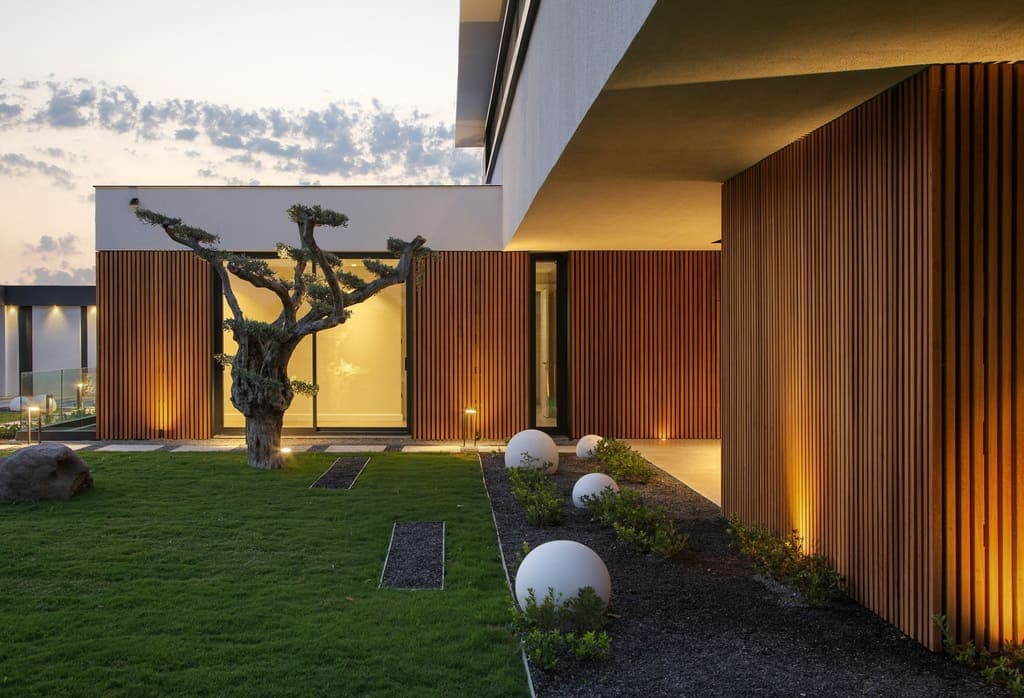
Understanding Thermally Modified Wood for Wall Applications
Thermally modified wood undergoes a controlled heating process that alters its cellular structure. This process aims to reduce the wood's ability to absorb moisture, which contributes to its enhanced dimensional stability. For covered patio walls, this stability is a key advantage, as it can help minimize warping and cupping that might occur with untreated wood exposed to outdoor conditions.
While protected from direct rain and snow, covered patio walls are still part of the exterior envelope and experience fluctuations in humidity and temperature. Thermally modified wood's reduced hygroscopy means it is less prone to the expansion and contraction cycles that can stress fasteners and finishes over time. This makes it a practical choice for a long-lasting wall surface.
It's important to differentiate covered patio walls from fully exposed siding. The level of protection provided by an overhang or roof can influence the choice of finish and the long-term maintenance schedule. For covered applications, the wood is less subject to UV degradation and direct water exposure, potentially extending the life of certain finishes or allowing for a more natural, unfinished appearance if desired.
Selecting Profiles and Species for Aesthetics and Performance
The aesthetic of your covered patio wall in Minneapolis will largely depend on the profile and species of thermally modified wood you choose. Common profiles include tongue-and-groove, shiplap, and square-edge boards, each offering a different shadow line and visual texture. Tongue-and-groove profiles provide a tight, interlocked fit, often used for a clean, continuous surface, while shiplap creates a distinct overlap and shadow.
NORX thermally modified wood is available in various profiles, offering flexibility in design. For a modern look, consider a narrower board with a crisp shadow line. For a more rustic or traditional feel, wider boards or a shiplap profile might be suitable. The choice of profile also impacts installation, as some are designed for concealed fastening, contributing to a cleaner appearance.
While thermally modified wood generally has a consistent appearance due to the modification process, variations in grain and natural characteristics will still be present, offering an authentic wood aesthetic. Species like thermally modified ash or pine are commonly available, each with its own grain pattern and initial color before finishing. The thermal modification process typically results in a rich, darker tone that can be maintained with appropriate finishes or allowed to weather naturally to a silver-gray patina over time.
Finishing Options and Maintenance for Covered Walls
For covered patio walls, you have several finishing options for thermally modified wood. You can choose to apply a clear sealant to enhance the natural color and provide some protection, or use a semi-transparent stain to introduce color while still allowing the wood grain to show through. Alternatively, a solid stain can provide a more uniform color, similar to painted wood, while still benefiting from the wood's dimensional stability.
The level of protection offered by the patio cover will influence how often a finish might need reapplication. While protected, covered walls still experience some UV exposure and ambient moisture. Regular cleaning to remove dirt and debris is generally recommended. If you opt for an unfinished look, the wood will naturally weather to a silver-gray. This weathering is purely aesthetic and does not compromise the wood's structural integrity, but it's a look to consider when making your decision.
Regardless of the finish chosen, periodic inspection for any signs of wear, especially on areas that might receive more exposure, is a good practice. Touch-ups or reapplication of finishes can help maintain the desired appearance and prolong the life of the surface.
Installation Considerations for Minneapolis Covered Patios
Proper installation is crucial for the performance of thermally modified wood on covered patio walls. While protected, ensuring adequate ventilation behind the cladding is still beneficial. A rainscreen assembly, even in a covered application, can help manage any incidental moisture and promote airflow, contributing to the longevity of the wall system. This typically involves installing furring strips over a weather-resistive barrier, creating an air gap between the cladding and the structural wall.
Fastening methods will depend on the chosen profile. Concealed fasteners, often used with tongue-and-groove or specific shiplap profiles, can provide a clean, fastener-free appearance. Face fastening, where screws or nails are visible, is also an option and can be part of the aesthetic. Always use corrosion-resistant fasteners, such as stainless steel, to prevent staining and ensure long-term durability, especially in an outdoor environment.
When planning your layout, consider how boards will meet at corners, around openings, or at the base and top of the wall. Proper detailing at these transitions will contribute to both the aesthetic and the performance of the wall. Allow for small expansion gaps where the wood meets other materials or at long runs, although thermally modified wood's stability reduces the need for large gaps.
Project Example: A Modern Covered Patio in Minneapolis
Consider a hypothetical covered patio in a Minneapolis backyard, measuring 12 feet wide by 8 feet deep, with a back wall and two side walls that are each 8 feet high. The owner wants to clad the interior faces of these three walls with thermally modified wood to create a warm, inviting outdoor room.
For this project, the owner selects NORX thermally modified ash in a 5.25-inch face-width tongue-and-groove profile, delivered in 12-foot lengths to minimize end joints. The back wall is 12 feet wide by 8 feet high, totaling 96 square feet. Each side wall is 8 feet wide by 8 feet high, totaling 64 square feet each. The total area to be covered is 96 + 64 + 64 = 224 square feet.
To calculate the number of boards needed: Each board has a face width of 5.25 inches (0.4375 feet). For a 12-foot long board, the coverage per board is 0.4375 feet * 12 feet = 5.25 square feet. Dividing the total area by the coverage per board: 224 sq ft / 5.25 sq ft/board = 42.67 boards. Accounting for cuts, waste, and a typical buffer, ordering 48 boards would be a prudent approach. This allows for 10-15% waste, which is common for siding installations, especially with potential for cuts around any existing features or for matching grain patterns.
Before you order
- Determine the exact dimensions of the covered patio walls to be clad.
- Choose a thermally modified wood species and profile (e.g., tongue-and-groove, shiplap).
- Decide on the desired finish: natural weathering, clear sealant, semi-transparent, or solid stain.
- Plan for the substructure, including furring strips for ventilation and a weather-resistive barrier.
- Select appropriate corrosion-resistant fasteners (e.g., stainless steel).
- Consider how corners, edges, and transitions to other materials will be detailed.
- Calculate the quantity of material needed, including a waste factor for cuts and unforeseen issues.
Confirm installation details, approved uses and warranty terms in the current instructions for the exact product and profile. Your installer should verify the substrate, structure and applicable project requirements.
This is a planning guide for projects in Minneapolis, MN. Ask our team to confirm availability, delivery to your ZIP code and which branch can support your order.
Questions to help you decide
Can thermally modified wood be left unfinished on covered patio walls?
Yes, thermally modified wood can be left unfinished. When exposed to UV light, it will naturally weather to a silver-gray patina over time. This aesthetic change does not compromise the wood's enhanced dimensional stability or resistance to decay. Regular cleaning is still recommended to remove dirt and debris.
What is the best way to clean thermally modified wood on a covered patio?
For routine cleaning, a soft brush or cloth with mild soap and water is typically sufficient to remove dirt, dust, and light stains. Avoid harsh chemicals or high-pressure washers, which can damage the wood fibers or strip finishes. For more stubborn stains, consult the manufacturer's recommendations for cleaning thermally modified wood.
Does thermally modified wood require a rainscreen system for covered patio walls?
While covered patio walls offer significant protection, a rainscreen assembly is still a beneficial consideration. It creates an air gap behind the cladding, which promotes ventilation and helps manage any incidental moisture, even from condensation. This can contribute to the overall longevity and performance of the wall system, especially in climates with varying humidity like Minneapolis.
Ready to Plan Your Thermally Modified Wood Project?
For a material quote and to confirm current availability and service options for your Minneapolis, MN covered patio walls, please provide your project dimensions, desired profile, and ZIP code. Visit our contact page to request a quote.
Request a material quote →