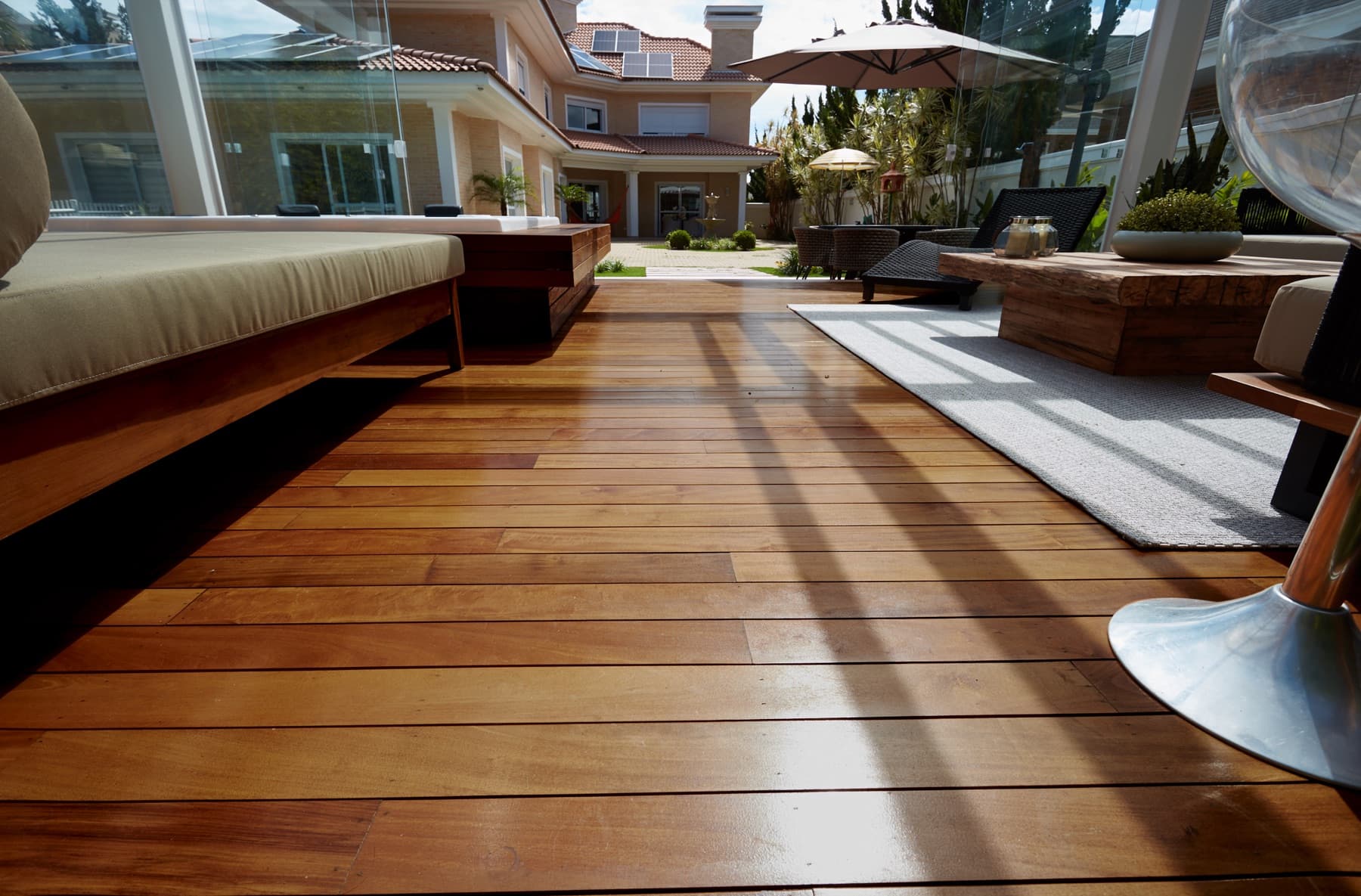
Evaluating Your Existing Deck Frame
A successful hardwood deck renovation begins with a thorough inspection of your existing deck frame. Hardwood decking, particularly dense species like Ipe or Cumaru, is heavier than many common decking materials. The existing joists, beams, and support posts must be in sound condition and adequately sized to support the increased weight.
Look for any signs of rot, insect damage, or structural weakness. Check ledger boards for secure attachment to the house and ensure all fasteners are corrosion-free. If any significant issues are found, these must be addressed and repaired or replaced before new decking is installed. Consulting with a qualified builder or structural engineer is recommended to confirm the frame's integrity and capacity for hardwood decking.
Choosing the Right Hardwood Species for Minneapolis Conditions
Minneapolis experiences a wide range of temperatures and moisture levels throughout the year, from humid summers to freezing winters. Selecting a hardwood species that can withstand these conditions is crucial for longevity. Tropical hardwoods like Ipe and Cumaru are known for their natural resistance to rot, insects, and significant weather changes.
Ipe, also known as Brazilian walnut, is a dense and durable option, often cited for its longevity and resistance to elements. It ranges from reddish-brown to olive-brown and can last for decades with proper care. Cumaru is another very durable tropical hardwood, resistant to termites and weather, offering stiffness and strength. Both species are suitable for outdoor applications in demanding climates.
While both Ipe and Cumaru are highly durable, Ipe generally represents the benchmark for performance, while Cumaru offers a comparable level of resilience for a potentially different budget. The choice often comes down to specific aesthetic preferences, project budget, and the desired lifespan.
Other hardwood species like Garapa and Tigerwood also offer distinct appearances and durability characteristics, providing additional options depending on your project's specific needs.
You can explore more about these options at our main hardwood decking page: [Hardwood Decking](/decking/hardwood).
Hardwood Decking Profiles and Lengths
Hardwood decking is available in various profiles and lengths. Common profiles include standard dimensional lumber, such as 1x4 (nominal 3/4" x 3 1/2") or 5/4x6 (nominal 1" x 5 1/2"). The choice of profile can influence the overall look and feel of your deck, as well as the fastening method.
Lengths typically range from 3 to 24 feet. Planning your layout with available lengths helps minimize waste and reduce the number of butt joints, leading to a cleaner appearance. For a renovation, consider how board lengths will align with your existing joist spacing and any planned deck dimensions. While Ipe is available in 1"x2" through 6"x6" dimensions and lengths from 3–24 ft, specific availability can vary.
Always confirm current profiles and lengths from a local supplier when planning your project. This ensures you are working with what is readily available for your specific renovation.
Fastening Methods for Hardwood Decking
The density of hardwood decking, especially species like Ipe and Cumaru, means that specialized fastening techniques are often recommended. There are generally two primary methods: face-fastening and hidden fastening.
Face-fastening involves screwing boards directly through their face into the joists. This method provides a very secure attachment and is often preferred for its structural integrity. Pre-drilling is almost always required for dense hardwoods to prevent splitting and ensure screws drive properly. Stainless steel screws are recommended for their corrosion resistance, essential for outdoor use.
Hidden fastening systems use clips or specialized fasteners that attach to the side or underside of the boards, creating a smooth, fastener-free surface. This provides a clean aesthetic but requires specific milling on the decking boards or compatible clips. Always verify that your chosen hardwood profile is compatible with the hidden fastening system you intend to use. These systems can also impact board spacing, which is critical for proper drainage and ventilation.
Material Takeoff Example: A Minneapolis Deck Renovation
Let's consider a hypothetical deck renovation project in Minneapolis. Imagine an existing deck frame measures 10 feet by 12 feet, and the homeowner wishes to replace the old decking with Ipe.
For a 10-foot by 12-foot deck (120 square feet), using standard 5/4x6 Ipe boards (nominal 1" x 5 1/2"):
First, calculate the linear feet needed. A 5.5-inch wide board means approximately 2.18 boards per linear foot across the 12-foot width (144 inches / 5.5 inches per board = 26.18 boards). We will round up to 27 boards to ensure full coverage.
Given that boards are typically sold in even foot increments, we would purchase 27 boards at 10 feet each.
To account for cuts, waste, and potential board selection (e.g., avoiding minor imperfections), it's common practice to add 10-15% to the total linear footage. For this example, 270 linear feet + 10% = 297 linear feet. So, approximately 300 linear feet of 5/4x6 Ipe would be a reasonable estimate.
This calculation assumes a straightforward parallel lay. More complex patterns, such as diagonal layouts or picture-frame borders, will require additional material and a more detailed cut plan. Always measure precisely and account for all cuts and potential waste. It is always better to have a small surplus than to run short during installation.
Before you order
- Inspect existing deck frame for rot, insect damage, and structural integrity. Consult a professional if unsure.
- Verify existing joist spacing and ensure it is compatible with your chosen hardwood decking.
- Select a hardwood species (e.g., Ipe, Cumaru) suitable for Minneapolis's climate and your aesthetic preference.
- Determine desired decking profile (e.g., 1x4, 5/4x6) and confirm local availability of lengths.
- Choose between face-fastening (pre-drilling required) and hidden fastening systems, ensuring compatibility.
- Calculate linear footage needed, adding 10-15% for waste and cuts. Create a detailed cut plan for complex layouts.
- Plan for proper ventilation beneath the deck to ensure material longevity.
- Consider the desired finish: natural silvering or UV-blocking sealer to maintain original color.
- Confirm any local building codes or regulations that may apply to your deck renovation.
Confirm installation details, approved uses and warranty terms in the current instructions for the exact product and profile. Your installer should verify the substrate, structure and applicable project requirements.
This is a planning guide for projects in Minneapolis, MN. Ask our team to confirm availability, delivery to your ZIP code and which branch can support your order.
Questions to help you decide
How does Minneapolis's climate affect hardwood decking?
Minneapolis experiences significant temperature swings and moisture variations, including freezing winters and humid summers. Hardwoods like Ipe and Cumaru are naturally dense and resistant to rot, insects, and warping, making them well-suited to withstand these challenging conditions. Proper installation, including adequate ventilation, is crucial for optimal performance.
Can I reuse my existing deck railings with new hardwood decking?
You can potentially reuse existing deck railings if they are in good structural condition and compatible with the aesthetics of your new hardwood deck. However, it's an opportune time to inspect them for wear, rot, or damage. If the railings are showing significant age or do not complement the new decking, replacing them can enhance the overall renovated look and ensure safety. Always check local building codes for railing requirements.
What maintenance does hardwood decking require in Minneapolis?
Hardwood decking is relatively low maintenance. A yearly wash with mild soap and water is generally sufficient to remove dirt and debris. If you prefer to maintain the wood's original color, a UV-blocking sealer or oil can be applied annually. Without treatment, hardwoods like Ipe and Cumaru will naturally weather to a silvery-gray patina, which does not affect their structural integrity. Regular clearing of leaves and snow can also help extend the deck's life.
Ready to Plan Your Hardwood Deck Renovation?
Request a material quote with your project dimensions, desired hardwood profile, and ZIP code. Our team can help confirm current availability and service options for your Minneapolis project.
Request a material quote →