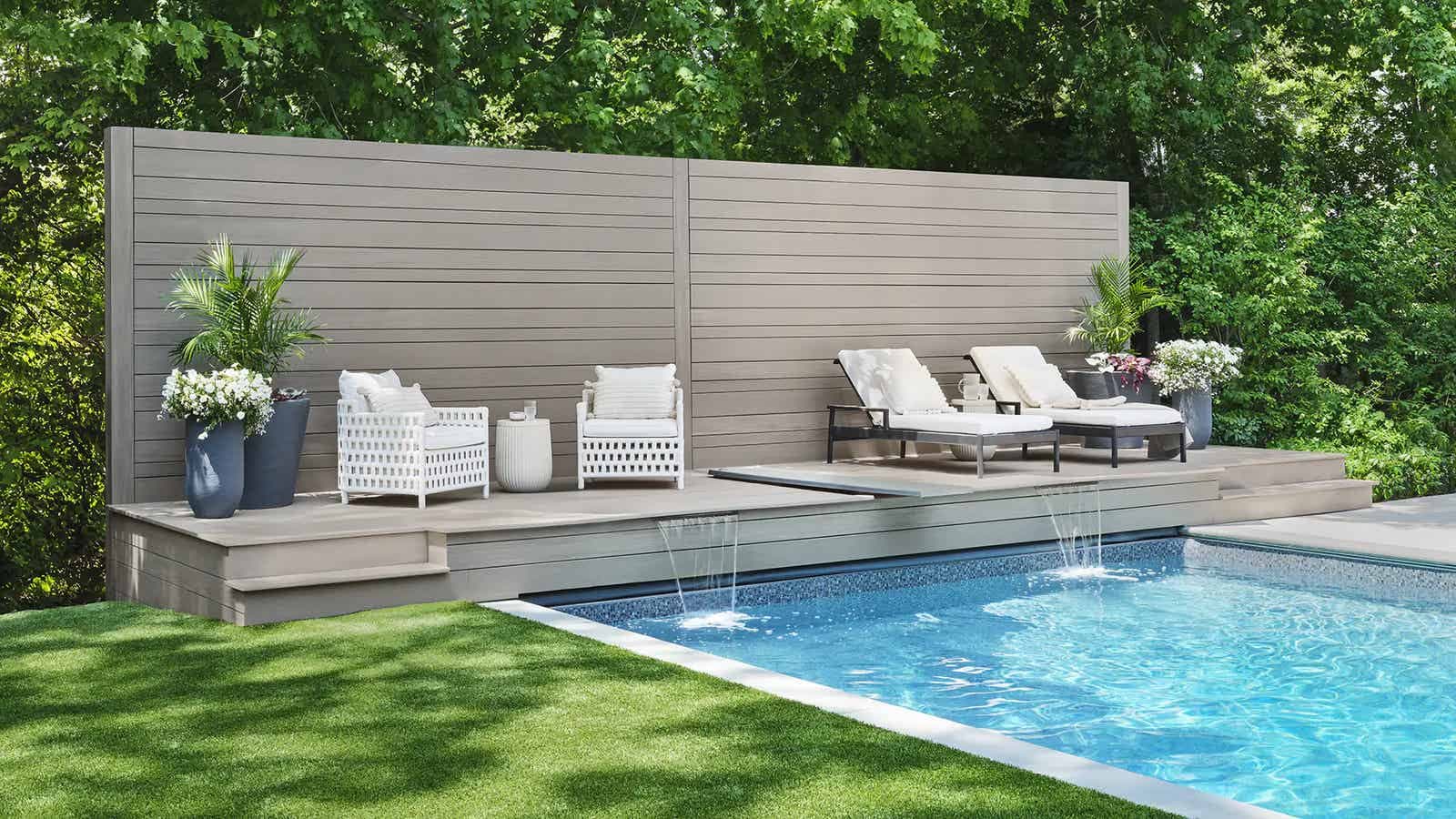
Why PVC Decking for Pool Terraces?
PVC decking is a 100% synthetic material, meaning it contains no wood fibers. This composition makes it inherently waterproof to the core, a critical advantage for areas consistently exposed to water, such as pool surrounds.
This inherent water resistance makes PVC decking a practical choice where boards are frequently wet. It offers a low-maintenance surface that can be wiped clean with soap and water, simplifying the upkeep often associated with poolside areas. Additionally, PVC decking is generally lighter than hardwood and some composite options, which can facilitate handling and installation.
Water Exposure and Durability
The primary benefit of PVC decking for a pool terrace is its complete impermeability to water. This characteristic means that splash zones, regular cleaning, and even prolonged exposure to moisture from rain or snowmelt will not compromise the material's integrity. There's no wood content to absorb water, eliminating concerns about warping, rot, or fungal growth that can affect other decking types over time.
This durability extends to various environmental factors. The advanced capping on many PVC boards is designed to shed grease and wine, making cleanup straightforward.
Appearance and Design Flexibility
Modern PVC decking offers a wide range of aesthetic options, including collections that mimic the deep, rich looks of natural wood. This allows homeowners to achieve a sophisticated appearance around their pool without the maintenance demands of real wood. Available in various colors and finishes, PVC decking can complement different architectural styles and landscaping designs.
Some PVC decking lines also feature heat-mitigating color options, which can be a consideration for surfaces exposed to direct sunlight. While all dark surfaces will absorb heat, these options aim to help manage surface temperatures, potentially making the deck more comfortable underfoot during warm Minneapolis summers. It's important to review specific product specifications for details on color and finish properties.
Maintenance and Cleaning for Pool Areas
Maintaining a PVC decking pool terrace is generally straightforward. The non-porous surface resists stains from common poolside spills like sunscreen, food, and beverages. Regular cleaning with soap and water is typically sufficient to keep the deck looking its best. For specific cleaning products, always consult the manufacturer's guidelines to ensure compatibility and avoid damaging the surface.
Unlike wood, PVC decking does not require sanding, staining, or sealing. This significantly reduces the long-term maintenance burden, allowing more time to enjoy the pool area. Promptly addressing spills and routine cleaning will help preserve the deck's appearance and performance over time.
Hypothetical Project Example: A 12x20 Foot Pool Terrace
Consider a hypothetical pool terrace project measuring 12 feet by 20 feet, requiring PVC decking. For this example, let's assume standard PVC decking boards are available in 12-foot and 20-foot lengths, with a typical width of 5.5 inches (0.458 feet).
To cover the 12-foot width of the terrace, a 12-foot board would be ideal for minimizing cuts along that dimension. The number of boards needed for the 20-foot length would be 20 feet / 0.458 feet/board ≈ 43.67 boards. Since you cannot purchase partial boards, you would need 44 boards of 12-foot length. This calculation assumes a straight run and no special patterns or picture framing. Always account for potential waste and design cuts by adding an additional 5-10% to your total material estimate.
For a 20-foot length terrace using 20-foot boards, the number of boards needed for the 12-foot width would be 12 feet / 0.458 feet/board ≈ 26.2 boards. You would need 27 boards of 20-foot length. This illustrates how board length availability can impact the total quantity and potential waste. Always plan your layout carefully to optimize material use.
This example simplifies the process; actual projects will require precise measurements, consideration of joist spacing, fastening systems, and any required border or trim pieces. Always consult detailed installation guides for proper spacing between boards and at ends, as these are crucial for drainage and material performance.
Before you order
- Confirm the exact dimensions of your pool terrace area, including any curves or irregular shapes.
- Consider the desired aesthetic: do you prefer a wood-look finish or a more contemporary solid color?
- Research specific PVC decking lines for available colors, textures, and heat-mitigating properties.
- Evaluate the local climate conditions in Minneapolis, including sun exposure, precipitation, and winter temperatures, to inform material and color choices.
- Plan for proper drainage around the pool terrace to prevent standing water.
- Understand the manufacturer's cleaning and maintenance recommendations for your chosen PVC decking.
- Account for all necessary accessories, such as fasteners, trim, and fascia boards, in your material list.
- Consult with a professional installer or designer to ensure structural integrity and compliance with local building practices.
Confirm installation details, approved uses and warranty terms in the current instructions for the exact product and profile. Your installer should verify the substrate, structure and applicable project requirements.
This is a planning guide for projects in Minneapolis, MN. Ask our team to confirm availability, delivery to your ZIP code and which branch can support your order.
Questions to help you decide
Is PVC decking suitable for year-round exposure in Minneapolis's climate?
Yes, PVC decking is designed to withstand various weather conditions, including the freeze-thaw cycles and snow common in Minneapolis. Its 100% synthetic composition means it won't absorb moisture, which prevents issues like rotting, cracking, or splintering that can affect wood in such climates. However, proper installation with adequate ventilation and drainage is always important.
How does PVC decking compare to composite decking for a pool terrace?
While both PVC and composite decking are low-maintenance alternatives to wood, PVC decking offers superior water resistance because it contains no wood fibers. This makes it a preferred choice for areas with constant water exposure, like pool surrounds, where it's less prone to moisture-related issues. Composite decking, which contains wood fibers, can still absorb some moisture, though typically less than solid wood.
What kind of sub-structure is needed for PVC decking around a pool?
PVC decking requires a properly constructed sub-structure, typically made of treated lumber or steel, similar to other decking materials. The joist spacing must adhere strictly to the manufacturer's specifications for the chosen PVC board, which can vary by product line and intended use. Ensuring adequate ventilation beneath the deck is also crucial, especially in wet areas, to prevent moisture buildup.
Plan Your PVC Decking Pool Terrace
Ready to transform your pool area with durable and low-maintenance PVC decking? Request a material quote today. Provide your project dimensions, desired PVC profile, and ZIP code to confirm current availability and service options.
Request a material quote →