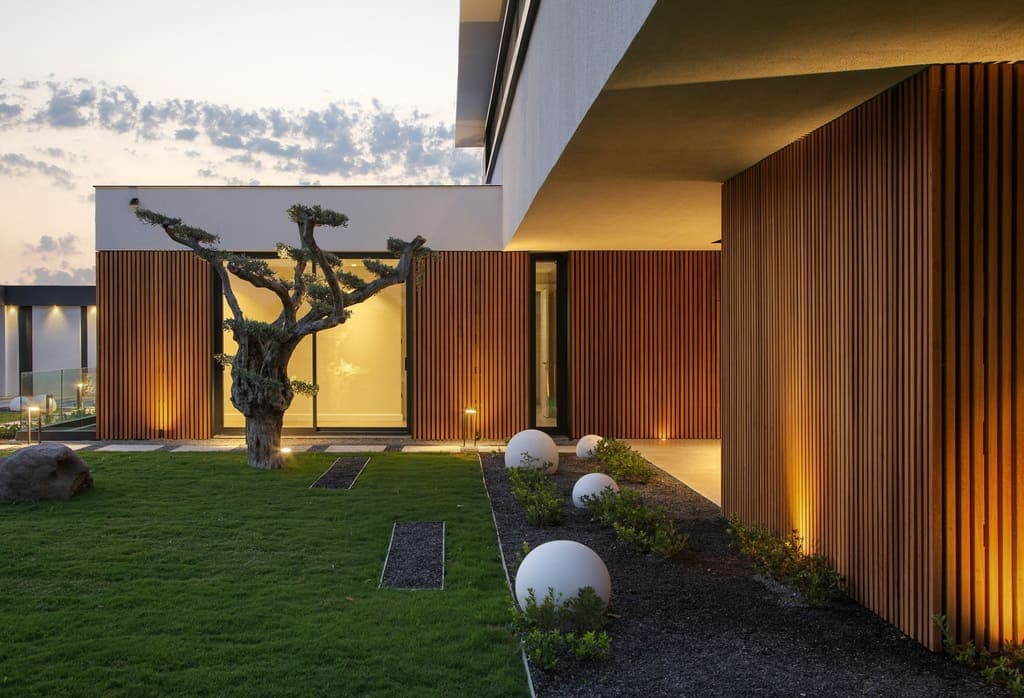
Understanding Thermally Modified Wood for Wall Applications
Thermally modified wood undergoes a high-heat treatment process that alters its cellular structure. This process aims to enhance the wood's dimensional stability and resistance to decay. For covered patio walls, these properties are beneficial because they help the wood resist warping, shrinking, or swelling even with fluctuations in humidity, which are common in Miami.
The modification process typically darkens the wood, giving it a rich, consistent tone throughout. This color can deepen further with finishing or lighten over time if left unfinished and exposed to UV light, even in a covered setting where indirect light is present. The choice of species, such as Ash or Pine, also influences the final appearance and grain pattern. Lumber Plus offers various thermally modified wood options, including those from NORX, known for their consistent quality.
Selecting the Right Profile and Species for Your Miami Patio Wall
The profile of the thermally modified wood planks significantly impacts the visual texture and installation method of your covered patio walls. Common profiles include tongue-and-groove, shiplap, and square-edge. Tongue-and-groove and shiplap profiles offer a cleaner, more integrated look with concealed fasteners, which can be advantageous for a refined patio aesthetic.
Square-edge profiles, while simpler to install, may require visible fasteners or specialized clips, and the gaps between boards can be more pronounced. Consider the desired shadow lines and overall design theme of your patio when selecting a profile. For example, a narrow shiplap can create a contemporary, linear effect, while wider planks might offer a more rustic or classic feel. Species like thermally modified Ash often provide a more pronounced grain, while Pine offers a more subdued texture. For a unique aesthetic, consider Maximo Accoya, which offers exceptional performance characteristics.
Finishing and Maintenance for Miami's Climate
While thermally modified wood is enhanced for durability, applying a finish can further protect its appearance and offer additional resistance to moisture and UV degradation, even on a covered patio. In Miami's humid environment, a breathable finish is often preferred to allow the wood to acclimate naturally. Clear sealers or semi-transparent stains can preserve the wood's natural color while offering protection.
If left unfinished, thermally modified wood will gradually weather to a silver-gray patina, a process that can still occur even under a covered patio due to indirect UV exposure and ambient humidity. Regular cleaning to remove dust, pollen, and mildew is recommended to maintain the wall's appearance. Inspecting the finish periodically and reapplying as needed will help extend its life and preserve the wood's aesthetic.
Installation Considerations for Covered Patio Walls
Proper installation is key to the longevity and appearance of thermally modified wood walls. Ensure the substructure is sound, level, and provides adequate ventilation behind the cladding, even in a covered setting. This ventilation helps manage moisture and temperature fluctuations, preventing potential issues.
Use corrosion-resistant fasteners, such as stainless steel screws, to prevent staining and ensure secure attachment. When installing, allow for appropriate expansion and contraction gaps, especially at ends and around openings, as wood can still experience minor movement. For tongue-and-groove or shiplap profiles, hidden fastening systems are often used, providing a clean, fastener-free surface. Always refer to manufacturer guidelines for specific installation instructions for the chosen profile and species.
Even though the patio is covered, consider potential exposure to wind-driven rain. Detailing around corners, edges, and at the base of the wall should account for water runoff and drainage, preventing moisture from pooling or being trapped behind the cladding. Ensure a minimum clearance from the ground or patio surface to prevent moisture wicking.
Hypothetical Project Example: Covered Patio Wall in Miami
Consider a covered patio in Miami, measuring 12 feet wide by 8 feet high, where thermally modified wood is desired for one accent wall. The homeowner selects NORX Thermally Modified Ash in a 5.5-inch face-width shiplap profile.
The wall area is 12 feet * 8 feet = 96 square feet. To account for cuts, waste, and specific board lengths, a common practice is to add a waste factor of 10-15%. For this example, we'll use 15% waste: 96 sq ft * 1.15 = 110.4 sq ft of material needed. If the planks are sold in 10-foot lengths, each plank of 5.5-inch face width covers (5.5/12) feet * 10 feet = 4.58 square feet. Therefore, approximately 110.4 sq ft / 4.58 sq ft/plank = 24.1 planks are needed. Rounding up, 25 planks would be a reasonable purchase quantity.
The installation would involve attaching furring strips to the existing wall to create a ventilation gap, followed by the shiplap planks. Fasteners would be concealed within the shiplap profile. A semi-transparent finish would be applied to maintain the wood's rich color while offering protection against humidity and indirect UV exposure.
Before you order
- Confirm local building codes and HOA requirements for exterior wall materials.
- Evaluate the specific exposure level of the covered patio wall (e.g., indirect sun, wind-driven rain).
- Select a thermally modified wood species (e.g., Ash, Pine) and profile (e.g., shiplap, tongue-and-groove) that aligns with your design vision and performance needs.
- Determine the desired finish: unfinished (for silvering patina) or finished (for color retention and added protection).
- Plan for proper substructure, ventilation, and drainage behind the wall cladding.
- Choose appropriate corrosion-resistant fasteners.
- Calculate material quantities, accounting for waste and specific board lengths.
- Consider professional installation for optimal results and adherence to best practices.
Confirm installation details, approved uses and warranty terms in the current instructions for the exact product and profile. Your installer should verify the substrate, structure and applicable project requirements.
This is a planning guide for projects in Miami, FL. Ask our team to confirm availability, delivery to your ZIP code and which branch can support your order.
Questions to help you decide
Can thermally modified wood be used on any exterior wall in Miami?
While thermally modified wood offers enhanced stability and decay resistance, its suitability for fully exposed exterior walls depends on the specific product, profile, and installation method. For covered patio walls, it is generally well-suited due to reduced direct exposure to sun and rain. Always verify product specifications and consult with a professional for fully exposed applications.
Does thermally modified wood require a finish in Miami's climate?
A finish is not strictly required for thermally modified wood to perform its function, as the thermal modification process enhances its durability. However, applying a finish can help maintain its original color, provide additional protection against moisture and indirect UV, and simplify cleaning. If left unfinished, the wood will naturally weather to a silver-gray patina over time, even in a covered setting.
How do I clean thermally modified wood walls on a covered patio?
Regular cleaning with a soft brush or cloth and a mild soap-and-water solution is typically sufficient. For stubborn dirt or mildew, a diluted bleach solution (following manufacturer recommendations for the finish, if any) can be used, followed by thorough rinsing. Avoid harsh chemicals or high-pressure washers, which can damage the wood surface or finish.
Request a Quote for Your Miami Covered Patio Wall Project
Ready to transform your Miami covered patio? Provide your project dimensions, desired profile, and ZIP code to request a material quote. Our team can help confirm current availability and service options for thermally modified wood.
Request a material quote →