Evaluating Your Existing Deck Frame
Before selecting new hardwood decking boards, a professional inspection of your existing deck's substructure is essential. The condition of the joists, beams, and ledger board will determine if they can support the weight and fastening requirements of dense hardwoods. Even if the surface appears sound, underlying rot, insect damage, or structural fatigue can compromise the entire renovation.
Specifically, check for any signs of water damage, especially where the deck connects to your home. Ensure all fasteners are secure and free from corrosion. The spacing of your joists is also critical; denser hardwoods may require tighter joist spacing than lighter materials to prevent deflection and ensure proper support. Documenting these elements will inform your material choices and any necessary frame repairs or upgrades.
Considering Hardwood Species for Miami's Climate
Miami's coastal environment, with its humidity, salt air, and strong sun exposure, demands decking materials that can withstand these conditions. Certain hardwood species are particularly well-suited due to their natural density and resistance properties.
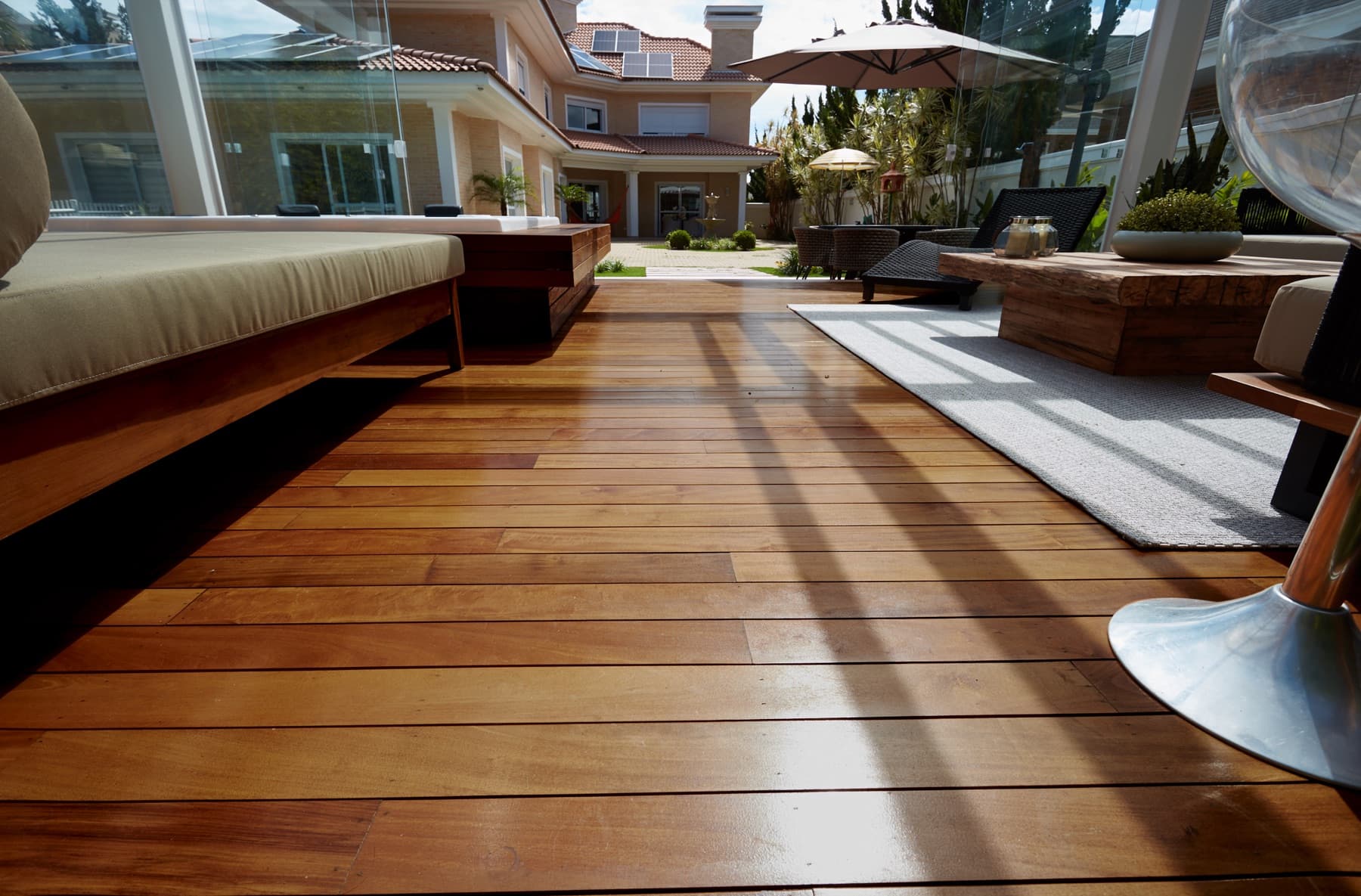
Ipe, also known as Brazilian Walnut, is a premier choice, recognized for its exceptional durability and resistance to rot, insects, and weather changes. It can last for decades with proper care and is often specified for marine-grade applications. Ipe ranges from reddish-brown to olive-brown. Cumaru is another highly durable tropical hardwood that offers similar resistance to termites and weather. It shares many of Ipe's advantages, providing stiffness, strength, and hardness, often at a different price point. Cumaru has a rich, reddish-brown to golden-brown color.
Both Ipe and Cumaru are naturally dense, which helps them resist warping and cracking even after exposure to moisture. This natural resilience means they require minimal chemical treatments for protection, relying on their inherent properties as a defense against environmental factors. While they can be oiled to maintain their original color, they will weather to a silvery-gray patina if left untreated, without structural compromise.
Explore Ipe hardwood decking: /decking/hardwood/ipe
Explore all hardwood decking options: /decking/hardwood
Hardwood Decking Profiles and Lengths
Hardwood decking is available in various profiles and lengths, which can impact both the aesthetic and installation of your renovation project. Common profiles include standard dimensional lumber, which can be face-fastened or installed with hidden fasteners depending on the specific board design.
For Ipe, typical availability includes dimensions from 1"x2" up to 6"x6", with lengths ranging from 3 to 24 feet. This variety allows for flexibility in design, whether you're planning a traditional linear layout or a more intricate pattern. When planning, consider how board lengths align with your deck dimensions to minimize waste and visible seams. Longer boards can create a more continuous look, while shorter lengths might be more suitable for smaller, more complex areas or for minimizing cuts.
It's important to confirm current profile and length availability as this can vary. A detailed takeoff of your project dimensions is crucial when requesting a quote to ensure you receive the correct materials.
Planning for Fastening and Installation
Due to the density of hardwoods like Ipe and Cumaru, specialized tools and techniques are often recommended for installation. Pre-drilling is typically necessary for face-fastening to prevent splitting, and specific fasteners designed for hardwoods are advised. Hidden fastening systems can provide a clean, fastener-free surface, but require precise installation and compatible board profiles.
Ventilation beneath the deck is also a critical consideration, especially in humid climates. Proper airflow helps prevent moisture buildup, which can contribute to mold or mildew, even with naturally resistant hardwoods. Ensure your renovation plan includes adequate spacing between boards and sufficient under-deck ventilation to promote drying.
While some experienced DIYers may attempt installation, professional installation is generally recommended for hardwood decking, particularly with dense tropical species, to ensure proper technique and long-term performance.
Worked Example: Renovating a 10'x12' Deck in Miami
Let's consider a hypothetical renovation of an existing 10-foot by 12-foot deck. The homeowner wants to replace worn composite decking with Ipe hardwood, aiming for a classic linear layout.
If running boards along the 12-foot length, each 12-foot board covers approximately 5.5 inches of width. Allowing for cuts and waste, purchasing 24-25 twelve-foot boards would be a prudent starting point.
Alternatively, if running boards along the 10-foot length, each 10-foot board covers 5.5 inches of width. Again, accounting for cuts, purchasing 28-30 ten-foot boards would be a reasonable estimate.
For a picture-frame border, additional shorter boards would be needed. For instance, two 12-foot boards and two 10-foot boards for a single border. Fasteners, end sealers, and any desired UV-blocking oil would also need to be factored into the material list.
This example highlights the importance of precise measurements and accounting for waste. Always create a detailed material list based on your specific deck dimensions and desired layout before ordering.
Before you order
- Have I had the existing deck frame professionally inspected for structural integrity?
- Are the existing joist spacing and support adequate for the chosen hardwood species?
- Have I considered the specific environmental conditions of Miami (humidity, salt, sun) when selecting my hardwood?
- Have I confirmed the availability of desired hardwood profiles and lengths for my project?
- Have I planned for appropriate fastening methods (face vs. hidden) and gathered the necessary specialized tools?
- Is there adequate ventilation planned for beneath the deck surface?
- Have I accounted for waste and potential cuts in my material quantity estimate?
- Do I have a plan for maintaining the hardwood's appearance (e.g., oiling for color retention or allowing it to silver)?
- Have I considered professional installation for dense tropical hardwoods?
Confirm installation details, approved uses and warranty terms in the current instructions for the exact product and profile. Your installer should verify the substrate, structure and applicable project requirements.
This is a planning guide for projects in Miami, FL. Ask our team to confirm availability, delivery to your ZIP code and which branch can support your order.
Questions to help you decide
Which hardwood species are best for Miami's coastal climate?
Ipe and Cumaru are highly recommended for Miami's coastal climate due to their natural density, resistance to rot, insects, and weather changes, and their ability to withstand salt air and strong sun exposure. Both are considered marine-grade standards.
Can I install hardwood decking over my existing deck frame?
It depends on the condition and structural integrity of your existing frame. A professional inspection is crucial to ensure the joists, beams, and ledger board are sound and can support the weight of denser hardwoods. Joist spacing may also need to be evaluated.
How much maintenance does hardwood decking require in Miami?
Hardwood decking like Ipe and Cumaru is relatively low maintenance. A wash once a year is generally sufficient. If you wish to preserve their original reddish-brown or olive-brown color, an annual application of a UV-blocking oil is recommended. Without oil, the wood will naturally weather to a silvery-gray patina, which does not affect its structural integrity.
Ready to Transform Your Miami Deck?
Request a material quote for your hardwood decking renovation. Provide your project dimensions, desired profile, and ZIP code to confirm current availability and service options.
Request a material quote →