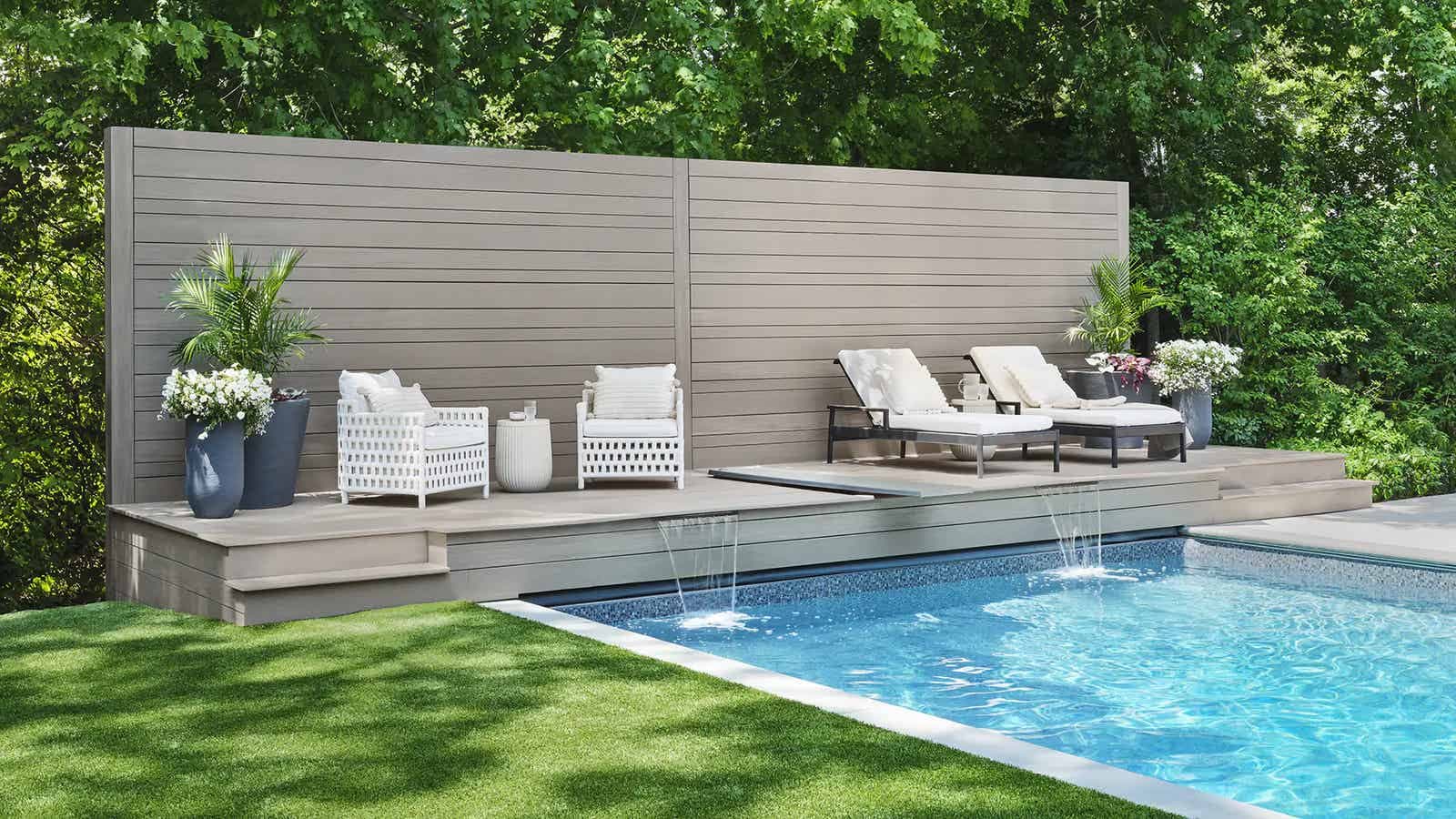
Why PVC Decking for Pool Terraces?
PVC decking is a 100% synthetic material, containing no wood fiber. This composition is a key factor for its suitability around pools. Unlike wood-based materials, PVC does not absorb water, making it resistant to swelling, staining, or rot when exposed to standing water, splash zones, or salt spray. This characteristic is particularly beneficial in a humid, coastal environment like Miami.
The waterproof core of PVC decking means it can withstand constant moisture without degrading. This makes it a default specification for areas where boards are expected to be wet frequently, such as pool surrounds and docks. Its resistance to moisture also contributes to its low-maintenance profile, as it sheds grease and wine and can be cleaned with soap and water.
Additionally, PVC decking is generally lighter than hardwood and some composite options, which can facilitate faster handling and installation, especially for larger projects or those with access challenges.
Understanding PVC Decking Profiles and Appearance
PVC decking is available in various collections, such as the TimberTech Azek line, which offers full PVC boards with advanced capping. These boards are designed to emulate the look of natural wood with deep textures and varied color options. Collections like Vintage, Landmark, and Harvest provide a range of aesthetic choices, allowing for design flexibility.
When planning a pool terrace, consider color options that are described as heat-mitigating. Lighter colors may absorb less heat, which can be a comfort factor for bare feet around a pool in direct sun. Verify the specific product's characteristics regarding heat retention.
Fascia boards and edge finishes are also important for a complete look, providing a clean transition around the pool's perimeter or at the edges of the deck. Ensure that these complementary components are available in matching or coordinating colors and finishes.
Installation Considerations for Poolside PVC Decking
While PVC decking is waterproof, proper installation is still crucial for longevity and performance. Adequate ventilation beneath the deck is important to prevent moisture buildup, even with a material that resists water absorption. This helps to maintain a stable environment for the deck structure.
Manufacturer-specified board spacing should be strictly followed to allow for thermal expansion and contraction, which can occur with temperature fluctuations, even in a warm climate. Using compatible hidden fasteners is often preferred for a clean, barefoot-friendly surface around a pool, though face-fastening options also exist. Always consult the specific product's installation guide for precise instructions on fastening and spacing.
Connecting PVC decking to surrounding elements like paving or landscaping requires careful planning to ensure proper drainage away from the deck surface and the pool area. This prevents water from pooling against the deck, which, while not damaging to the PVC itself, could affect the substructure or surrounding areas.
Maintenance and Cleaning for Pool Terrace Environments
PVC decking is designed for low maintenance. Its capped polymer surface is resistant to stains from common poolside spills like grease or wine, and it generally cleans easily with soap and water. This is a significant advantage for a pool terrace, where spills and splashes are frequent.
Regular cleaning helps to prevent the buildup of dirt, grime, and mildew, which can occur in humid environments. While PVC itself is resistant to rot, organic matter accumulation on the surface can still lead to discoloration if not addressed. Always refer to the manufacturer's specific cleaning instructions and recommended products to ensure compatibility and avoid damage to the decking surface.
Avoid using abrasive cleaners or tools that could scratch the surface. For stubborn stains, specialized deck cleaners formulated for PVC may be necessary. Always test any cleaning product on an inconspicuous area first.
Hypothetical Project Example: Miami Pool Terrace
Consider a hypothetical pool terrace project in Miami, FL, measuring 20 feet by 15 feet, surrounding an existing inground pool. The homeowner desires a durable, low-maintenance surface that can withstand the tropical climate and frequent pool use. They select a light-colored PVC decking board, 12 feet long and 5.5 inches wide, to help mitigate heat absorption.
To calculate the approximate number of boards needed, first determine the total deck area: 20 ft * 15 ft = 300 square feet. Each board is 12 feet long * (5.5 / 12) feet wide = 5.5 square feet. Dividing the total area by the area per board gives 300 / 5.5 54.55 boards. Accounting for cuts, waste, and a picture-frame border, it would be prudent to order approximately 60-65 boards to ensure sufficient material for the project, including any potential offcuts for shorter sections or repairs. This calculation is for area-equivalent coverage and does not account for specific layout patterns or waste. A detailed cut plan would be necessary to optimize material use.
The installation plan includes a substructure designed for adequate airflow beneath the deck, with joist spacing as specified by the PVC decking manufacturer. Hidden fasteners are chosen for a smooth surface. Fascia boards in a matching color are planned for the perimeter edges to create a finished look where the deck meets the pool coping and the surrounding landscape.
Before you order
- Confirm PVC decking manufacturer's specific guidelines for poolside applications.
- Verify heat-mitigating color options and their actual performance in direct sun.
- Plan for adequate ventilation beneath the deck structure.
- Select compatible fastening systems (e.g., hidden fasteners) for a smooth surface.
- Account for thermal expansion and contraction by following manufacturer's spacing recommendations.
- Choose matching or coordinating fascia and trim boards for a finished appearance.
- Review cleaning and maintenance instructions, including compatible products.
- Calculate material quantities, adding a buffer for cuts and waste.
- Consider the overall design and how the PVC decking will integrate with the pool and landscape.
Confirm installation details, approved uses and warranty terms in the current instructions for the exact product and profile. Your installer should verify the substrate, structure and applicable project requirements.
This is a planning guide for projects in Miami, FL. Ask our team to confirm availability, delivery to your ZIP code and which branch can support your order.
Questions to help you decide
Is PVC decking slippery when wet?
While PVC decking is designed for wet environments, its slip resistance can vary by product and finish. Many PVC decking products are engineered with textured surfaces to enhance traction. However, any surface can become slippery with standing water, algae, or certain contaminants. Always verify the specific product's slip resistance ratings and ensure proper cleaning to maintain traction. For poolside applications, consider textured finishes.
Can PVC decking be installed directly over concrete?
Installing PVC decking directly over concrete often requires a sleeper system or a subframe to provide proper ventilation and drainage beneath the deck boards. Direct contact with a solid surface like concrete without airflow can lead to moisture buildup, which, while not damaging to the PVC itself, can affect the substructure and potentially lead to issues like mildew. Consult the manufacturer's installation guide for approved methods over concrete or other solid surfaces.
How does PVC decking withstand the Miami sun?
PVC decking is manufactured with UV inhibitors to resist fading and degradation from sun exposure. Many products offer fade and stain warranties, reflecting their designed durability in sunny climates. However, like any outdoor material, some degree of weathering is natural over time. Selecting lighter, heat-mitigating color options can help reduce surface temperature in direct sunlight, enhancing comfort for bare feet.
Ready to Plan Your Miami Pool Terrace with PVC Decking?
Request a material quote with your project dimensions, desired PVC decking profile, and ZIP code. Our team can help confirm current availability and service options for your project.
Request a material quote →