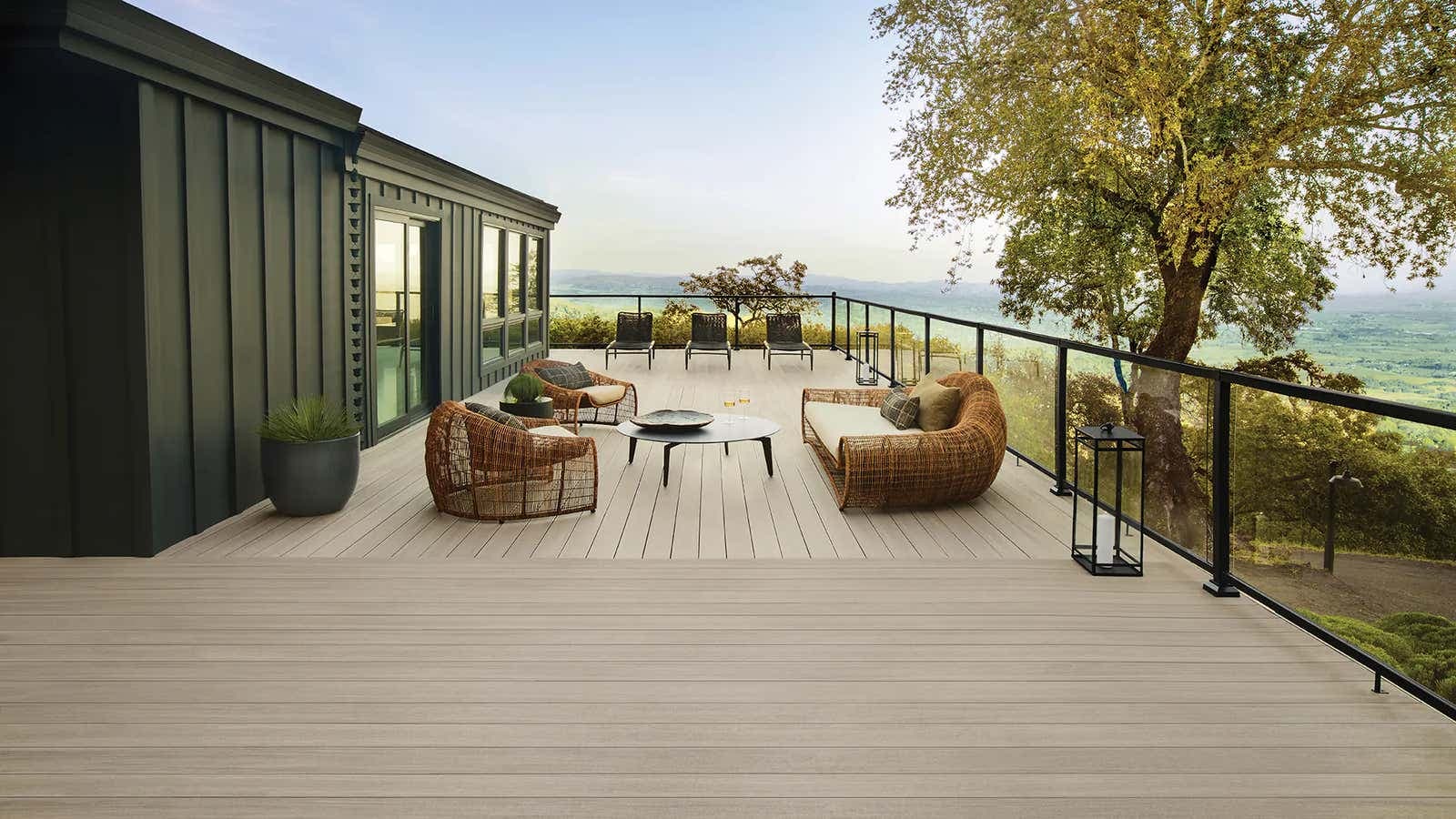
Understanding Your Compact Space: Balcony, Patio, or Terrace?
Before selecting composite decking, clarify the exact nature of your compact outdoor area. Is it a ground-level patio, a raised balcony, or a rooftop terrace? Each type presents distinct structural, drainage, and access considerations. Balconies and rooftop terraces often have weight restrictions and require careful planning for water runoff, while ground-level patios may need specific sub-grade preparation.
Consider the existing surface. Is it concrete, pavers, or an older deck frame? The foundation will dictate the complexity of your installation. For instance, composite decking can often be installed directly over a sound concrete slab with proper sleepers and ventilation, or it may require a new subframe if the existing surface is uneven or unsuitable. Verify local building codes and any homeowner association rules that might apply to your specific type of outdoor space in Miami.
Board Profiles and Dimensions for Small Footprints
Composite decking comes in various profiles and lengths. For compact spaces, selecting the right board dimensions is crucial to minimize waste and simplify installation. Shorter board lengths can be easier to transport and maneuver in tight areas, reducing the need for extensive cutting on-site.
Standard composite decking boards are typically available in lengths like 12, 16, or 20 feet. For a small balcony that might be 6 feet by 10 feet, using 12-foot boards could mean fewer cuts and less material to discard. Some manufacturers also offer thinner or narrower profiles, which might be aesthetically pleasing in a small space or easier to handle.
Consider the visual impact: a consistent board width can make a small space feel more expansive, while varying widths might introduce visual interest. Always verify the available profiles and lengths from brands like Trex, TimberTech, or Fiberon, as these can vary by collection.
Link: /decking/composite
Access and Logistics for Urban and Multi-Story Projects
One of the primary challenges for compact outdoor spaces, especially in urban Miami or on upper floors, is material delivery and job site access. Large, heavy bundles of decking can be difficult to move through narrow hallways, elevators, or stairwells. Planning for how materials will reach your project site is as important as the installation itself.
Discuss delivery options with your supplier. Some may offer smaller, more manageable bundles or specific delivery windows for urban environments. Consider if you have a service elevator, freight lift, or if manual carrying will be necessary. This logistical planning can influence your choice of board length and even the overall quantity ordered.
Confirm current lines, colors, and delivery timing with the local branch when requesting a quote. This ensures that the materials you choose are suitable not only for your design but also for practical delivery to your specific location.
Link: /contact-us
Ventilation and Drainage for Durability in Miami's Climate
Miami's humid climate makes proper ventilation and drainage critical for any deck, especially in compact spaces where airflow might be naturally limited. Capped composite decking, offered by brands like Trex, TimberTech, and Fiberon, is designed to shrug off humidity and resist moisture absorption.
Ensure that your deck design includes adequate spacing between boards for drainage and air circulation. Manufacturer guidelines for composite decking often specify minimum gaps between boards and between the decking and any adjacent structures. These gaps are essential to prevent moisture buildup, which can lead to mold or mildew, even with low-maintenance composite materials.
If installing over a concrete slab, using sleepers (joists) that elevate the decking off the surface is vital to allow water to drain and air to circulate underneath. Without proper ventilation, moisture can become trapped, potentially affecting the long-term performance and appearance of the decking. Always refer to the specific installation instructions for the chosen composite decking product.
Link: /decking/hardwood
Worked Example: A 7-Foot by 12-Foot Balcony Deck
Let's consider a hypothetical balcony project in Miami, measuring 7 feet wide by 12 feet long. The existing surface is a sound concrete slab, and the goal is to install composite decking that runs parallel to the 12-foot length.
For this project, standard composite decking boards, say 6 inches wide and 12 feet long, would be an efficient choice. Running the boards along the 12-foot dimension means no cuts are needed for length. For the 7-foot width, we need to determine how many 6-inch boards fit. Seven feet is 84 inches, and 84 inches divided by 6 inches per board equals 14 boards.
Therefore, we would need 14 boards, each 12 feet long. This minimizes waste significantly, as only the width needs to be precisely managed. If the balcony was, for example, 7 feet by 14 feet, using 16-foot boards would be more efficient, allowing for a 2-foot offcut that might be reusable for a shorter section or trim.
This example assumes standard board dimensions and a straightforward layout. More complex designs, such as diagonal patterns or picture-frame borders, would require more intricate cutting and potentially more material. Always add an allowance for cuts and potential errors, typically 5-10% extra material for standard layouts.
Maintenance and Longevity in a Compact Setting
One of the key advantages of composite decking, especially for compact spaces where access for extensive maintenance can be difficult, is its low-maintenance nature. Composite decking typically requires only an annual wash with soap and water to keep it looking good. This contrasts with hardwood decking, which may require yearly oiling, sanding, or staining.
Brands like Trex, TimberTech, and Fiberon offer composite decking with consistent color and grain, board after board, ensuring a uniform appearance that is easy to maintain. Many collections also offer cooler-underfoot options and capped shells that are designed to resist fading and staining.
For a compact space, the ability to simply wash the surface without needing heavy machinery or extensive cleanup is a significant benefit. This makes composite decking a practical choice for those seeking a durable, attractive outdoor surface with minimal upkeep.
Link: /decking/pvc
Before you order
- Verify local building codes and HOA rules for your specific compact space (balcony, patio, terrace).
- Measure your space accurately, considering both length and width for efficient board selection.
- Choose a composite decking profile and length that minimizes cuts and material waste.
- Plan for material delivery and job site access, especially for upper-story or urban projects.
- Ensure adequate ventilation and drainage are designed into your deck system, crucial for Miami's climate.
- Consider the aesthetic impact of board direction and width in your compact area.
- Confirm the low-maintenance requirements align with your lifestyle expectations.
- Request a material quote with exact dimensions, desired profile, and your project ZIP code.
Confirm installation details, approved uses and warranty terms in the current instructions for the exact product and profile. Your installer should verify the substrate, structure and applicable project requirements.
This is a planning guide for projects in Miami, FL. Ask our team to confirm availability, delivery to your ZIP code and which branch can support your order.
Questions to help you decide
Can composite decking be installed directly over an existing concrete patio?
Yes, composite decking can often be installed over a concrete patio, provided the concrete is sound, level, and has proper drainage. You will typically need to install sleepers (joists) on top of the concrete to create a subframe, which allows for air circulation and water runoff underneath the deck boards. This prevents moisture buildup and ensures the longevity of your decking. Always consult the manufacturer's specific installation guide for the product you choose.
How do I ensure proper drainage for a composite deck on a balcony?
For balconies, proper drainage is critical. Ensure the existing balcony structure has a slight slope away from the building to direct water. When installing composite decking, use a subframe system that elevates the boards, allowing water to flow freely underneath and off the balcony edge. Maintain recommended board spacing to facilitate surface drainage. Check local building codes and any condominium or building management regulations regarding drainage on balconies.
What are the best composite decking colors for a compact space in Miami's sun?
Lighter colors can sometimes help a compact space feel more open and expansive. Additionally, some composite decking manufacturers offer 'cooler-underfoot' options, which are designed to absorb less heat, making the deck more comfortable in Miami's intense sun. While color choice is largely aesthetic, considering heat absorption can enhance usability. Always review specific product features for heat performance.
Ready to Plan Your Miami Composite Decking Project?
Request a material quote with your project dimensions, desired composite decking profile, and project ZIP code. Our team can help confirm current availability and service options for your compact outdoor space.
Request a material quote →