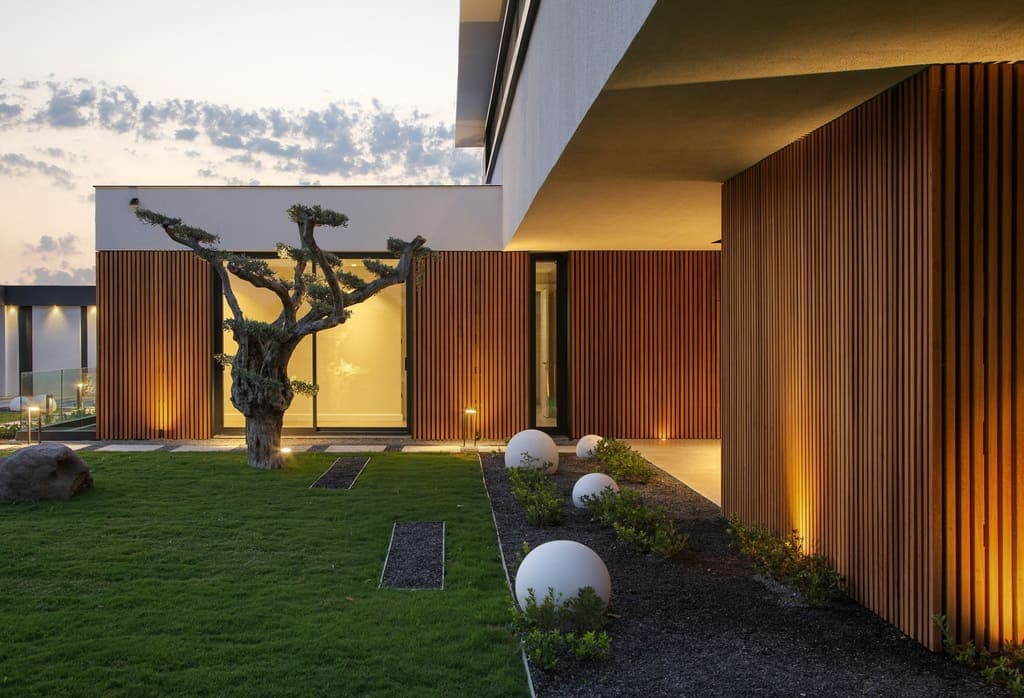
Understanding Thermally Modified Wood for Covered Walls
Thermally modified wood undergoes a high-heat treatment process that alters its cellular structure. This process aims to enhance the wood's stability and resistance to certain environmental factors. For covered patio walls, where direct exposure to rain and intense UV radiation is reduced, these properties are particularly advantageous.
The modification process generally results in a wood product that is less prone to shrinking and swelling due to changes in humidity, which can be beneficial in climates with seasonal shifts. This stability can contribute to a more consistent appearance over time, reducing the likelihood of board movement or warping on your patio walls.
While thermally modified wood is often used in fully exposed applications, its use on covered walls allows for a focus on its aesthetic qualities and dimensional stability, without the same level of concern for constant weathering. This can open up options for finishes and design details that might be less practical in fully exposed settings.
Selecting the Right Profile and Species
The profile of your thermally modified wood planks will significantly impact the visual appeal of your covered patio walls. Common profiles include tongue-and-groove, shiplap, and square-edge boards. Each creates a different shadow line and overall texture.
Tongue-and-groove profiles offer a tight, interlocking fit, which can be ideal for a clean, seamless look. Shiplap provides a distinct overlap, creating pronounced shadow lines that add depth and character. Square-edge boards, when installed with a consistent gap, can achieve a more open, slatted appearance.
Thermally modified wood is available in various species, with popular options including Thermally Modified Hemlock and Thermally Modified Spruce. These species, after modification, typically exhibit a rich, darker tone that can be further enhanced or altered with finishes. Consider the natural grain patterns and how they will complement your overall patio design.
Finishes and Appearance Considerations
While thermally modified wood naturally develops a silver-gray patina over time if left unfinished and exposed to UV light, for covered patio walls, you have more control over its long-term appearance. Applying a finish can help preserve the original color, enhance its natural tones, or introduce a new hue.
Clear protective oils or stains can deepen the wood's color while allowing the grain to show through. Pigmented stains can offer a broader range of colors, from natural wood tones to bolder statements. It's important to choose finishes that are suitable for exterior wood and compatible with thermally modified material.
Even on covered walls, some degree of UV exposure will occur. Regular cleaning and reapplication of finishes, as recommended by the manufacturer, will help maintain the desired look. For a low-maintenance approach, allowing the wood to naturally weather to a silver-gray can also be an attractive option, provided it aligns with your design vision.
Installation Planning and Substructure
Proper installation is crucial for the longevity and appearance of your thermally modified wood patio walls. The substructure needs to be sound, plumb, and adequately prepared to receive the cladding. This typically involves a framework of furring strips or blocking, creating a flat surface for attachment.
For covered walls, a rainscreen assembly might still be beneficial, even with reduced direct moisture exposure. This involves creating a small air gap behind the cladding, which allows for ventilation and helps manage any incidental moisture. Consult local building practices and manufacturer guidelines for specific spacing and attachment methods.
Fasteners should be corrosion-resistant and appropriate for the wood species and profile. Hidden fastening systems can provide a clean, fastener-free surface appearance, while visible fasteners, such as trim screws, can be part of the aesthetic. Always ensure fasteners are installed according to manufacturer recommendations to avoid splitting or damaging the wood.
Worked Example: Designing a 10x8 Foot Covered Patio Wall
Let's consider a hypothetical covered patio wall measuring 10 feet wide by 8 feet high. We'll use Thermally Modified Hemlock planks with a tongue-and-groove profile, each measuring approximately 5.5 inches wide (nominal 6-inch board) by 12 feet long. We aim for a horizontal installation.
First, calculate the total wall area: 10 ft * 8 ft = 80 square feet. The effective coverage width of each plank is 5.5 inches (0.458 feet).
For horizontal installation, the number of courses (rows) needed vertically is 8 feet / 0.458 feet/plank = approximately 17.47 planks. Since we can't use partial planks for a course, we'll need 18 full courses.
Each course is 10 feet long. Since our planks are 12 feet long, each plank can cover the 10-foot width of a single course. Therefore, for 18 courses, we would need 18 planks. However, it's good practice to account for cuts, waste, and future repairs by adding an overage, typically 10-15%.
For this example, a 10% overage would mean 18 planks * 1.10 = 19.8 planks. Round up to 20 planks to ensure sufficient material for cuts and waste. This calculation assumes minimal waste from cut ends, as the 12-foot planks can be cut to 10 feet with a 2-foot offcut, which might be too short for reuse in this specific wall but could be used for other small details if applicable. Always confirm exact dimensions and waste factors with your supplier.
This example provides a basic material quantity. Additional considerations include furring strips for the substructure, fasteners, and the chosen finish material.
Before you order
- Confirm the specific thermally modified wood species and profile (e.g., Tongue-and-Groove, Shiplap) suitable for vertical wall applications.
- Evaluate the level of cover for the patio wall: Is it fully sheltered from rain and direct sun, or partially exposed?
- Decide on the desired long-term appearance: natural weathering or a finished look (stain, oil)?
- Verify compatibility of chosen finishes with thermally modified wood and local climate conditions.
- Plan the substructure, including furring strips or blocking, ensuring adequate support and ventilation.
- Select appropriate corrosion-resistant fasteners, considering visible vs. hidden installation.
- Calculate material quantities, including an overage for cuts and waste.
- Consider detailing around any openings, corners, or transitions to other materials.
- Review manufacturer's installation guidelines for specific product requirements.
Confirm installation details, approved uses and warranty terms in the current instructions for the exact product and profile. Your installer should verify the substrate, structure and applicable project requirements.
This is a planning guide for projects in Manchester, NH. Ask our team to confirm availability, delivery to your ZIP code and which branch can support your order.
Questions to help you decide
Can thermally modified wood be painted for covered patio walls?
While thermally modified wood can be painted, many users choose to stain or oil it to highlight its natural grain and enhanced color. If painting, ensure the primer and paint system are specifically formulated for exterior wood and compatible with thermally modified material for best adhesion and longevity. Always follow the paint manufacturer's recommendations.
How do I maintain thermally modified wood on covered patio walls?
Maintenance for covered patio walls is generally less intensive than for fully exposed surfaces. Regular cleaning to remove dust, pollen, and cobwebs is usually sufficient. If a finish has been applied, periodic reapplication according to the manufacturer's instructions will be necessary to maintain its appearance and protective qualities. If left unfinished, the wood will naturally weather to a silver-gray patina, requiring minimal upkeep beyond cleaning.
Are there specific considerations for using thermally modified wood in a climate like Manchester, NH?
In climates with seasonal temperature and humidity fluctuations, such as Manchester, NH, the dimensional stability of thermally modified wood is a key advantage. It is less prone to the shrinking and swelling that can affect untreated wood. Ensure proper ventilation behind the cladding, even on covered walls, to manage any moisture and allow the wood to perform optimally through changing seasons. Always confirm that any chosen finish can withstand freeze-thaw cycles if the patio is not fully enclosed.
Ready to Plan Your Covered Patio Walls?
To begin your project with thermally modified wood, request a material quote. Provide your project dimensions, desired profile, and ZIP code to confirm current availability and service options for your Manchester, NH location. Our team can assist you in selecting the right materials for your covered patio walls.
Request a material quote →