Assessing Your Existing Deck Frame and Substructure
Before any hardwood decking is ordered, a critical first step is to thoroughly inspect your existing deck frame. This substructure is the foundation for your new decking and must be sound, level, and adequately supported. Look for any signs of rot, insect damage, or excessive movement in the joists, beams, and support posts. Even if the current decking is failing, the underlying structure might be salvageable.
Verify that the joist spacing is appropriate for the hardwood decking you plan to install. Hardwood, especially denser species, typically requires specific support to prevent sagging and ensure proper ventilation. Consult product specifications for recommended joist spacing, as this can vary by board thickness and species. If the existing spacing is too wide, you may need to add blocking or sister new joists to meet the requirements. Also, check for proper ledger board attachment to the house and ensure all fasteners are secure and free from corrosion.
Choosing Hardwood Species for Manchester's Climate
Manchester, NH, experiences a range of weather conditions, from humid summers to cold, snowy winters. Selecting a hardwood species that can withstand these environmental shifts is crucial for longevity. Tropical hardwoods are known for their natural density and resistance to rot, insects, and moisture, making them suitable for outdoor applications.
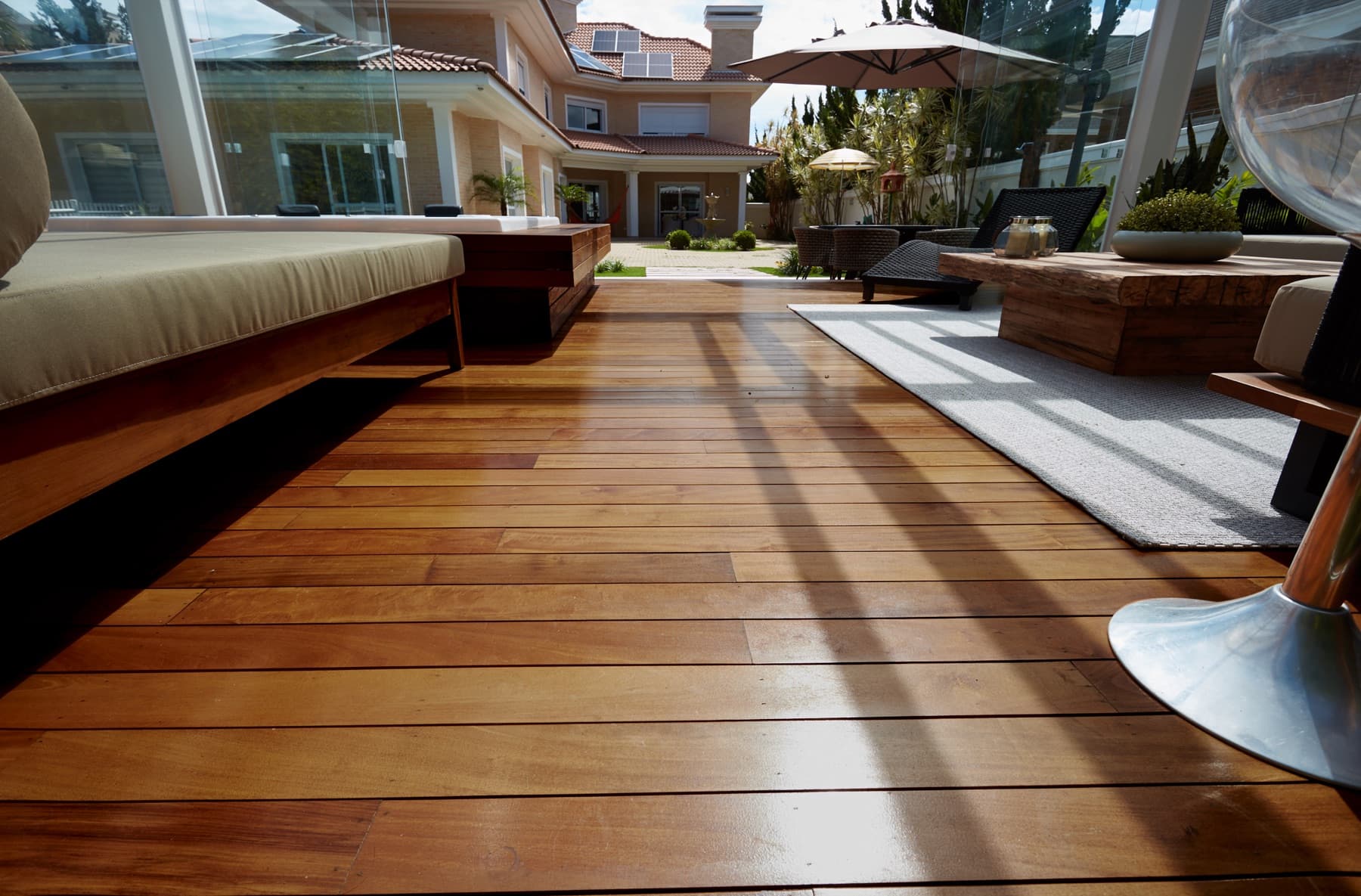
Ipe, also known as Brazilian Walnut, is a premium choice renowned for its exceptional durability and resistance to weathering, rot, and insects. It's often specified for demanding outdoor projects due to its density and long lifespan. Cumaru is another robust tropical hardwood, offering similar benefits with high durability and resistance to termites and weather changes. Both Ipe and Cumaru are noted for their natural oils, which contribute to their resistance to cracking and warping after moisture exposure. If left untreated, these hardwoods will weather to a silvery-gray patina, a common aesthetic choice that does not compromise their structural integrity.
Other options like Garapa, Tigerwood, Angelim, and Jatoba also offer distinct appearances and durability characteristics. Garapa, for example, is a value pick with a golden tone, while Tigerwood presents a dramatic figure. Consider the specific advantages of each species in relation to your project's exposure and desired maintenance level.
Lumber Plus offers a range of Brazilian hardwood decking species, including Ipe, Cumaru, Garapa, Tigerwood, Angelim, and Jatoba. Each species has unique characteristics regarding density, color, and resistance. These properties contribute to their suitability for outdoor applications in varying climates.
Planning for Ventilation and Drainage
Proper ventilation and drainage are vital for the longevity of any hardwood deck, especially in a renovation where existing conditions might be less than ideal. Hardwood needs air circulation to dry out evenly after rain or snowmelt, preventing moisture buildup that can lead to issues over time. Ensure there is adequate space between the decking boards for water to drain and for air to flow both above and below the deck surface.
If your existing deck is low to the ground, consider ways to improve airflow. This might involve adding perimeter skirting with vents or ensuring that the area beneath the deck is clear of debris and vegetation that could impede air circulation. For decks where water might pool, evaluate the slope of the joists and consider adding drainage solutions to direct water away from the structure.
Worked Example: Renovating a 10' x 12' Deck in Manchester
Let's consider a hypothetical renovation project for a 10-foot by 12-foot elevated deck in Manchester, NH. The existing deck boards are failing, but the pressure-treated lumber frame appears sound upon initial inspection.
Step 1: Frame Inspection. After removing the old decking, a detailed inspection reveals that all joists, beams, and posts are free from rot and insect damage. The ledger board is securely attached.
Step 2: Material Selection. The homeowner desires a durable, low-maintenance deck that will silver gracefully over time. They opt for Ipe hardwood decking, known for its longevity and natural resistance. They choose a standard 1x6 (nominal 5.5-inch actual width) profile.
Step 3: Quantity Calculation. The deck area is 10 ft x 12 ft = 120 square feet. To calculate the number of 1x6 boards needed, we first consider the coverage per linear foot. For a 10-foot width (120 inches), we need 120 / 5.625 = ~21.33 boards. Since we can't buy fractional boards, we'll need 22 boards running the 12-foot length. Therefore, 22 boards x 12 linear feet = 264 linear feet of Ipe. It is prudent to add 10-15% for cuts, waste, and future repairs, bringing the total to approximately 290-304 linear feet. We would then round up to the nearest available length combination. If 12-foot boards are available, 22 boards would suffice. If only 8-foot and 10-foot lengths are available, a cut plan would be needed to minimize waste, potentially requiring more total linear footage.
Hidden fasteners are chosen for a clean surface appearance. Appropriate hardware, such as stainless steel screws, is selected for attaching the ledger board (if replaced) and any new blocking, ensuring compatibility with the hardwood and local building codes.
This example highlights the need for precise measurements, adherence to product specifications, and a buffer for material acquisition in any renovation project.
Maintenance Considerations for Hardwood Decking
One of the advantages of hardwood decking is its relatively low maintenance, especially compared to some other decking materials. For species like Ipe and Cumaru, a simple annual wash is often sufficient to keep the deck clean. If you prefer to maintain the wood's original reddish-brown to olive-brown color, applying a UV-blocking sealer annually or bi-annually is recommended. Without a sealer, the wood will naturally weather to a soft silvery-gray patina, which many homeowners find appealing.
Regular cleaning helps prevent the buildup of dirt, mildew, and algae, which can compromise the deck's appearance and potentially contribute to premature wear. Ensure any cleaning products used are compatible with hardwood and follow the manufacturer's instructions. Avoid harsh chemicals or abrasive cleaners that could damage the wood surface. For specific product care, always refer to the decking manufacturer's guidelines.
Complementary Materials and Finishing Touches
A deck renovation is also an opportunity to enhance the overall outdoor living space. Consider complementary materials that will integrate with your new hardwood decking. For railings, options include coordinating hardwood balusters, sleek metal designs, or glass panels to maintain views. Hardwood fascia and trim pieces can provide a finished edge to the deck, concealing the substructure.
Think about lighting solutions, such as post-cap lights or recessed deck lighting, to extend the usability of your deck into the evening hours. Plan for any built-in seating, planters, or pergolas that will complete your outdoor oasis. Ensure all additional elements are structurally sound and appropriately fastened, considering the weight and design implications.
Before you order
- Thoroughly inspect existing deck frame for rot, insect damage, and structural integrity.
- Select a hardwood species suitable for Manchester's climate (e.g., Ipe, Cumaru for durability and weather resistance).
- Plan for adequate ventilation and drainage beneath the deck to prevent moisture buildup.
- Calculate exact linear footage needed, adding 10-15% for waste and cuts.
- Choose appropriate fasteners (hidden or face-fastened) and ensure compatibility with hardwood.
- Consider complementary elements like railings, lighting, and trim.
- Understand the maintenance requirements for your chosen hardwood species.
- Confirm current availability of desired profiles and lengths with Lumber Plus.
Confirm installation details, approved uses and warranty terms in the current instructions for the exact product and profile. Your installer should verify the substrate, structure and applicable project requirements.
This is a planning guide for projects in Manchester, NH. Ask our team to confirm availability, delivery to your ZIP code and which branch can support your order.
Questions to help you decide
Can I use my existing deck frame for hardwood decking?
You can, but it requires a thorough inspection. The existing frame must be structurally sound, free from rot or insect damage, and have appropriate joist spacing for the new hardwood. Hardwood decking often requires closer joist spacing than softer woods or composites due to its density. Any deficiencies in the frame must be addressed before installing new decking.
What is the best hardwood for a deck renovation in a climate like Manchester, NH?
For climates with significant temperature and moisture fluctuations, tropical hardwoods like Ipe and Cumaru are excellent choices. They are naturally dense and resistant to rot, insects, and warping. These species can withstand harsh winters and humid summers, providing a long-lasting and durable deck surface. Ipe is considered a benchmark for durability, while Cumaru offers similar benefits at a different price point.
How much maintenance does hardwood decking require after renovation?
Hardwood decking is generally low maintenance. An annual cleaning with soap and water is typically sufficient. If you wish to preserve the original color of the wood, applying a UV-blocking sealer or oil annually is recommended. Otherwise, hardwoods like Ipe and Cumaru will naturally weather to an attractive silvery-gray patina over time without affecting their structural integrity.
Ready to Transform Your Manchester Deck?
Request a material quote today. Provide your project dimensions, desired hardwood profile, and ZIP code to confirm current availability and service options for your hardwood decking renovation.
Request a material quote →