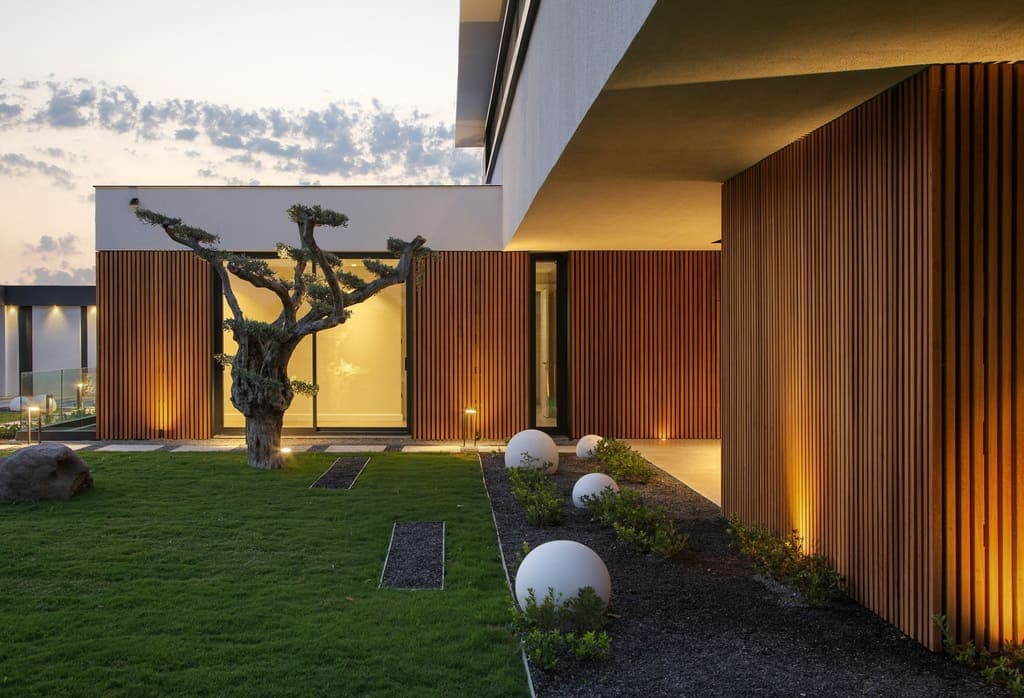
Understanding Thermally Modified Wood for Wall Applications
Thermally modified wood undergoes a high-temperature treatment process that alters its cellular structure. This process aims to enhance the wood's stability and reduce its tendency to expand and contract with changes in humidity. For covered patio walls, this stability can be particularly beneficial, helping to maintain the integrity and appearance of the installation over time.
While thermally modified wood is often considered for exterior siding, its suitability for covered walls lies in its consistent performance. It can be a good choice for areas where some exposure to ambient moisture is expected, but direct, driving rain is largely prevented by an overhang or roof structure. This controlled environment allows for a wider range of finish options and can contribute to a longer-lasting aesthetic.
It's important to confirm that the specific thermally modified wood product you choose is approved for vertical wall applications. Products like those from NORX, for example, offer profiles designed for cladding and siding, which can be adapted for covered patio walls.
Selecting Profiles and Species for Your Covered Patio Wall
The aesthetic of your covered patio wall is heavily influenced by the profile of the wood chosen. Common profiles include tongue-and-groove, shiplap, and square-edge boards. Each creates a different shadow line and visual texture.
Tongue-and-groove profiles offer a tight, interlocking fit, which can create a more uniform appearance. Shiplap profiles provide a distinctive overlap that casts a visible shadow line, adding depth. Square-edge boards can be installed with a gap for a more open, contemporary look, often used in rainscreen-style applications or with a dark backing for contrast.
Thermally modified woods are typically made from species like Ash or Poplar. Thermally modified Ash, for instance, often presents a richer, darker tone, while thermally modified Poplar can have a lighter, more consistent color. The choice of species can impact the natural color and grain pattern, which will be visible, especially if a clear or semi-transparent finish is applied. You can explore options like NORX Thermally Modified Ash or NORX Thermally Modified Poplar for these applications.
For a different aesthetic or performance characteristic, Maximo Accoya offers an alternative wood product with enhanced durability and stability, suitable for various outdoor applications, including wall cladding.
Finishing and Appearance Considerations
Thermally modified wood can be left unfinished to weather naturally, or it can be finished to preserve its initial color or alter its appearance. If left unfinished, the wood will gradually turn a silver-gray over time due to UV exposure, even in a covered area, though the process may be slower than on a fully exposed facade. This natural weathering can be a desirable aesthetic for many homeowners.
For those who prefer to maintain the wood's original color or introduce a specific hue, a penetrating oil finish or a semi-transparent stain can be applied. These finishes offer UV protection and can help to prevent the graying process. It's crucial to select a finish that is compatible with thermally modified wood and suitable for outdoor use. Regular maintenance, such as reapplication, will be necessary to sustain the finish's appearance and protective qualities.
Consider the overall design of your patio and home when choosing a finish. A darker finish can create a dramatic backdrop, while a lighter tone can brighten the space. The interaction of light and shadow on the chosen profile will also play a role in the final visual impact.
Attachment Methods and Substructure
Proper attachment is critical for the longevity and appearance of your covered patio walls. Thermally modified wood can be installed using either face fastening or concealed fastening systems, depending on the desired aesthetic and profile.
Face fastening involves driving screws or nails directly through the face of the board into the substructure. This method is generally straightforward and provides a strong hold, but the fasteners will be visible. Stainless steel fasteners are typically recommended to prevent staining the wood and ensure corrosion resistance.
Concealed fastening systems, often used with tongue-and-groove or specific shiplap profiles, hide the fasteners within the joinery, resulting in a cleaner, uninterrupted wood surface. These systems may use clips, specialized screws, or nails driven at an angle through the tongue or groove.
The substructure behind the thermally modified wood needs to be sound, level, and provide adequate support. This typically involves horizontal furring strips or a vertical strapping system, depending on the orientation of your wood panels. Ensuring proper ventilation behind the cladding is also important, even in covered areas, to allow for air circulation and moisture management. Consult product-specific installation guides for precise fastening and substructure requirements.
Hypothetical Project Example: Covered Patio Wall in Madison
Imagine a covered patio in Madison, WI, with an existing concrete slab and an overhead roof structure. The homeowner wants to clad a single, interior wall of this covered patio, measuring 10 feet wide by 8 feet tall. They envision a modern aesthetic with subtle shadow lines and a natural wood tone.
For this project, they select NORX Thermally Modified Ash, in a shiplap profile, with boards measuring 5.5 inches wide (nominal coverage, accounting for overlap). The goal is to apply a clear, UV-protective oil finish to maintain the wood's natural color.
To calculate the material needed for the 10-foot by 8-foot wall (80 square feet):
1. **Board Coverage:** Each 5.5-inch wide board provides 0.458 feet of vertical coverage (5.5 / 12).
2. **Number of Boards (Vertical):** To cover 8 feet vertically, approximately 8 feet / 0.458 feet/board = 17.46 boards are needed. Since boards are installed horizontally, this isn't directly applicable for length.
3. **Number of Boards (Horizontal):** For a 10-foot wide wall, if boards are installed horizontally, each board needs to be 10 feet long. To cover the 8-foot height, 8 feet / 0.458 feet/board = 17.46 courses are needed. Therefore, 18 boards, each 10 feet long, would be purchased to account for cuts and waste. This is 180 linear feet.
4. **Waste Factor:** It is prudent to add a waste factor, typically 10-15%, for cuts, mistakes, and potential future repairs. For 180 linear feet, an additional 10% would be 18 linear feet, bringing the total to 198 linear feet.
The homeowner would also need appropriate stainless steel fasteners for concealed attachment (if using a suitable profile) and furring strips for the substructure, spaced according to manufacturer guidelines for the specific wood profile. The clear oil finish would be applied after installation. This example assumes no window or door openings on the wall.
Before you order
- Confirm specific thermally modified wood product is approved for vertical wall applications.
- Select desired profile (tongue-and-groove, shiplap, square-edge) based on aesthetic goals.
- Choose wood species (e.g., Ash, Poplar) considering natural color and grain.
- Decide on finish: natural weathering or applied stain/oil for color retention/change.
- Plan attachment method: face fastening (visible) or concealed fastening (hidden).
- Design substructure (furring strips) to ensure proper support and ventilation.
- Calculate linear footage needed, including a waste factor (10-15% recommended).
- Source compatible stainless steel fasteners and chosen finish.
Confirm installation details, approved uses and warranty terms in the current instructions for the exact product and profile. Your installer should verify the substrate, structure and applicable project requirements.
This is a planning guide for projects in Madison, WI. Ask our team to confirm availability, delivery to your ZIP code and which branch can support your order.
Questions to help you decide
Can thermally modified wood be used on exterior walls in Madison, WI, that are not covered?
Yes, thermally modified wood is commonly used for fully exposed exterior siding and cladding. Its enhanced stability helps it perform well in various climates, including those with significant temperature and humidity fluctuations. For fully exposed applications, careful consideration of finishes and a robust rainscreen assembly are even more critical to manage moisture and UV exposure effectively. Always refer to specific product guidelines for exposed installations.
How does the Madison climate affect thermally modified wood on a covered patio wall?
While covered patio walls offer protection from direct weather, Madison's seasonal humidity changes can still affect wood. Thermally modified wood's increased stability helps mitigate swelling and shrinking compared to untreated wood, making it more resilient to these fluctuations. The primary benefit in a covered setting is reduced direct UV exposure and precipitation, which can help finishes last longer and slow the natural graying process if left unfinished.
What maintenance is required for thermally modified wood on covered patio walls?
Maintenance depends on whether the wood is finished or left to weather naturally. If left unfinished, occasional cleaning to remove dust or debris is generally sufficient. If a finish (like an oil or stain) is applied, reapplication will be necessary periodically to maintain its appearance and protective qualities. The frequency of reapplication will depend on the product, the degree of indirect exposure to UV and moisture, and the desired aesthetic. Always follow the finish manufacturer's recommendations.
Ready to Plan Your Covered Patio Wall Project?
Request a material quote with your project dimensions, desired wood profile, and ZIP code to confirm current availability and service options for thermally modified wood.
Request a material quote →