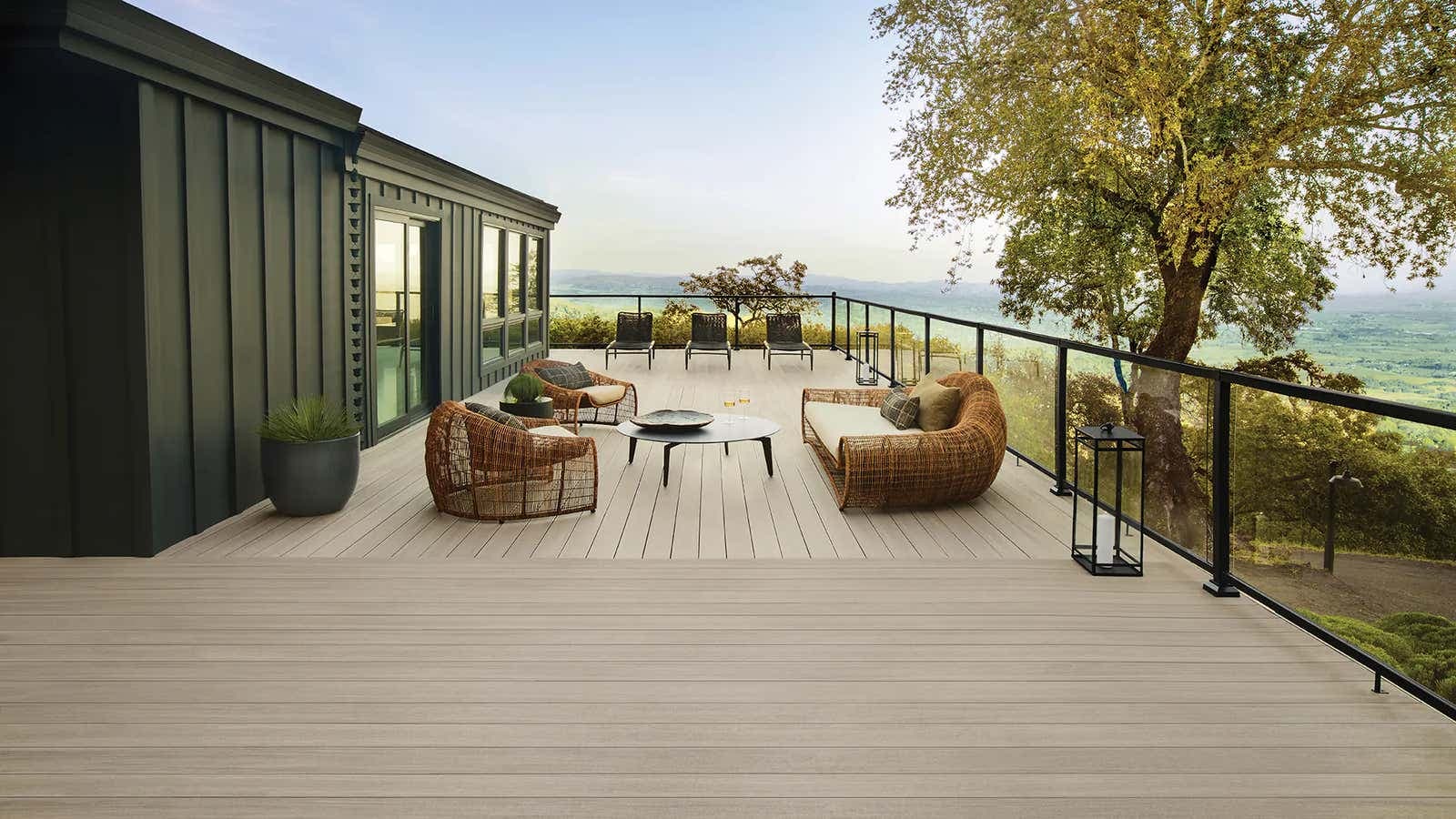
Maximizing Usable Space in Compact Areas
In a compact outdoor space, every inch matters. Composite decking can help maximize usable area through thoughtful design and material selection. Unlike some natural wood options that may require more frequent maintenance, composite decking's consistent finish and low upkeep mean less time spent on cleaning, sanding, or staining, freeing up your outdoor space for relaxation or entertaining. The uniform appearance of composite boards can also contribute to a sense of openness and order in a smaller area.
Consider board widths and lengths. While wider boards can sometimes make a space feel larger, very wide boards might require more cuts and generate more waste in a small, irregularly shaped area. Shorter board lengths, if available, can simplify handling and reduce cutting, particularly if access to the project site is restricted.
Understanding Composite Decking Collections and Profiles
Composite decking is available from various manufacturers, including Trex, TimberTech, and Fiberon, each offering distinct collections, colors, and profiles. These differences can influence the final look and feel of your compact deck.
Different collections may offer solid or scalloped profiles. Solid profiles often provide a more substantial feel and can be suitable for heavy-traffic areas, while scalloped profiles can be lighter. The surface finish, whether a wood-grain texture or a smoother, brushed look, will also impact the aesthetic. Many composite products feature a capped shell, which is designed to resist fading and staining, a useful feature for any deck exposed to the elements.
When considering a compact space, a consistent color and grain, board after board, can provide a cohesive look that visually expands the area. Some collections also offer cooler-underfoot options, which can be a benefit in sunny, enclosed spaces where heat can build up.
Support Details and Installation for Small Decks
Even for a compact deck, proper structural support is crucial. Composite decking requires a stable substructure, typically made of pressure-treated lumber or steel. The spacing of joists and beams must adhere to the manufacturer's specific guidelines for the chosen composite board, which can vary by collection and profile. Over-spanning joists can lead to deck failure and void warranties.
For smaller decks, especially those built close to the ground or on balconies, ventilation is a key consideration. Adequate airflow beneath the deck helps prevent moisture buildup, which can affect both the composite boards and the substructure. Ensure there is sufficient clearance and open space around the perimeter or through ventilation panels, as recommended by the manufacturer.
Hidden fastening systems are often used with composite decking, providing a clean, screw-free surface. These systems typically involve clips that secure the board to the joist while also providing the necessary spacing between boards for drainage and expansion. Face-fastening with color-matched screws is another option, particularly for perimeter boards or stairs.
Project Access and Logistics for Confined Sites
Compact outdoor spaces often come with restricted access, which can pose logistical challenges for material delivery and project execution. Before ordering, assess the path from the street to your project site. Will full-length decking boards (typically 12, 16, or 20 feet) be manageable to carry through gates, narrow walkways, or up stairs? If access is severely limited, consider whether shorter board lengths or a different delivery method might be necessary.
Storage on-site can also be an issue. Composite decking should be stored flat, off the ground, and protected from direct sunlight and moisture until installation. In a compact space, you may need to plan for staged deliveries or temporary off-site storage to avoid cluttering your small yard or obstructing pathways. Coordinate closely with your supplier regarding delivery timing and any specific access requirements for your Madison, WI project.
When planning, remember that many composite decking products are quoted by collection, color, profile, quantity, and project ZIP. Confirming these details early helps ensure a smooth ordering and delivery process.
Hypothetical Project Example: A 6x10 Foot Balcony Deck
Consider a hypothetical balcony in Madison, WI, measuring 6 feet wide by 10 feet long, where you want to install composite decking.
To cover the 6-foot width, you would lay boards parallel to the 10-foot length. Each 12-foot board could be cut to the 10-foot length, leaving a 2-foot offcut. This means you would need 13 boards to cover the width. Each of these 13 boards would be 10 feet long. If purchasing 12-foot boards, you would buy 13 boards, cut each to 10 feet, and have 13 reusable 2-foot offcuts (which might be used for fascia or other small details, depending on product guidelines).
This example illustrates how precise measurements and board dimensions directly influence material quantities and potential waste.
Before you order
- Measure your compact space precisely, noting any irregular shapes or obstructions.
- Evaluate access routes for material delivery and consider potential storage limitations.
- Research different composite decking collections (Trex, TimberTech, Fiberon) for aesthetic and profile options.
- Confirm manufacturer-specific requirements for joist spacing and ventilation.
- Decide on board width and length to minimize waste and optimize visual flow.
- Plan for fascia, trim, and any other finishing details to match your chosen decking.
- Request a material quote with exact dimensions, desired profile, and your project ZIP code.
- Verify current availability and service options for your chosen composite decking.
Confirm installation details, approved uses and warranty terms in the current instructions for the exact product and profile. Your installer should verify the substrate, structure and applicable project requirements.
This is a planning guide for projects in Madison, WI. Ask our team to confirm availability, delivery to your ZIP code and which branch can support your order.
Questions to help you decide
What are the maintenance requirements for composite decking in a compact space?
Composite decking generally requires minimal maintenance. An annual wash with soap and water is typically sufficient. Unlike wood, it does not require oiling, sanding, or staining. This low-maintenance aspect is particularly beneficial for compact spaces, as it means less disruption for upkeep.
Can composite decking be installed directly on the ground in a small yard?
No, composite decking, like most decking materials, should not be installed directly on the ground. It requires a proper substructure with adequate ventilation to prevent moisture accumulation and ensure structural integrity. Always follow the manufacturer's specific installation guidelines for ground clearance and substructure requirements.
Are there specific composite decking colors that work best for compact spaces?
Lighter colors can sometimes make a compact space feel more open and expansive, reflecting more light. However, the best color choice ultimately depends on your personal aesthetic preference and the surrounding environment. Consider samples in your actual space to see how the color interacts with natural light throughout the day.
Plan Your Compact Deck Project in Madison, WI
Ready to transform your compact outdoor area with composite decking? Request a material quote today. Provide your project dimensions, exact profile preferences, and ZIP code to confirm current availability and service options for your Madison, WI project.
Request a material quote →