Evaluating Your Existing Deck Frame
Before selecting new hardwood decking, a thorough inspection of your existing deck frame is crucial. This assessment determines if the current structure can adequately support the weight and demands of hardwood and if any repairs or upgrades are necessary. Look for signs of rot, insect damage, or structural instability in joists, beams, and support posts. Check for proper spacing between joists, as hardwood decking typically requires specific support to prevent sagging or movement. Local building codes may also dictate minimum joist sizes and spacing for new decking materials.
Hardwood species like Ipe and Cumaru are known for their density and durability, which also means they are heavier than some other decking materials. Ensure your existing frame is robust enough to handle this increased load. If the frame shows significant wear, or if joist spacing is too wide, reinforcement or partial reconstruction may be needed.
Choosing the Right Hardwood Species for Madison Weather
Madison's climate, with its cold winters and warm, humid summers, demands decking materials that can withstand significant temperature fluctuations and moisture exposure. Hardwood species like Ipe and Cumaru are well-suited for such conditions due to their natural resistance properties.
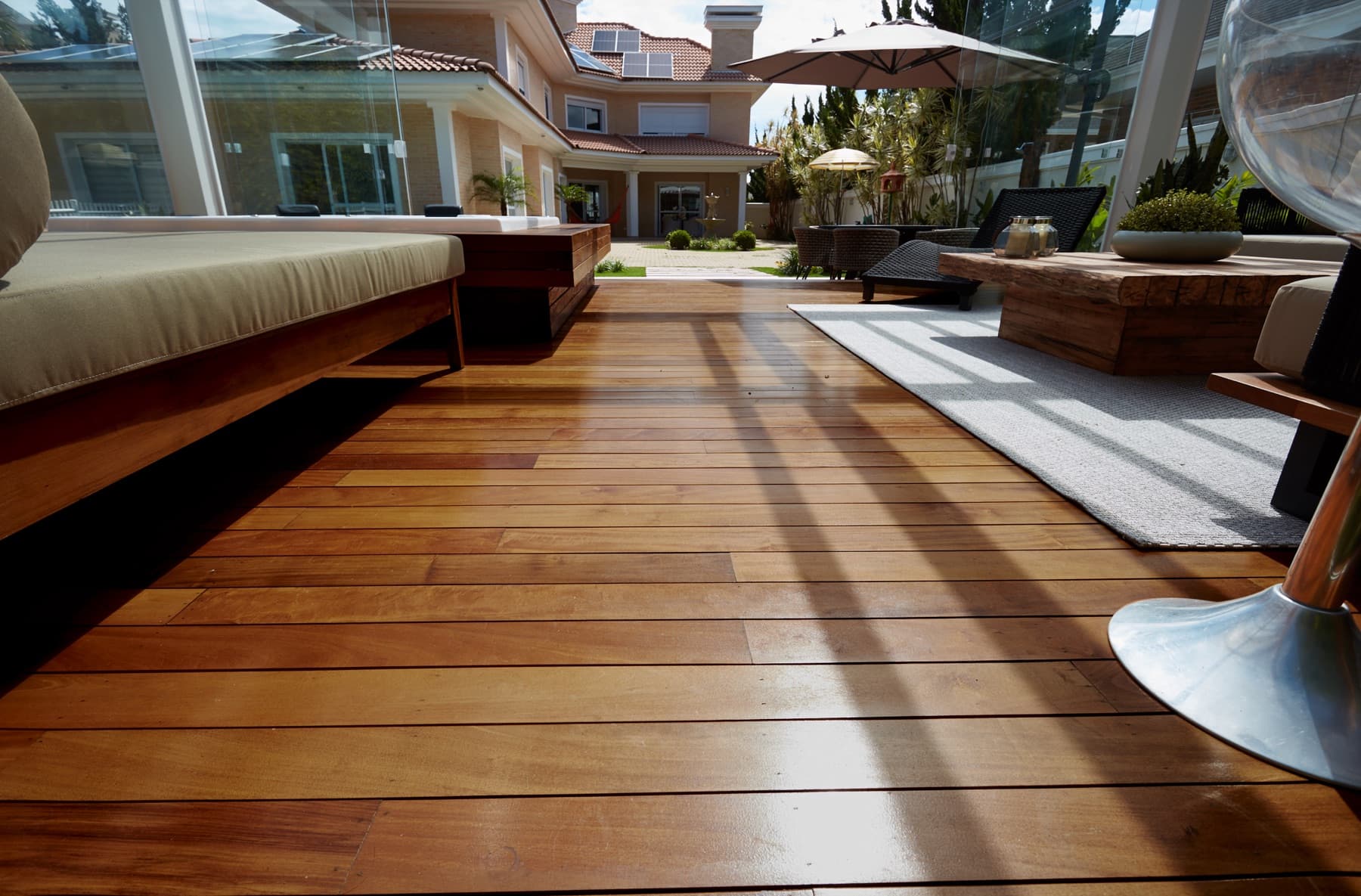
Ipe, also known as Brazilian walnut, is a dense hardwood known for its exceptional durability and resistance to rot, insects, and weather changes. It can last for decades with proper care and maintains minimal movement post-installation. Its color ranges from reddish-brown to olive-brown.
Cumaru is another very durable tropical hardwood. It offers stiffness, strength, and extreme hardness, along with natural resistance to insects, rot, and fungi. Cumaru is resistant to weather changes and has a Class A fire resistance. Both Ipe and Cumaru are considered marine-grade standards, making them suitable for environments with varying moisture levels. If left untreated, both species will naturally weather to a silvery-gray patina; applying a UV-blocking sealer can help preserve their original color.
For a more budget-conscious option that still offers good performance, Garapa presents a golden tone. Tigerwood is another option for those seeking a dramatic grain figure.
Planning for Ventilation and Drainage
Proper ventilation and drainage are critical for the longevity of any deck, especially when using hardwood in a renovation. Adequate airflow beneath the deck helps prevent moisture buildup, which can lead to issues like mold, mildew, and potential rot, even in naturally resistant hardwoods. Ensure there is sufficient space between the decking boards and that the area beneath the deck allows for air circulation.
Consider the ground conditions beneath your deck. If the area is prone to standing water, improving drainage with grading or a gravel base can be beneficial. These measures work in conjunction with the natural resistance of hardwoods to create a healthier environment for your deck structure.
Hardwood Decking Profiles and Fastening Options
Hardwood decking is available in various profiles and lengths. Common dimensions can range from 1"x2" up to 6"x6" in lengths from 3 to 24 feet, though specific availability may vary. Choosing the right profile depends on your design aesthetic and structural requirements.
For fastening, you generally have two main options: visible face-fastening or hidden fastening systems. Face-fastening involves screwing through the top surface of the board into the joists, which is a secure method but leaves screw heads visible. Hidden fastening systems use clips or fasteners that attach to the sides of the boards, creating a smooth, unblemished surface. The choice often comes down to desired appearance and installation preference.
Worked Example: Renovating a 10x12 Foot Deck
Let's consider renovating a hypothetical 10-foot by 12-foot deck, replacing existing boards with 5/4" x 6" Ipe decking.
First, calculate the deck area: 10 ft * 12 ft = 120 square feet. For 5/4" x 6" (nominal) Ipe boards, the actual width is closer to 5.5 inches. To estimate the number of boards needed, we'll consider the linear footage. A 10-foot width would need approximately (10 ft * 12 in/ft) / 5.5 in/board = 21.8 boards. Since boards are purchased in full lengths, and we want to cover 12 feet, we'd likely use 12-foot length boards. So, 22 boards * 12 feet/board = 264 linear feet.
It's recommended to add 10-15% for waste, cuts, and future repairs. For this example, let's add 15%: 264 linear feet * 1.15 = 303.6 linear feet. You would round up to the nearest full board length available. If 12-foot lengths are available, you'd purchase 26 boards (312 linear feet).
Additionally, consider any fascia or trim boards you might need for the perimeter. For a 10x12 deck, you would need perimeter boards for (10+10+12+12) = 44 linear feet, plus waste. This example assumes a simple rectangular layout; more complex designs with diagonal patterns or picture-frame borders would require more detailed calculations and potentially higher waste factors.
Maintenance Considerations for Hardwood Decking
Hardwood decking, particularly species like Ipe and Cumaru, is known for being low maintenance. A simple wash once a year is generally sufficient to keep the deck clean. If you prefer to maintain the original rich brown color of the wood, an annual application of a UV-blocking oil or sealer is recommended. If left untreated, the wood will naturally weather to a beautiful silvery-gray patina, which does not impact its structural integrity.
Regular cleaning helps prevent the buildup of dirt, leaves, and other debris that can trap moisture and potentially lead to staining or biological growth. Always follow the specific maintenance guidelines for your chosen hardwood species and any applied finishes.
Before you order
- Inspect existing deck frame for rot, insect damage, and structural integrity.
- Determine if frame reinforcement or repair is needed to support hardwood's density.
- Choose a hardwood species (e.g., Ipe, Cumaru) suitable for Madison's climate.
- Decide on desired wood color retention (oil for brown, allow to silver naturally).
- Plan for proper ventilation and drainage beneath the deck.
- Select preferred decking profile and fastening method (face-fasten or hidden).
- Calculate linear footage needed, including waste factor for cuts and future repairs.
- Consider fascia or trim boards for the deck perimeter.
Confirm installation details, approved uses and warranty terms in the current instructions for the exact product and profile. Your installer should verify the substrate, structure and applicable project requirements.
This is a planning guide for projects in Madison, WI. Ask our team to confirm availability, delivery to your ZIP code and which branch can support your order.
Questions to help you decide
How long does hardwood decking last in Madison's climate?
With proper installation and minimal care, high-density hardwoods like Ipe can last up to 75 years, and Cumaru over 25 years. Their natural resistance to rot, insects, and weather changes makes them well-suited for Madison's varied climate, significantly outlasting many other decking materials.
Can I install hardwood decking myself?
While it is possible, installing hardwood decking, especially dense species like Ipe, often requires specialized tools and techniques. Professional installation is generally recommended to ensure correct fastening, proper board spacing for expansion and contraction, and a durable, aesthetically pleasing finish. Mistakes during installation can compromise the deck's longevity.
What is the primary difference between Ipe and Cumaru for a renovation?
Both Ipe and Cumaru are excellent, durable choices for hardwood decking. Ipe is often considered the benchmark for extreme longevity and hardness, with a slightly higher Janka rating and lifespan. Cumaru offers similar benefits in terms of durability and resistance but may be a more cost-effective option while still providing a very long service life and a distinct cinnamon-vanilla scent when worked.
Start Your Hardwood Deck Renovation in Madison, WI
Ready to upgrade your deck with the lasting beauty and durability of hardwood? Request a material quote for your project. Provide your project dimensions, desired hardwood profile, and ZIP code to confirm current availability and service options.
Request a material quote →