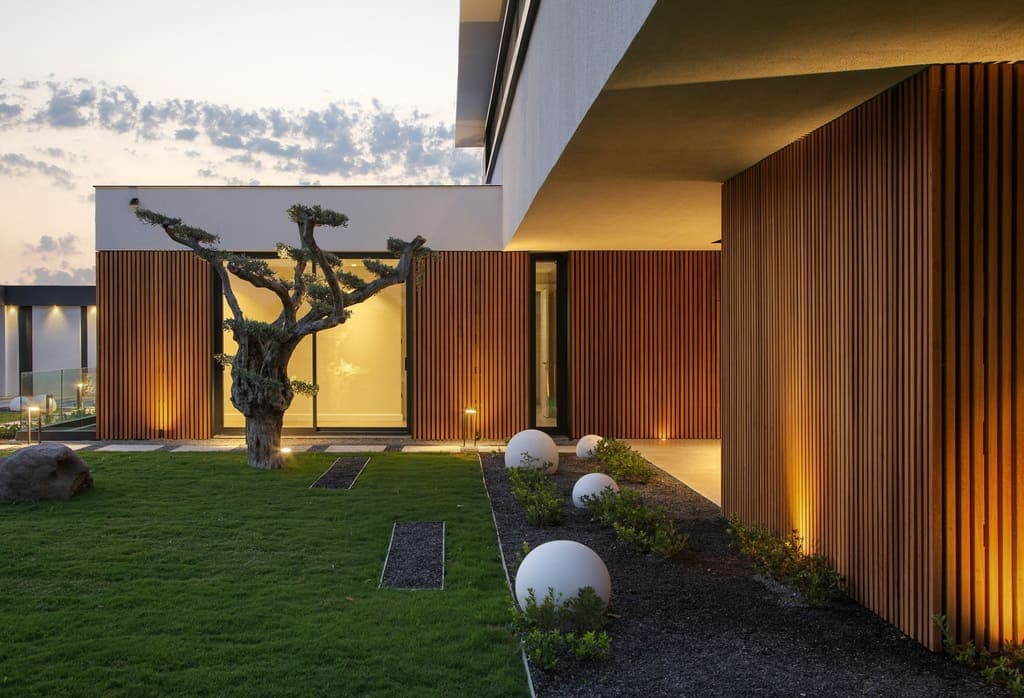
Understanding Thermally Modified Wood for Wall Applications
Thermally modified wood undergoes a high-heat treatment process that alters its cellular structure. This process aims to reduce the wood's ability to absorb moisture, which can enhance its dimensional stability and resistance to certain environmental factors. For covered patio walls, this means less susceptibility to expansion, contraction, and potential issues often associated with moisture exposure.
While thermally modified wood offers improved characteristics, it is important to remember that it is still wood. It will naturally weather over time, developing a silvery-gray patina if left unfinished. The specific species and modification process can influence its final appearance and performance. Products like NORX Thermally Modified Wood are designed with exterior applications in mind, offering a range of profiles suitable for vertical installation.
When considering thermally modified wood for covered patio walls, verify that the chosen profile is approved for vertical, non-structural wall cladding. Common profiles include tongue-and-groove, shiplap, and square-edge boards, each offering different aesthetic and installation characteristics.
Planning for Juneau's Climate: Covered vs. Exposed
Juneau's climate, characterized by significant precipitation and temperature fluctuations, makes material selection for outdoor structures critical. For covered patio walls, the 'covered' aspect is key. While the wood is shielded from direct rain and snow, it will still experience ambient humidity and temperature changes.
This reduced direct exposure means that certain finishes may last longer than on fully exposed facades. However, proper ventilation behind the wall cladding remains crucial to prevent moisture accumulation and allow the wood to acclimate. The specific design of your covered patio, including roof overhangs and wall placement, will influence the degree of protection and, consequently, the long-term performance and appearance of the wood.
Consider the prevailing wind patterns in Juneau; even under a cover, wind-driven moisture or mist could reach the wall surface. Planning for adequate air circulation behind the cladding helps manage moisture and supports the wood's stability.
Selecting Profiles and Finishes for Aesthetic and Performance
The choice of profile significantly impacts the visual style of your patio walls. Tongue-and-groove profiles, for example, create a tight, interlocking surface that can offer a clean, contemporary look. Shiplap profiles provide distinct shadow lines and a more traditional appearance. Square-edge boards can be installed with a visible gap for a slatted, open feel.
For finishes, thermally modified wood can be left unfinished to age naturally, or it can be coated with an exterior-grade stain or oil. If you choose to apply a finish, select one designed for thermally modified wood, as its altered structure may interact differently with some coatings. A finish can help maintain the wood's initial color and offer an additional layer of protection against UV rays, even in a covered setting. However, any finish will require periodic reapplication.
Consider the overall design of your patio and home. A darker stain might create a cozy, enclosed feeling, while a lighter, natural oil could enhance the wood's inherent grain and brighten the space. The NORX product line includes various profiles that can be suitable for vertical applications, offering flexibility in design.
Installation Best Practices for Covered Patio Walls
Proper installation is vital for the longevity and appearance of thermally modified wood walls. Ensure the substructure is sound, level, and provides adequate ventilation. A rainscreen assembly, even in a covered area, can be beneficial by creating an air gap between the cladding and the structural wall, promoting drainage and airflow. This is especially relevant in Juneau's humid environment.
Use appropriate fasteners designed for exterior wood applications, such as stainless steel screws, to resist corrosion and minimize staining. Fasten boards securely, following manufacturer recommendations for spacing and attachment points. While thermally modified wood is dimensionally stable, some movement can still occur, so avoid over-tightening fasteners.
Carefully plan for corners, edges, and transitions to other materials. Meticulous detailing here not only enhances the aesthetic but also helps protect the wood from potential moisture intrusion. Always refer to the specific installation guidelines provided by the manufacturer for the chosen thermally modified wood product.
Hypothetical Project Example: Covered Patio Wall in Juneau
Imagine a covered patio in Juneau, measuring 12 feet wide by 8 feet deep, with one long wall (12 feet) and one short wall (8 feet) designated for thermally modified wood cladding, both under the patio roof. The walls are 8 feet high. The total linear footage of wall to be clad is 12 + 8 = 20 feet. The total area is (12 ft + 8 ft) * 8 ft = 160 square feet.
Let's assume we select a NORX Thermally Modified Wood shiplap profile, with a 5.5-inch (0.458 ft) face coverage per board. To calculate the number of boards needed, we first find the total linear feet of board required. For a 160 sq ft area, with 0.458 ft coverage per board, we need 160 sq ft / 0.458 ft = 349.34 linear feet of coverage.
If the boards are supplied in 12-foot lengths, we would need 349.34 linear feet / 12 linear feet/board = 29.11 boards. Rounding up to the nearest full board, 30 boards would be purchased. This calculation does not account for waste from cuts or pattern matching, so it is advisable to add an additional 10-15% for waste, bringing the total to approximately 33-35 boards.
For this project, the homeowner opts for a clear exterior oil finish to highlight the natural grain, reapplying it every two to three years based on visual inspection and product guidelines. The installation includes a furring strip system to create a rainscreen gap, ensuring proper ventilation behind the shiplap.
Before you order
- Verify the thermally modified wood profile is approved for vertical wall cladding.
- Assess the degree of cover and exposure to Juneau's specific weather conditions.
- Choose a finish (or none) considering natural weathering and maintenance expectations.
- Plan for a robust substructure and adequate ventilation behind the cladding.
- Select appropriate corrosion-resistant fasteners.
- Account for waste in material calculations (typically 10-15%).
- Review manufacturer's installation guidelines for specific product details.
Confirm installation details, approved uses and warranty terms in the current instructions for the exact product and profile. Your installer should verify the substrate, structure and applicable project requirements.
This is a planning guide for projects in Juneau, AK. Ask our team to confirm availability, delivery to your ZIP code and which branch can support your order.
Questions to help you decide
Can thermally modified wood be painted?
While thermally modified wood can be painted, it is often chosen for its natural wood aesthetic. If painting is desired, select an exterior-grade primer and paint system compatible with thermally modified wood. Always test a small, inconspicuous area first to ensure adhesion and appearance.
Does thermally modified wood require regular maintenance?
The level of maintenance depends on whether the wood is finished or left to weather naturally. If left unfinished, it will develop a silvery-gray patina and requires minimal maintenance beyond occasional cleaning. If a finish is applied, periodic reapplication will be necessary to maintain its appearance and protective qualities, typically every 1-5 years depending on the product and exposure.
Is thermally modified wood suitable for all outdoor wall applications?
Thermally modified wood is well-suited for many outdoor wall applications, particularly in covered or semi-exposed areas due to its enhanced stability. However, its suitability for fully exposed, high-impact, or structural applications depends on the specific product, species, and local building codes. Always confirm the product's intended use and consult with a professional for structural considerations.
Request a Quote for Your Juneau Covered Patio Walls
Ready to enhance your Juneau covered patio with thermally modified wood? Request a material quote by providing your project dimensions, desired profile, and ZIP code. We can confirm current availability and service options to help you get started on your project.
Request a material quote →