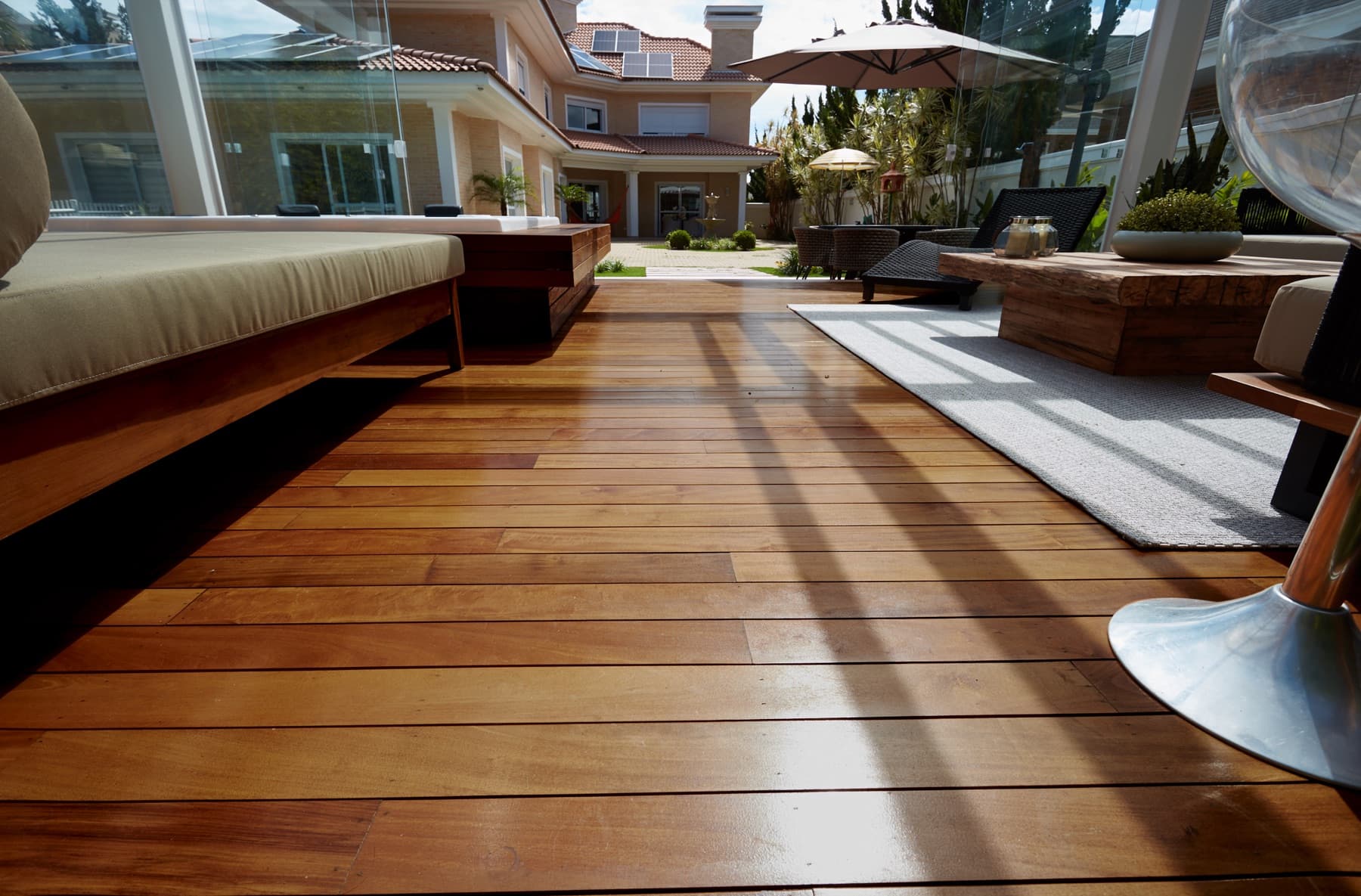
Assess Your Existing Deck Frame and Footings
The foundation of any successful deck renovation is a sound existing structure. Before any new decking material is ordered, a qualified professional should inspect your deck's frame, joists, beams, and footings. Look for signs of rot, insect damage, or structural weakness. In Juneau's climate, moisture exposure can be a significant factor, so particular attention should be paid to areas where water may collect or where wood is in contact with the ground or concrete.
Verify that the existing frame is level, square, and robust enough to support the new decking material. Hardwood decking, such as Ipe or Cumaru, is denser and heavier than many other decking options, including treated pine or some composites. This increased weight must be accounted for by the underlying structure. If the frame shows any compromise, repairs or reinforcements may be necessary before proceeding with new decking. This initial assessment can prevent costly issues down the line and ensure the safety and longevity of your renovated deck.
Understanding Hardwood Decking Characteristics
Hardwood decking, particularly tropical species like Ipe and Cumaru, offers distinct advantages for outdoor applications. These woods are known for their natural density and resistance to rot, insects, and decay, often without the need for chemical treatments. This inherent durability makes them a compelling choice for areas with significant moisture exposure, like Juneau, AK.
Ipe, also known as Brazilian walnut, is a benchmark hardwood, recognized for its exceptional strength and a lifespan that can extend for decades with proper care. It exhibits minimal movement post-installation and is resistant to weather changes, mold, and termites. Its color ranges from reddish-brown to olive-brown.
Cumaru is another very durable tropical hardwood. It is resistant to termites and weather changes, offering stiffness, strength, and extreme hardness. It features a Class A fire resistance rating.
Both Ipe and Cumaru can be maintained to retain their rich, natural color with occasional cleaning and oiling, or they can be allowed to weather to a silvery-gray patina, which does not affect their structural integrity.
Material Selection: Ipe vs. Cumaru for Juneau Projects
When considering hardwood decking for a renovation in Juneau, Ipe and Cumaru are two prominent choices, each with specific attributes. Your decision will depend on factors like budget, desired aesthetic, and long-term maintenance preferences.
Ipe is often considered the premium choice due to its exceptional durability and longevity. It is a dense, strong wood with a consistent reddish-brown to olive-brown color. Ipe is highly resistant to warping after moisture exposure, and its natural oils protect it from cracking. This makes it particularly well-suited for Juneau's variable weather, where moisture is a constant consideration.
Cumaru provides a very durable alternative, offering similar resistance to termites and weather changes. While slightly less dense than Ipe, it still delivers excellent stiffness and hardness. Cumaru's color palette can vary, often featuring golden-brown to reddish-brown tones. It offers a balance of performance and value, making it an attractive option for many renovation budgets.
Both species are well-suited for coastal environments and areas with significant precipitation. The choice often comes down to the specific shade and grain pattern you prefer, alongside your project's budget.
Planning for Ventilation and Drainage
Proper ventilation and drainage are critical for the longevity of any deck, especially in a humid climate like Juneau. For a renovation project, assess if your existing deck design allows for adequate airflow beneath the deck boards and around the joists. Stagnant moisture can accelerate decay, even in naturally resistant hardwoods.
Ensure there is sufficient clearance between the ground and the underside of your deck. If your deck is low to the ground, consider adding vents or lattice to promote cross-ventilation. Proper spacing between deck boards is also essential for water runoff. While hardwood decking is naturally resistant to moisture, standing water should be avoided to prevent mildew or staining. Review the manufacturer's recommendations for board spacing to ensure optimal performance.
Calculating Material Needs: A Hypothetical Example
Let's consider a hypothetical deck renovation project in Juneau. Suppose you have an existing deck frame measuring 12 feet by 16 feet, and you plan to replace the decking surface with Ipe boards. You decide on 1x6 (nominal size) Ipe boards, which typically have an actual width of 5.5 inches.
First, calculate the total square footage: 12 feet * 16 feet = 192 square feet. To cover this area with 5.5-inch wide boards, you'll need approximately 2.18 boards per linear foot of deck width (12 feet * 12 inches/foot / 5.5 inches/board). This means for a 16-foot length, you'd need about 35 linear feet of board per foot of deck width. Total linear footage would be roughly 192 square feet * (12 inches/foot / 5.5 inches/board) = 418.9 linear feet. However, due to cuts, waste, and the need for full boards, it's prudent to add 10-15% for waste. For this example, let's use a 15% waste factor.
418.9 linear feet * 1.15 (waste factor) = approximately 482 linear feet of Ipe boards. Since Ipe is available in lengths from 3 to 24 feet, you would then determine the most efficient combination of lengths to minimize waste for your specific layout. For instance, using mostly 12-foot or 16-foot lengths would be efficient for a 12x16-foot deck. This simplified example assumes a straightforward layout; more complex designs like diagonal patterns or picture-frame borders will require more detailed takeoff calculations.
Remember, this is an illustrative example. Always measure your specific project dimensions accurately and consult with your supplier for precise quantities and to confirm current product availability and profiles. You may also need additional material for fascia, stair treads, or other trim elements.
Before you order
- Have I had my existing deck frame, joists, and footings professionally inspected for structural integrity?
- Is the existing frame capable of supporting the increased weight of hardwood decking?
- Have I confirmed local building codes and renovation requirements for Juneau, AK?
- Which hardwood species (Ipe, Cumaru, etc.) best fits my aesthetic preferences and budget?
- Have I considered the long-term maintenance requirements for my chosen hardwood?
- Is there adequate ventilation and drainage beneath the existing deck structure?
- Have I accurately measured my deck dimensions and calculated material quantities, including waste factor?
- Do I have a plan for fasteners (hidden vs. face-fastened) and any necessary trim pieces?
- Have I obtained a material quote that includes exact profiles, lengths, and delivery options to Juneau, AK?
Confirm installation details, approved uses and warranty terms in the current instructions for the exact product and profile. Your installer should verify the substrate, structure and applicable project requirements.
This is a planning guide for projects in Juneau, AK. Ask our team to confirm availability, delivery to your ZIP code and which branch can support your order.
Questions to help you decide
How does Juneau's climate affect hardwood decking?
Juneau's climate, characterized by significant rainfall and humidity, makes the natural resistance of hardwoods like Ipe and Cumaru particularly beneficial. These woods are inherently resistant to rot, mold, and insects, which are common concerns in moist environments. Proper ventilation and drainage are still crucial to maximize their lifespan.
Can I install hardwood decking myself in Juneau?
While it is possible to install hardwood decking yourself, species like Ipe and Cumaru are very dense and require specialized tools and techniques. Professional installation is often recommended, especially for renovation projects where integrating new material with existing structures can be complex. Consulting with an experienced installer can ensure proper techniques and a quality finish.
What maintenance is required for hardwood decking in Juneau?
Hardwood decking requires relatively low maintenance. A wash once a year is typically sufficient. If you wish to preserve the original reddish-brown or olive-brown color, an annual application of a UV-blocking sealer or oil is recommended. If left untreated, the wood will naturally weather to a silvery-gray patina, which does not impact its structural integrity or durability.
Ready to Plan Your Hardwood Deck Renovation in Juneau?
Request a material quote today with your project dimensions, desired hardwood profile, and ZIP code. Our team can help confirm current availability and service options for your Juneau, AK project.
Request a material quote →