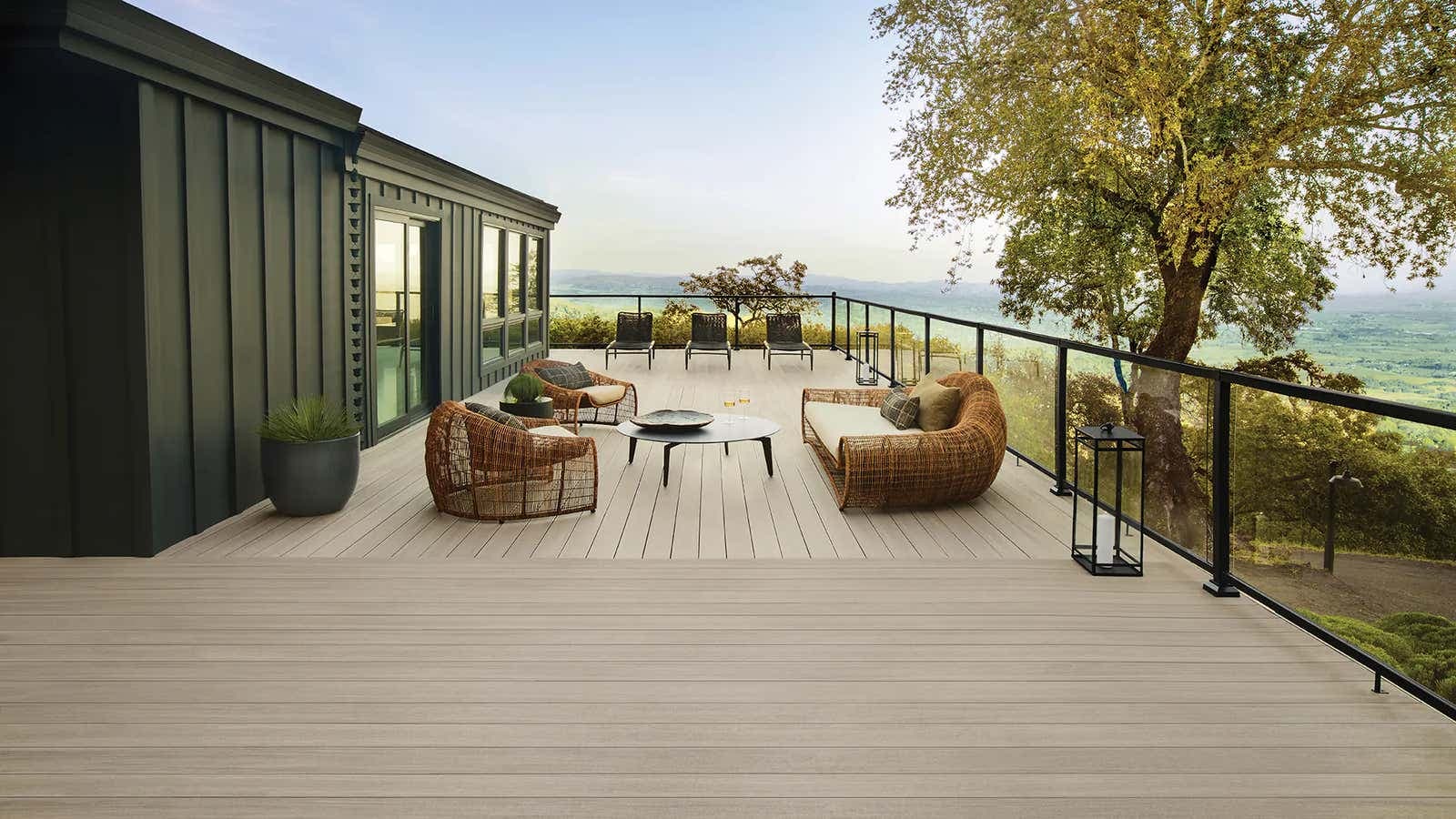
Evaluating Your Compact Outdoor Space
Before selecting any materials, assess the specific characteristics of your compact outdoor area. Consider its dimensions, sun exposure, proximity to existing structures, and potential for water drainage. For instance, a north-facing balcony in Juneau will have different light and moisture considerations than a small, south-facing patio. Understanding these factors will inform your choice of decking material and design.
Think about how you intend to use the space. Is it for a small bistro set, a reading nook, or a place for container gardening? The intended function will influence the required deck size, layout, and even the type of furniture or accessories you can comfortably incorporate. Compact spaces benefit from multi-functional design, where elements can serve more than one purpose.
Why Choose Composite Decking for Juneau's Climate?
Composite decking is engineered to withstand various environmental conditions, making it a suitable choice for Juneau's climate, which often features significant rainfall and humidity. Manufacturers like Trex, TimberTech, and Fiberon produce composite boards that resist moisture absorption, a key factor in preventing issues like rot, warping, and mildew in damp environments.
The low-maintenance aspect of composite decking is another significant advantage. Unlike traditional wood, composite boards typically do not require annual sanding, staining, or sealing. A simple soap-and-water wash is often sufficient to keep them clean. This reduces the ongoing effort required to maintain your outdoor space, allowing more time to enjoy it. Some composite options also offer cooler-underfoot technologies, which can be a consideration even in cooler climates if direct sun exposure is present. (S1)
Regarding material composition, many composite decking products incorporate recycled content, such as sawdust and plastic film. For example, Trex is noted for using up to 95% recycled content, contributing to a reduced environmental footprint. (S1)
Maximizing Usable Space with Decking Layouts
In a compact area, the decking layout can significantly impact the perception and utility of the space. Consider board direction: running boards parallel to the longest dimension can make a narrow space feel longer, while a diagonal layout can add visual interest and often make a small area feel more expansive. However, diagonal layouts typically require more cuts and can lead to increased material waste.
For very small areas, a simple, straight lay pattern often works best to minimize complexity and material waste. When planning, account for necessary gaps between boards for drainage and expansion, following manufacturer specifications. Avoid overly complex patterns that might visually clutter the space. Integrating built-in seating or planters can also save floor space compared to freestanding furniture.
Selecting the Right Composite Decking Profile and Color
Composite decking comes in various profiles, including solid and hollow core options, and a range of board widths and lengths. For compact spaces, consider standard or narrower board widths, which can sometimes make a small area feel less visually heavy. The choice of color also plays a role. Lighter colors can make a space feel larger and reflect more light, which can be beneficial in areas with limited natural light. Darker colors tend to absorb more heat and can make a space feel cozier or more enclosed.
Manufacturers offer diverse color palettes and grain patterns that mimic natural wood. When making your selection, consider how the chosen color will harmonize with your home's exterior and the surrounding landscape. Consistent color and grain are characteristic of composite decking, offering a uniform appearance board after board. (S1)
Worked Example: A 6-foot by 8-foot Balcony Deck
Let's consider a hypothetical balcony in Juneau measuring 6 feet (72 inches) by 8 feet (96 inches). We want to install composite decking boards that are 5.5 inches wide and available in 12-foot lengths.
For a straight lay parallel to the 8-foot length (96 inches):
1. **Number of boards across the 6-foot width:** 72 inches / 5.5 inches per board = 13.09.
2. **Board length required:** Each board needs to be 96 inches (8 feet) long. Since boards come in 12-foot (144-inch) lengths, each 12-foot board can yield one 8-foot piece, with a 4-foot offcut. This offcut might be usable for other small projects or waste.
3. **Total 12-foot boards needed:** We need 14 pieces that are 8 feet long. If we cut each 12-foot board into one 8-foot piece, we would need 14 boards. This leaves 14 four-foot offcuts. If any of these offcuts can be used for shorter sections (e.g., if there's a small jog in the balcony), that could reduce waste, but for a simple rectangle, we'd purchase 14 boards.
This example illustrates the need to consider both the dimensions of your space and the available board lengths to estimate material quantities and potential waste accurately. Always add a small percentage (e.g., 5-10%) for cuts and potential errors.
Planning for Support and Drainage
Even in compact spaces, proper sub-structure and drainage are essential. Composite decking requires a stable, well-ventilated frame, typically built from pressure-treated lumber or steel. Ensure the frame is adequately spaced according to the decking manufacturer's recommendations to prevent sagging. For balconies or elevated decks, verify that the existing structure can support the additional weight of the decking and any planned furnishings.
In Juneau's climate, managing water is critical. Ensure your deck design allows for proper water runoff away from your home's foundation and any underlying structures. Adequate ventilation beneath the deck helps prevent moisture buildup, which can be important for the longevity of both the decking and the supporting frame.
Before you order
- Measure your compact outdoor space precisely, noting all dimensions and any obstructions.
- Determine the primary function(s) of the deck (e.g., dining, relaxation, gardening).
- Assess sun exposure, shade patterns, and existing drainage conditions.
- Research composite decking collections from brands like Trex, TimberTech, and Fiberon, noting their specific properties. (S1)
- Select a board profile (solid/hollow) and width appropriate for your space and aesthetic preference.
- Choose a color and finish that complements your home and personal style.
- Plan your decking layout (straight, diagonal) to maximize visual space and minimize waste.
- Verify the structural requirements for the sub-frame and ensure proper ventilation and drainage.
- Estimate material quantities, including boards, fasteners, and fascia, adding a waste factor.
- Consider complementary products like railing systems (if applicable) or outdoor lighting.
- Confirm current availability of chosen lines and colors with a supplier. (S1)
Confirm installation details, approved uses and warranty terms in the current instructions for the exact product and profile. Your installer should verify the substrate, structure and applicable project requirements.
This is a planning guide for projects in Juneau, AK. Ask our team to confirm availability, delivery to your ZIP code and which branch can support your order.
Questions to help you decide
Is composite decking slippery in Juneau's wet conditions?
It is important to check specific product specifications for slip resistance ratings, especially for areas that will be frequently wet. Regular cleaning to remove moss or algae can also help maintain traction.
How do I clean composite decking in Juneau?
Composite decking generally requires minimal cleaning. For most composite boards, a simple wash with soap and water is sufficient to remove dirt and grime. For more stubborn stains or mildew, follow the manufacturer's specific cleaning recommendations, which may include using a composite deck cleaner. Avoid pressure washing at very high settings or using harsh chemicals unless explicitly approved by the manufacturer, as this can damage the board surface. (S1)
Can composite decking be installed directly over an existing concrete patio?
Installing composite decking over an existing concrete patio is possible, but it requires careful planning to ensure proper drainage and ventilation. A sub-frame (sleeper system) must be constructed on top of the concrete to elevate the decking boards, allowing water to drain and air to circulate. The concrete must be in good condition and sloped away from the house to facilitate drainage. Always consult manufacturer guidelines for approved installation methods over existing surfaces.
Ready to Transform Your Compact Outdoor Space?
Request a material quote with your project dimensions, exact profile, and ZIP code. We can help you confirm current availability and service options for composite decking.
Request a material quote →