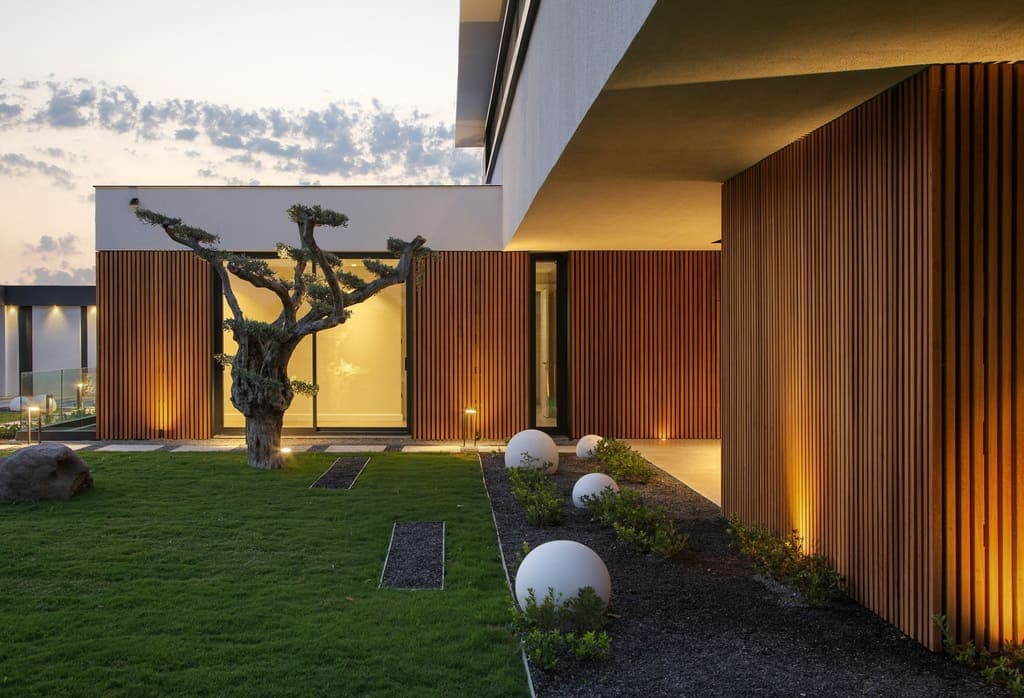
Why Choose Thermally Modified Wood for Covered Patio Walls?
Thermally modified wood undergoes a high-heat treatment process that alters its cellular structure. This process aims to enhance the wood's stability and resistance to moisture fluctuations, which can be particularly beneficial in humid coastal climates. For covered patio walls, where direct rain is minimized but ambient humidity remains a factor, this improved stability helps reduce tendencies for warping or cupping.
Beyond its performance characteristics, thermally modified wood offers a rich, consistent color throughout the material, often a deep brown tone. This aesthetic can complement various design styles, from modern to rustic. Its natural wood appearance can create a warm and inviting atmosphere for a covered patio, enhancing the overall outdoor living experience.
Understanding Covered Patio Wall Exposure in Coastal SC
Even though a patio wall is covered, its location in Hilton Head Island, SC, means it is still exposed to specific environmental factors. High ambient humidity, warm temperatures, and potential salt air influence material performance. While direct rain is largely excluded, condensation and airborne moisture can still affect the wood.
The 'covered' aspect is critical: it implies protection from direct UV radiation and heavy precipitation, which generally reduces the rate of weathering compared to fully exposed siding. However, proper ventilation within the covered space is still important to prevent moisture buildup and ensure the longevity of the wood. Consider the prevailing wind patterns and how they might carry moisture into the covered area.
Suitable Thermally Modified Wood Profiles for Walls
When selecting thermally modified wood for covered patio walls, various profiles can achieve different visual effects. Common options include tongue-and-groove, shiplap, and square-edge boards. The choice of profile influences the shadow lines and the overall texture of the wall.
Tongue-and-groove profiles offer a tight, interlocking fit, which can create a smooth, continuous surface. Shiplap profiles, with their overlapping design, produce distinct shadow lines that add depth and character. Square-edge boards, installed with a consistent gap, can achieve a more contemporary, open-joint look. The specific profile chosen should align with the desired aesthetic and the degree of visual texture you wish to achieve. For covered walls, the primary function of the profile is aesthetic and to facilitate installation, as weather-tightness is less critical than for exterior siding.
Finishing and Maintenance for Longevity
While thermally modified wood is enhanced for stability, applying a finish can help maintain its appearance and offer additional protection, especially in a humid coastal climate. Leaving the wood unfinished will allow it to gradually weather to a silver-gray patina over time. If you prefer to retain the rich brown tones, a UV-inhibiting oil-based finish is generally recommended.
Regular cleaning is important to remove any accumulated dust, pollen, or salt residue that might settle on the covered walls. The frequency of reapplication for a finish will depend on the product type, exposure to indirect sunlight, and local environmental factors. Always follow the finish manufacturer's instructions for application and maintenance.
Installation Considerations and Substructure
Proper installation is key to the performance of thermally modified wood walls. Even in a covered application, ensuring adequate ventilation behind the boards can help manage moisture. This typically involves installing the wood over a furring strip system, creating an air gap between the wall sheathing and the wood cladding.
Fasteners should be chosen based on the wood species and the local environmental conditions. Stainless steel fasteners are generally recommended for coastal environments to resist corrosion. Pre-drilling may be necessary to prevent splitting, especially with denser wood species or when fastening near board ends. Always refer to the specific product's installation guidelines for recommended fastener types, spacing, and attachment methods. The substructure should be sound, level, and capable of supporting the weight of the cladding.
Hypothetical Project Example: Covered Patio Wall
Consider a covered patio in Hilton Head Island with two walls to be clad in thermally modified wood. One wall measures 12 feet wide by 8 feet high, and the other is 10 feet wide by 8 feet high. The total area to be covered is (12 ft * 8 ft) + (10 ft * 8 ft) = 96 sq ft + 80 sq ft = 176 sq ft. We select a thermally modified Ash shiplap profile, 5.5 inches (0.458 feet) wide with a 16-foot lineal length.
To calculate the number of lineal feet needed, we divide the total width of the walls by the effective width of one board (accounting for the overlap in shiplap). Assuming an effective coverage of 5 inches per board (0.417 feet) due to the shiplap overlap: 176 sq ft / 0.417 ft = approximately 422 lineal feet. Since boards come in 16-foot lengths, we need 422 / 16 = 26.375 boards. Rounding up to ensure sufficient material and accounting for cuts and potential waste, we would plan to purchase 28 boards. This provides a buffer for field cuts, mitered corners, and any unforeseen adjustments. This calculation is for coverage only; actual material needs should include a waste factor, typically 10-15%, especially with specific patterns or cuts.
The installation would involve horizontal furring strips spaced appropriately for the board length, creating an air gap. Stainless steel fasteners would be used, concealed where possible by the shiplap profile. A penetrating oil finish with UV inhibitors would be applied to help maintain the wood's color and provide additional moisture protection.
Before you order
- Confirm the specific thermally modified wood species and profile are approved for vertical wall applications.
- Assess the precise exposure level of the covered patio walls (e.g., direct sun exposure, indirect moisture, ventilation).
- Decide on the desired aesthetic: natural weathering or a maintained finished look.
- Select an appropriate finish (if desired) that is suitable for coastal conditions and thermally modified wood.
- Plan the substructure, ensuring proper furring strips for ventilation and a stable attachment surface.
- Choose corrosion-resistant fasteners suitable for the coastal environment and wood species.
- Calculate material quantities, including a waste factor for cuts and potential adjustments.
- Review manufacturer installation guidelines for specific spacing, fastening, and finishing recommendations.
Confirm installation details, approved uses and warranty terms in the current instructions for the exact product and profile. Your installer should verify the substrate, structure and applicable project requirements.
This is a planning guide for projects in Hilton Head Island, SC. Ask our team to confirm availability, delivery to your ZIP code and which branch can support your order.
Questions to help you decide
Does thermally modified wood require a finish for covered patio walls?
While thermally modified wood is enhanced for stability, applying a finish is recommended if you wish to preserve its original rich brown color. Without a finish, the wood will gradually weather to a silver-gray patina. A finish also provides an additional layer of protection against moisture and UV exposure, even in a covered setting.
Can thermally modified wood be installed directly onto existing wall sheathing?
For optimal performance and moisture management, it is generally recommended to install thermally modified wood over a furring strip system. This creates an air gap behind the cladding, promoting ventilation and helping to prevent moisture buildup, which is beneficial even in covered applications in humid environments.
How do I clean thermally modified wood on covered patio walls?
Regular cleaning with a soft brush or cloth and a mild soap-and-water solution is usually sufficient to remove dust, pollen, and any salt residue. Avoid harsh chemicals or abrasive cleaners that could damage the wood or its finish. Always rinse thoroughly with clean water.
Request a Material Quote for Your Covered Patio Walls
Ready to enhance your Hilton Head Island covered patio with thermally modified wood? Request a material quote by providing your project dimensions, desired profile, and ZIP code. We can help confirm current availability and service options for your project.
Request a material quote →