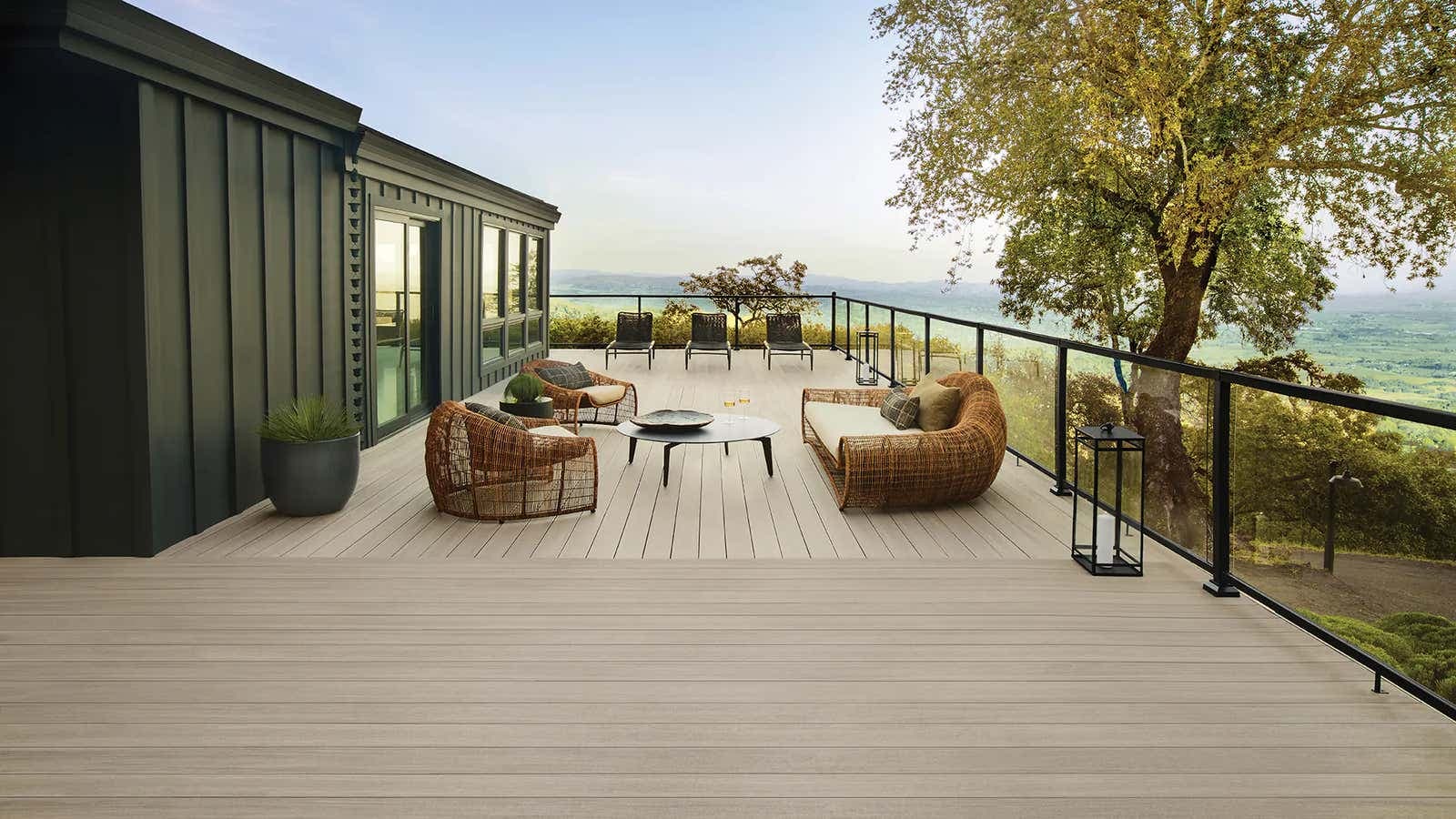
Why Composite Decking Suits Compact Hilton Head Island Spaces
Composite decking is engineered for resilience, a key benefit in coastal environments like Hilton Head Island. Brands such as Trex, TimberTech, and Fiberon offer collections designed to resist moisture absorption, which is important given the local humidity. Many composite boards feature capped shells that protect against staining and fading, reducing the need for intensive upkeep.
For smaller spaces, the consistent appearance of composite decking, board after board, helps create a cohesive and uncluttered look. Unlike natural wood, which can vary significantly in grain and color, composite provides a uniform aesthetic that can make a compact area feel more expansive and intentionally designed. This consistency also simplifies planning and material estimation, as there are fewer variables to account for.
The low-maintenance nature of composite decking—requiring only a soap-and-water wash—is particularly advantageous for smaller decks where access for sanding or staining might be challenging. This allows residents to spend more time enjoying their outdoor space rather than maintaining it.
Selecting the Right Collection and Profile for Limited Areas
When space is at a premium, every design choice matters. Composite decking collections offer a range of colors and finishes. Lighter colors can help a small area feel larger and reflect sunlight, potentially contributing to a cooler surface, an important consideration in warmer climates. Darker tones can provide a sophisticated, grounded feel but may absorb more heat.
Board profiles also play a role. Standard solid or grooved boards are common. For compact spaces, consider the visual impact of board width. Wider boards can sometimes make a small area appear more expansive by reducing the number of visible seams. However, very wide boards might overwhelm a tiny space; balance is key.
Some composite decking collections offer options that are cooler underfoot due to specific material compositions or surface treatments. In Hilton Head Island, where bare feet on a deck are common, this feature can significantly enhance comfort. Review specific product details for these options.
Installation Considerations for Small Decks and Balconies
Installing composite decking in a compact area often involves precise cuts and careful planning to minimize waste and ensure a clean finish. Hidden fastening systems are often preferred for their seamless appearance, which contributes to a refined look in smaller spaces. These systems typically use clips that fit into the grooved edges of the boards, securing them to the joists without visible screws.
Proper ventilation beneath the deck is crucial, especially in humid environments. Even in compact designs, airflow helps prevent moisture buildup. Ensure that the deck design allows for adequate air circulation, particularly if the deck is close to the ground or enclosed on multiple sides. Manufacturers provide specific guidelines for gapping between boards and clearance from the ground.
For elevated balconies or rooftop decks, specific structural requirements and weight limits must be confirmed with a qualified professional. While composite decking is durable, its weight must be factored into the overall structural capacity of the supporting structure. Always confirm local building codes and obtain necessary permits before beginning any elevated project.
Maximizing Usable Space: Design Strategies
To make a compact deck feel more spacious and functional, consider incorporating built-in elements. Integrated bench seating or planters along the perimeter can save floor space that would otherwise be taken up by freestanding furniture. This creates a sense of permanence and maximizes every square inch.
Vertical elements can also draw the eye upward, making the space feel taller. Consider trellises for climbing plants or a small privacy screen that doubles as a decorative feature. Thoughtful lighting, such as recessed deck lights or string lights, can extend the usability of the space into the evening without adding bulk.
Layout is critical. A diagonal decking pattern can sometimes create an illusion of greater width or length by disrupting the eye's perception of boundaries. However, this approach typically requires more material due to increased cutting and waste. A simple, straight lay can be equally effective and more material-efficient for very small areas.
Hypothetical Project: A 10x8 Foot Hilton Head Island Balcony Deck
Imagine a balcony in a Hilton Head Island condo, measuring 10 feet wide by 8 feet deep. The goal is to create a comfortable, low-maintenance outdoor seating area.
Each board would be cut to 8 feet. Since boards are sold in 12-foot lengths, each 12-foot board yields one 8-foot section with a 4-foot offcut. This means 22 boards are needed, resulting in 22 x 12 = 264 linear feet.
Each board would be cut to 10 feet. With 12-foot lengths, you'd need one 12-foot board for each 10-foot section. This means 18 boards are needed, totaling 18 x 12 = 216 linear feet. This layout is more material-efficient. The 2-foot offcuts from each board are likely too small for significant reuse on this project.
For the perimeter, a picture frame border can define the space. This would require additional boards for the framing. For a 10x8 deck, a single border would need (10ft + 10ft + 8ft + 8ft) = 36 linear feet. These boards would also be cut from 12-foot lengths.
Before you order
- Confirm local building codes and HOA requirements for decking on balconies or small yards.
- Measure your space accurately, considering any irregular shapes or obstacles.
- Evaluate composite decking collections for color, finish, and underfoot comfort.
- Determine the optimal board width and laying pattern to maximize the visual space and minimize waste.
- Plan for proper ventilation beneath the deck, especially in humid conditions.
- Consider incorporating built-in seating or planters to save floor space.
- Factor in the need for fascia boards or other trim elements for a finished look.
- Request a detailed quote based on your project dimensions, chosen profile, and quantity.
- Verify current availability and delivery options for Hilton Head Island, SC.
Confirm installation details, approved uses and warranty terms in the current instructions for the exact product and profile. Your installer should verify the substrate, structure and applicable project requirements.
This is a planning guide for projects in Hilton Head Island, SC. Ask our team to confirm availability, delivery to your ZIP code and which branch can support your order.
Questions to help you decide
Is composite decking suitable for coastal areas like Hilton Head Island?
Yes, composite decking is well-suited for coastal environments. Many brands offer capped composite boards designed to resist moisture, salt air, and UV exposure, which helps prevent fading, staining, and degradation. This makes them a durable, low-maintenance choice for Hilton Head Island's climate.
How do I choose a color for a small composite deck?
For small decks, lighter colors can help the space feel more open and expansive, and may also be cooler underfoot. Darker colors can create a more intimate or sophisticated atmosphere but might absorb more heat. Consider the overall aesthetic of your home and surrounding landscape when making your choice.
What kind of maintenance does composite decking require?
Composite decking is designed for low maintenance. Typically, it only requires an annual cleaning with soap and water to remove dirt and debris. Unlike wood, it does not need sanding, staining, or sealing, which is a significant advantage for maintaining a deck in a compact space.
Plan Your Compact Composite Decking Project
Ready to transform your small outdoor space in Hilton Head Island, SC? Request a material quote today. Provide your project dimensions, desired composite decking profile, and project ZIP code to confirm current availability and service options for your area.
Request a material quote →