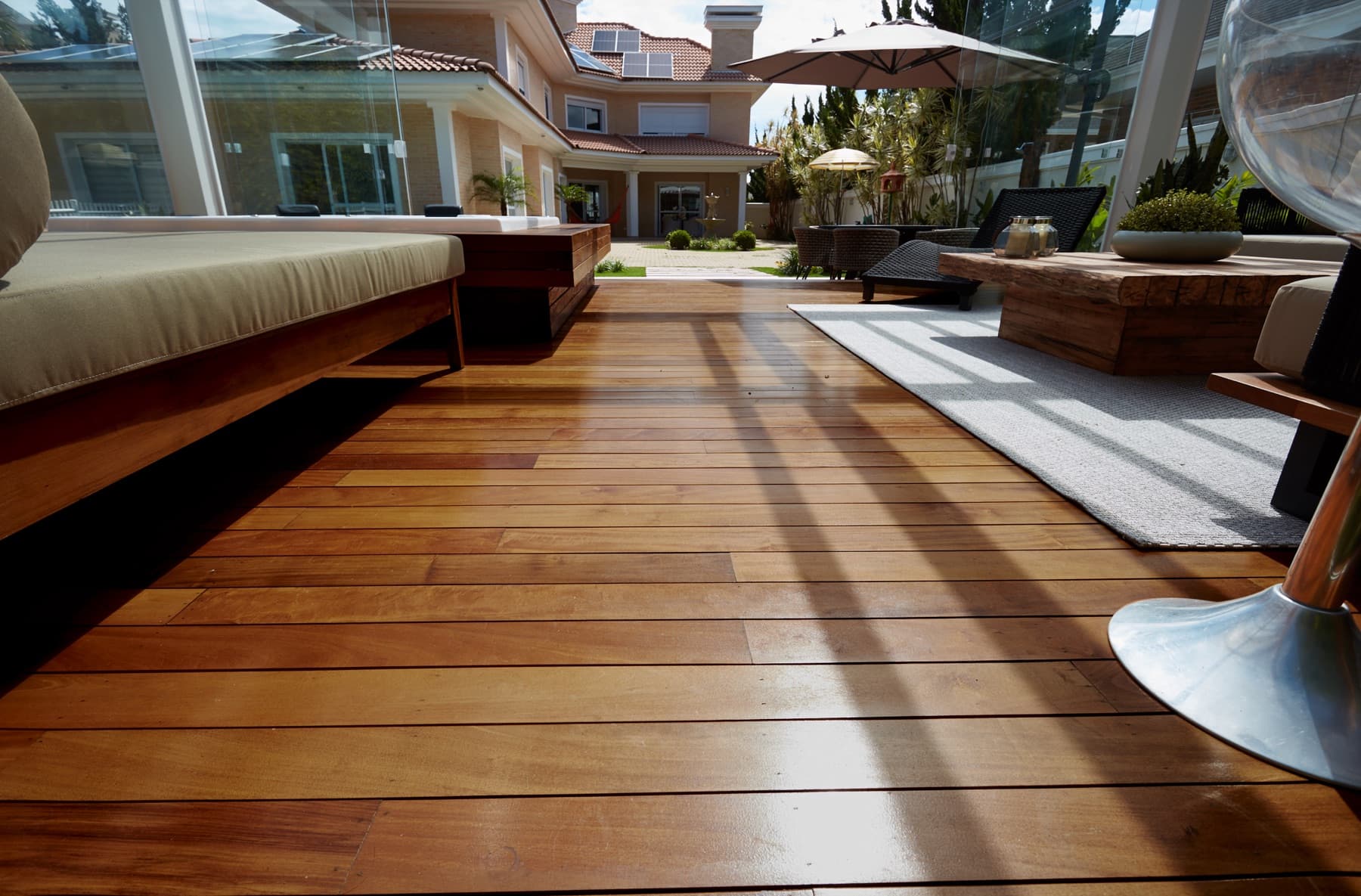
Evaluating Your Existing Deck Frame for Hardwood
Before selecting new decking boards, a thorough inspection of your existing deck frame is essential. Hardwood decking, particularly dense species like Ipe or Cumaru, can be heavier than some alternative materials. The frame must be structurally sound and capable of supporting the increased load.
Key areas to inspect include joists, beams, posts, and ledger boards. Look for any signs of rot, insect damage, splitting, or excessive deflection. Fasteners should be secure and free from corrosion. If any part of the frame shows significant wear or damage, it may need repair or replacement. Consulting with a qualified builder or engineer is recommended to ensure the frame meets current building standards and can safely accommodate your chosen hardwood decking.
Consider the existing joist spacing. Many hardwood decking products are designed for specific joist spans. If your current joist spacing is wider than recommended for the hardwood you select, additional blocking or sistering of joists may be necessary to provide adequate support and prevent board deflection.
Choosing Hardwood Species for Coastal Environments
Hilton Head Island's coastal climate presents unique challenges, including salt air, humidity, and strong sunlight. Selecting a hardwood species that naturally resists these conditions is crucial for long-term performance.
Ipe, also known as Brazilian walnut, is a benchmark for exterior applications due to its exceptional density and natural resistance to rot, insects, and weather changes. It is often specified for docks, boardwalks, and seawall caps in coastal areas, making it a robust choice for a Hilton Head Island deck.
Cumaru is another durable tropical hardwood that offers strong resistance to termites and weather changes. It shares many performance characteristics with Ipe, providing a resilient option for coastal exposure. Both Ipe and Cumaru are known for their ability to withstand salt air and spray without significant impact.
These species develop a silvery-gray patina if left untreated, a common aesthetic for coastal homes. If you prefer to maintain their original rich brown tones, a UV-blocking sealer can be applied periodically.
Hardwood Decking Profiles and Dimensions
Hardwood decking is available in a variety of profiles and dimensions. Common profiles include standard rectangular boards, often with eased edges. When planning your renovation, consider how the new board dimensions will integrate with your existing frame and desired aesthetic.
Ipe and Cumaru, for example, are typically available in a range of dimensions, such as 1"x2" through 6"x6" in lengths from 3 to 24 feet. The specific lengths and profiles in stock can vary, so it's important to confirm current availability.
If your existing frame has specific board spacing requirements, or if you plan to use a particular fastening system (such as hidden fasteners), ensure that the chosen hardwood profile is compatible. Some hardwood boards are milled with specific grooved edges to accommodate hidden fastening clips, while others are designed for face-fastening.
Planning Your Deck Layout and Material Takeoff
A precise material takeoff is critical for any renovation project. Start by accurately measuring the dimensions of your existing deck surface. Consider any unique features, such as angles, curves, or cutouts for posts or railings.
For a hypothetical 12-foot by 20-foot rectangular deck, you would need 240 square feet of decking. If you choose 1x6 (nominal) Ipe boards, which are approximately 5.5 inches wide, each linear foot covers about 0.458 square feet. Therefore, you would need approximately 524 linear feet of boards (240 sq ft / 0.458 sq ft/linear ft).
It's crucial to account for waste due to cuts, especially when dealing with existing framing irregularities or specific layout patterns like diagonal installations or picture-frame borders. A typical waste factor of 10-15% is often recommended for decking projects. For our hypothetical 240 sq ft deck, adding 15% waste means planning for roughly 276 square feet of material.
Remember that board lengths are typically sold in specific increments. Plan your layout to minimize waste by optimizing cuts and considering where seams will fall. For longer decks, staggering board ends can create a more visually appealing and structurally sound surface. Always order full boards and factor in potential unusable offcuts.
Maintenance Considerations for Coastal Hardwood Decks
While hardwoods like Ipe and Cumaru are inherently durable, understanding their maintenance requirements is important, especially in a coastal environment. Minimal maintenance is typically required for structural integrity.
A simple annual wash is usually sufficient to remove dirt, salt residue, and organic growth. If you prefer to maintain the original reddish-brown to olive-brown color of Ipe or Cumaru, applying a UV-blocking sealer or deck oil annually is recommended. Without this treatment, the wood will naturally weather to a silvery-gray patina.
For areas near the ocean, increased humidity and salt spray might necessitate more frequent cleaning. Always use cleaning products compatible with hardwood and follow manufacturer instructions. Regular inspection for any debris accumulation, especially between boards, can help ensure proper drainage and ventilation, which are vital in humid climates.
Before you order
- Assess the structural integrity of your existing deck frame: joists, beams, posts, ledger board.
- Verify existing joist spacing is compatible with chosen hardwood decking (e.g., Ipe, Cumaru).
- Determine if additional frame reinforcement or repairs are needed.
- Select a hardwood species suitable for coastal exposure (e.g., Ipe, Cumaru).
- Decide on your preferred aesthetic: natural silvering or maintained original color with UV-blocking sealer.
- Measure your deck surface accurately for material takeoff, including waste factor.
- Confirm desired board profiles and lengths are available for your chosen hardwood.
- Plan your deck layout, considering board direction, seams, and any special features.
- Review fastening options (hidden vs. face-fastened) and ensure compatibility with chosen boards.
- Plan for annual cleaning and optional sealing to maintain appearance.
Confirm installation details, approved uses and warranty terms in the current instructions for the exact product and profile. Your installer should verify the substrate, structure and applicable project requirements.
This is a planning guide for projects in Hilton Head Island, SC. Ask our team to confirm availability, delivery to your ZIP code and which branch can support your order.
Questions to help you decide
Can I use my existing deck frame for hardwood decking?
It depends on the condition and construction of your current frame. Hardwood decking can be heavier than some other materials, so the frame must be structurally sound and capable of supporting the additional load. An inspection for rot, damage, and proper joist spacing is crucial. It's advisable to consult a professional to ensure your frame is adequate.
Which hardwoods are best suited for coastal environments like Hilton Head Island?
Ipe and Cumaru are excellent choices for coastal environments. Both are dense, durable tropical hardwoods that offer natural resistance to salt air, humidity, rot, and insects. They perform well in demanding conditions and are commonly used in marine applications.
How much maintenance does hardwood decking require in a coastal climate?
Hardwood decking like Ipe and Cumaru is relatively low maintenance. An annual cleaning with water and a mild detergent is generally sufficient. If you wish to preserve the wood's original color, a UV-blocking sealer should be applied annually. Otherwise, the wood will naturally weather to a silvery-gray patina, which many find desirable for coastal aesthetics.
Request a Quote for Your Hardwood Decking Renovation
Ready to upgrade your Hilton Head Island deck with durable hardwood? Provide your project dimensions, desired hardwood profile, and ZIP code to request a material quote. We can also confirm current availability and discuss service options for your project.
Request a material quote →