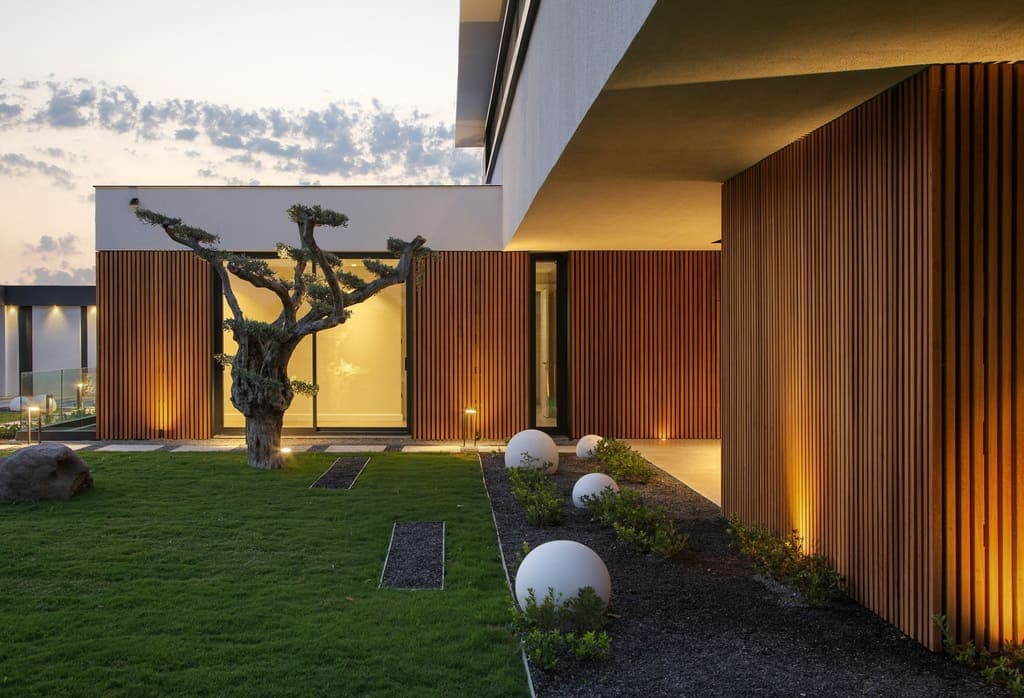
Why Choose Thermally Modified Wood for Covered Patio Walls?
Thermally modified wood undergoes a high-heat process that changes its cellular structure, reducing its ability to absorb moisture. This process enhances the wood's dimensional stability, making it less prone to shrinking, swelling, and warping compared to untreated wood. For covered patio walls, where humidity can fluctuate but direct weather exposure is limited, this stability is a significant advantage.
The thermal modification process also darkens the wood, creating a rich, consistent color throughout the material. This can be a desirable aesthetic for many patio designs, offering a natural yet refined appearance. While it retains the workability of natural wood, its modified properties make it a robust choice for semi-protected outdoor applications.
Using thermally modified wood allows for a natural wood aesthetic without the same level of concern for movement that might arise with untreated lumber in an outdoor setting. It can contribute to a cohesive design that blurs the lines between indoor and outdoor living spaces, providing a warm and inviting atmosphere for your patio.
Selecting the Right Profile and Species
Thermally modified wood is available in various profiles, each creating a different visual effect. For covered patio walls, common profiles include tongue-and-groove, shiplap, and square-edge boards. Tongue-and-groove profiles offer a tight, interlocking fit, which can be beneficial for a finished look and to minimize gaps, especially if the wall is a focal point.
Shiplap profiles create distinct shadow lines and are often chosen for a more traditional or rustic aesthetic. Square-edge boards can be installed with intentional gaps to achieve an open-joint or rainscreen-like appearance, which can add texture and depth, though for covered patios, the primary function of such gaps is often aesthetic rather than for drainage.
Common species used for thermal modification include Ash, Poplar, and Pine. Thermally modified Ash, such as NORX Thermally Modified Ash, offers a durable and stable option with a pronounced grain. Maximo Thermally Modified Poplar provides a lighter weight alternative with a fine, consistent grain. US4 Thermally Modified Pine is also available, offering a more economical choice while still benefiting from the thermal modification process.
The choice of profile and species will depend on your desired aesthetic, the specific dimensions of your patio wall, and the overall design language of your outdoor space. Consider how the profile will interact with light and shadow, and how the wood grain will complement other materials.
Finishing and Appearance Considerations
Thermally modified wood can be left unfinished to weather naturally, developing a silver-gray patina over time. This can be a desirable look for those seeking a low-maintenance, organic aesthetic. However, even in a covered patio setting, some UV exposure and environmental factors will contribute to this natural weathering process.
Alternatively, a finish can be applied to maintain the wood's original color or to introduce a specific tone. Clear or tinted oils and stains are common choices. These finishes can enhance the wood's natural color, provide some UV protection to slow down the graying process, and offer a layer of protection against moisture absorption.
When choosing a finish, consider its longevity and maintenance requirements. Even under a cover, finishes will eventually need reapplication. Always test your chosen finish on a sample piece of thermally modified wood to ensure it achieves the desired look before applying it to the entire wall. The specific product documentation for your chosen finish will provide guidance on application and reapplication schedules.
Installation and Fastening for Covered Walls
Proper installation is crucial for the longevity and appearance of your thermally modified wood patio walls. While covered, these walls still require attention to detail regarding moisture management and structural support. Ensure that the substrate is sound, dry, and clean before installation.
For most covered wall applications, direct fastening to furring strips or a solid sheathing is common. Fasteners should be corrosion-resistant, such as stainless steel screws, to prevent staining and ensure long-term hold. Depending on the profile, fasteners can be face-fastened or concealed.
Concealed fastening systems, often used with tongue-and-groove or specific shiplap profiles, provide a clean, uninterrupted look. Face fastening is more straightforward and visible, but care must be taken to ensure fasteners are uniformly placed and countersunk if desired. Always refer to the manufacturer's specific installation guidelines for the chosen profile.
Allow for adequate ventilation behind the wood cladding, even on covered walls. This helps prevent moisture buildup and promotes air circulation, which is beneficial for the wood's stability and the overall wall assembly. A simple furring strip system can create this necessary air gap. Maintain appropriate clearances from the ground or patio surface to prevent moisture wicking.
Hypothetical Project Example: Covered Patio Wall in Hartford, CT
Consider a homeowner in Hartford, CT, planning to enclose one side of their covered patio with a thermally modified wood wall. The wall measures 12 feet wide by 8 feet high. The homeowner desires a contemporary look with minimal visible fasteners and a natural wood tone.
They select a 5-inch wide (actual face width) NORX Thermally Modified Ash tongue-and-groove profile, 8 feet long. To cover the 12-foot width, they will need 12 feet / (5 inches / 12 inches/foot) = 28.8 boards. Since they need full 8-foot lengths, they would purchase 29 boards. However, to account for cuts and potential waste, it's prudent to add 10-15% for waste, bringing the total to approximately 32-33 boards.
The tongue-and-groove planks will be blind-fastened through the tongue into the furring strips using stainless steel trim screws. At the ends and corners, careful cuts and appropriate trim pieces will be used for a finished edge.
To maintain the natural ash color and provide some UV protection, a clear penetrating oil finish will be applied after installation. This finish will be reapplied as needed, typically every 1-3 years depending on exposure and product recommendations, to preserve the wood's appearance.
Before you order
- Assess the level of protection your patio walls receive from direct rain and sun.
- Choose a thermally modified wood species (e.g., Ash, Poplar, Pine) based on desired appearance and stability.
- Select a profile (tongue-and-groove, shiplap, square-edge) that matches your aesthetic and installation preference.
- Decide on a finish: natural weathering or a protective oil/stain.
- Verify the appropriate fastening method (face-fastened or concealed) for your chosen profile.
- Plan for adequate ventilation behind the cladding and proper clearances from the ground.
- Calculate material quantities, including an allowance for cuts and waste.
- Consider complementary materials like trim, flashing, and fasteners.
Confirm installation details, approved uses and warranty terms in the current instructions for the exact product and profile. Your installer should verify the substrate, structure and applicable project requirements.
This is a planning guide for projects in Hartford, CT. Ask our team to confirm availability, delivery to your ZIP code and which branch can support your order.
Questions to help you decide
Can thermally modified wood be painted for covered patio walls?
While thermally modified wood can be painted, it is more commonly finished with oils or stains to highlight its natural grain and color. If painting is desired, consult the paint manufacturer's recommendations for use on thermally modified wood, as its reduced moisture absorption can affect paint adhesion and drying times.
How does thermal modification affect the wood's color over time?
The thermal modification process darkens the wood throughout its thickness. If left unfinished and exposed to UV light, even in a covered patio, thermally modified wood will gradually weather to a silver-gray patina, similar to untreated wood. Applying a UV-inhibiting finish can help slow this process and maintain the original color longer.
Is thermally modified wood suitable for all climates, including areas with harsh winters?
Thermally modified wood's enhanced dimensional stability makes it well-suited for various climates, including those with significant temperature and humidity fluctuations. Its reduced moisture uptake helps it resist swelling and shrinking through freeze-thaw cycles. For covered patio walls, where direct exposure to snow and ice is limited, it performs reliably, provided proper installation with ventilation and drainage is maintained.
Ready to Plan Your Covered Patio Walls?
Request a material quote for your project. Provide your project dimensions, desired thermally modified wood profile, and ZIP code to confirm current availability and service options for your Hartford, CT location.
Request a material quote →