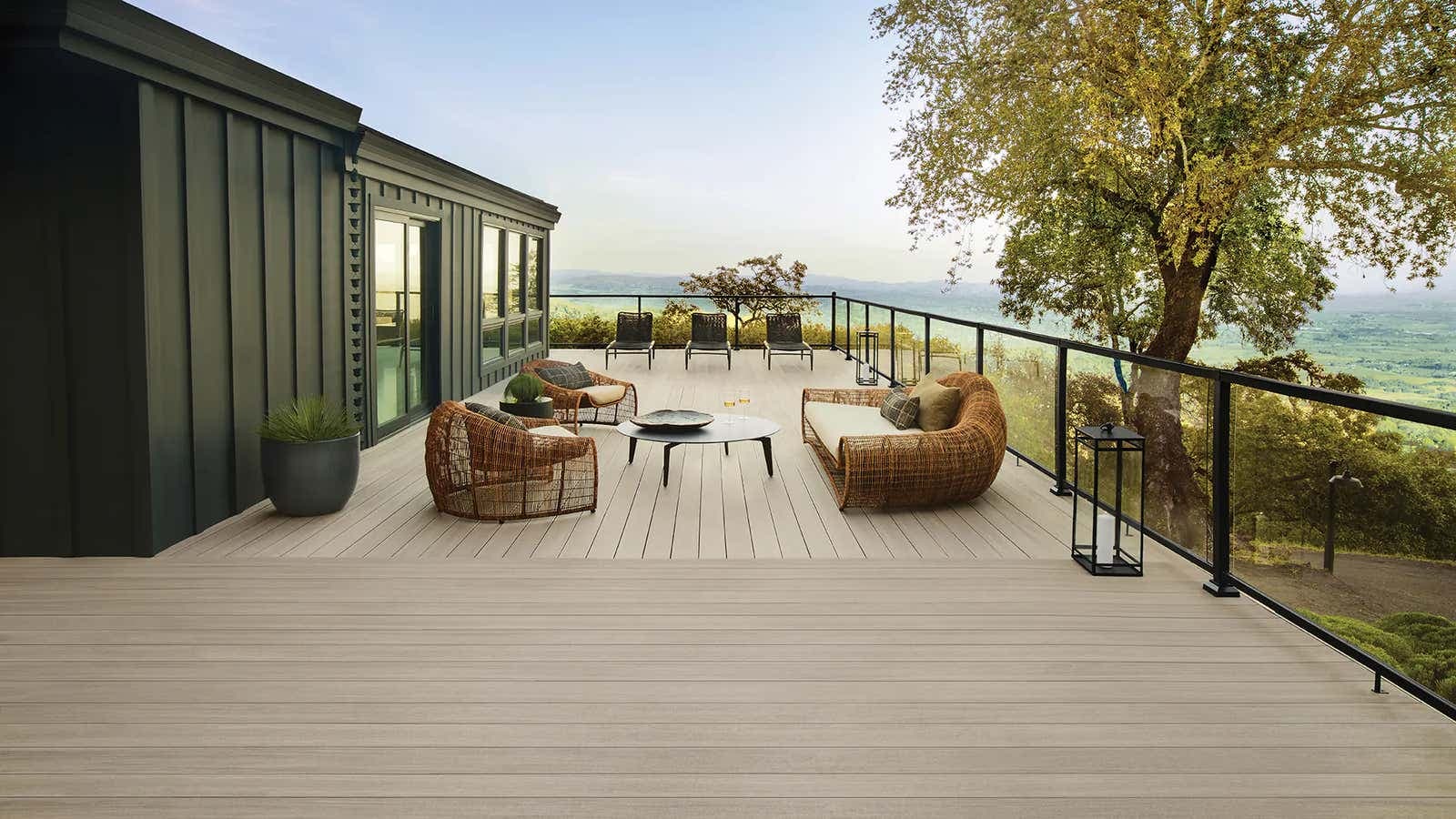
Evaluating Usable Space and Project Access
Before selecting your composite decking, take precise measurements of your compact outdoor area. Note not only the length and width but also any fixed obstructions like exterior staircases, HVAC units, or garden beds. These elements will dictate the actual usable deck footprint and influence board layout.
Project access is a critical consideration for compact spaces. Can long decking boards be easily moved from the street to the project site? Is there sufficient room for installers to work comfortably? Some collections offer shorter board lengths or specific profiles that might be easier to maneuver in tight alleys or through doorways. Confirming these logistical details upfront can prevent delays and additional costs.
Think about the primary function of your compact deck. Is it for a small bistro set, a container garden, or simply to improve the aesthetic appeal of a neglected area? This will inform decisions about board width, color, and even the type of railing system, if any, that best suits the space without making it feel more cramped.
Comparing Composite Decking Collections for Small Footprints
Lumber Plus offers composite decking from brands like Trex, TimberTech, and Fiberon. Each brand features various collections with distinct characteristics that may be more suitable for compact spaces. When evaluating, consider the profile (solid vs. scalloped), board width, and available lengths.
For smaller areas, a standard or narrow board width can sometimes create the illusion of a larger space by increasing the number of visible lines, drawing the eye along the length of the deck. Wider boards can also work, offering fewer seams and a contemporary look, but ensure they don't visually overwhelm the area.
Some composite decking collections offer capped shells for enhanced durability and resistance to fading and staining. This can be particularly beneficial in compact spaces where planters, furniture, or foot traffic might concentrate wear in specific areas. Always review the specific fade and stain warranties provided by the manufacturer for the collection you are considering.
Cooler-underfoot options are available within certain composite decking lines. While a compact deck might not experience the same heat gain as a sprawling sun-exposed deck, this feature can still improve comfort, especially if the space receives direct afternoon sun.
Choosing Board Profiles and Lengths
Composite decking boards come in various profiles, including solid and scalloped (grooved underside). While solid boards offer a traditional feel and rigidity, scalloped boards can be lighter and may be easier to handle in tight spaces. Both types are designed for specific fastening systems, so confirm compatibility with your chosen fasteners.
Standard board lengths typically range from 12 to 20 feet. For very small decks, it might be tempting to order the shortest available lengths to minimize cuts and waste. However, a strategic layout with longer boards can sometimes reduce the number of end-to-end seams, creating a more continuous and expansive look. Discuss available lengths with your supplier and consider how they align with your project dimensions.
For projects requiring extensive cuts, such as intricate patterns or curved edges, solid profile boards may offer more flexibility. If using scalloped boards, plan cuts carefully to maintain structural integrity and ensure proper fastener engagement where needed.
Worked Example: A 10x8 Foot Balcony Deck
Let's consider a hypothetical balcony measuring 10 feet wide by 8 feet deep. The goal is to install composite decking with minimal waste and a clean appearance. Assume we are using standard 12-foot long composite decking boards, 5.5 inches wide.
For the 10-foot width, we would need approximately 22 boards (10 feet / (5.5 inches / 12 inches/foot) = 21.8 boards).
If the boards run parallel to the 8-foot depth, each 12-foot board can yield one 8-foot piece and one 4-foot offcut. The 4-foot offcuts can potentially be used for a picture frame border, stair treads, or other small sections, depending on the design. This minimizes waste compared to cutting 12-foot boards down to 8 feet without a secondary use for the remaining 4 feet.
Alternatively, if the boards run parallel to the 10-foot width, each 12-foot board would need to be cut to 10 feet, leaving a 2-foot offcut. This would require more boards in total (8 feet / (5.5 inches / 12 inches/foot) = 17.45 boards, rounded up to 18 boards), and the offcuts would be smaller. The choice of direction depends on aesthetic preference, joist direction, and waste management.
For this 10x8-foot balcony, running boards along the 8-foot depth (requiring 22 boards of 12-foot length) offers a better yield if the 4-foot offcuts can be integrated into the design, perhaps for a small seating bench or a decorative element. Always account for cutting waste and order a few extra boards (typically 5-10%) beyond the exact calculation.
Integrating Design Elements in Confined Spaces
In compact outdoor spaces, every design choice has a magnified impact. Consider how railings, planters, and lighting will integrate with your composite deck. Slim profile railings or cable railing systems can maintain an open feel, while solid railings might make the space feel smaller.
Built-in seating or planters, constructed with compatible composite materials or other weather-resistant options, can save space and provide functional elements without cluttering the deck. Ensure that any built-in structures are properly supported and do not compromise the deck's integrity.
Strategic lighting, such as recessed deck lights or discrete post cap lights, can enhance ambiance without taking up valuable surface area. Plan for electrical runs during the framing stage. Remember that proper drainage beneath and around the deck is crucial, especially in tight areas where water might accumulate.
Before you order
- Measure the exact dimensions of your compact space, including any fixed obstructions.
- Assess project access: Can long boards be easily delivered and maneuvered?
- Determine the primary function of the deck (e.g., dining, lounging, gardening).
- Compare composite decking collections for profile, width, and available lengths.
- Review manufacturer fade and stain warranties for your chosen collection.
- Decide on board orientation (parallel to short or long dimension) for aesthetic and waste considerations.
- Plan for railing type (if any) and other integrated design elements (seating, planters, lighting).
- Account for cutting waste and order an appropriate overage (5-10%).
- Confirm compatibility of your chosen decking with fasteners and any support systems.
Confirm installation details, approved uses and warranty terms in the current instructions for the exact product and profile. Your installer should verify the substrate, structure and applicable project requirements.
This is a planning guide for projects in Hartford, CT. Ask our team to confirm availability, delivery to your ZIP code and which branch can support your order.
Questions to help you decide
Can composite decking be installed directly over an existing concrete patio in a compact space?
Installing composite decking directly over concrete often requires a sleeper system to create ventilation and drainage space. This raises the deck height, which might be a concern in compact areas with limited vertical clearance. Always consult the specific manufacturer's installation guidelines for approved sub-structures and clearances. Improper installation can void warranties and lead to moisture issues.
What are the maintenance requirements for composite decking in a small urban environment?
Composite decking generally requires less maintenance than natural wood. Typically, an annual wash with soap and water is sufficient to keep it clean. In urban environments, dust, pollen, and occasional spills might be more frequent, so regular sweeping and spot cleaning can help maintain its appearance. Unlike wood, composite decking does not require sanding, staining, or sealing. Always refer to the manufacturer's specific cleaning instructions for your chosen collection to ensure compatibility with cleaning products.
Are there specific composite decking colors that make a compact space feel larger?
Lighter colors can often make a compact space feel more open and expansive by reflecting light. Cooler tones like grays and light browns tend to recede visually, contributing to this effect. However, personal preference and the surrounding architecture also play a significant role. Consider ordering samples to see how different colors interact with the natural light and existing elements in your specific compact outdoor area.
Plan Your Compact Composite Decking Project
Ready to transform your small outdoor space with composite decking? Request a material quote today. Provide your project dimensions, desired composite decking profile, and project ZIP code to confirm current availability and service options. Explore our full range of composite decking options, including Trex, TimberTech, and Fiberon, as well as hardwood and PVC decking solutions.
Request a material quote →