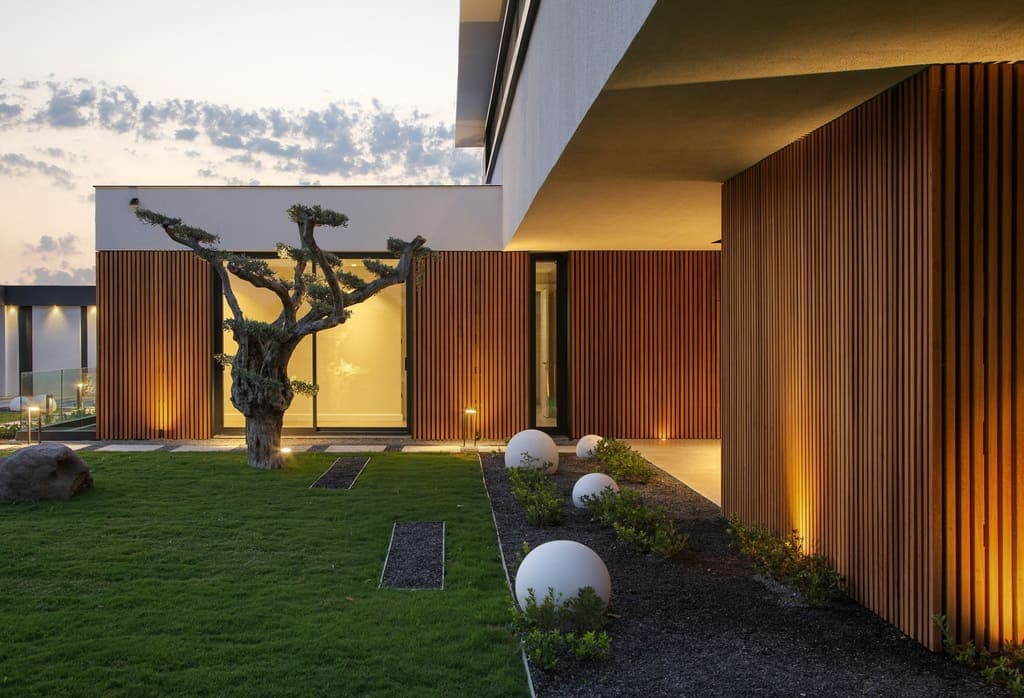
Understanding Thermally Modified Wood for Wall Applications
Thermally modified wood undergoes a high-temperature treatment process that alters its cellular structure. This process typically enhances the wood's stability by reducing its ability to absorb and release moisture, which can lead to less shrinking and swelling compared to untreated wood. For covered patio walls, this improved stability is a benefit, as it helps maintain the integrity and appearance of the installation over time, even with Des Moines' changing seasons.
The thermal modification process also imparts a consistent, darker color throughout the wood, which can range from a light to a rich brown, depending on the species and treatment intensity. This consistent color means that if the wood is cut or lightly scratched, the underlying color remains similar, reducing the visibility of minor imperfections. Many thermally modified wood products are designed for exterior use, making them a suitable candidate for covered outdoor spaces.
Selecting Suitable Profiles for Covered Patio Walls
For covered patio walls, the choice of profile influences both the aesthetic and the installation method. Common profiles for wall applications include tongue-and-groove (T&G), shiplap, and square-edge boards. Each offers a different look and installation characteristic.
Tongue-and-groove profiles create a tight, interlocking fit, often used for a smooth, continuous appearance. Shiplap profiles provide a distinctive shadow line and allow for some expansion and contraction. Square-edge boards can be installed with a visible gap for a more open, contemporary look, or butted tightly for a solid surface. When planning for covered patio walls, consider how the chosen profile will integrate with the overall design of your outdoor living space and the desired visual texture.
For example, NORX thermally modified wood is available in various profiles, including T&G and shiplap, which can be adapted for covered wall applications. Maximo Accoya also offers profiles suitable for exterior cladding that could be considered for covered walls.
Finishing and Appearance Options
Thermally modified wood can be left unfinished to weather naturally to a silver-gray patina, or it can be finished with stains or oils to maintain or enhance its color. The decision to finish depends on your aesthetic preference and the level of maintenance you are prepared for.
If left unfinished, the wood will gradually change color when exposed to UV light, even in a covered area, though the process may be slower than in direct sun. Applying a UV-inhibiting oil or stain can help preserve the initial color and provide an extra layer of protection against moisture and environmental factors. For covered patio walls in Des Moines, where humidity levels can vary, a finish can also offer additional protection against surface moisture.
When choosing a finish, consider products designed for exterior wood applications that are compatible with thermally modified wood. Always test a small, inconspicuous area first to ensure the desired color and absorption.
Installation Considerations for Covered Walls
While covered patio walls are protected from direct rain, they are still exposed to ambient humidity and temperature fluctuations. Proper installation is critical to ensure the longevity and performance of the thermally modified wood. This includes planning for ventilation, fastening, and detailing around openings or transitions.
Ensure adequate air circulation behind the wall cladding to prevent moisture buildup. This can be achieved through a rainscreen-like assembly, even if minimal, using furring strips or a drainage mat. Fastening should accommodate the wood's natural movement; concealed fasteners are often preferred for a clean look, or face-fastening with appropriate screws can be used. Always pre-drill pilot holes to prevent splitting.
Consider the substructure carefully. For a covered patio wall, the existing framing or sheathing must be sound and capable of supporting the cladding. Detail all edges, corners, and interfaces with other materials to prevent water intrusion and provide a finished appearance.
Worked Example: Covered Patio Wall Section
Let's consider a hypothetical covered patio wall section measuring 10 feet wide by 8 feet tall, located on a home in Des Moines. The homeowner desires a modern look with a subtle shadow line, opting for NORX thermally modified shiplap siding with a 6-inch exposure. The boards are supplied in 10-foot lengths.
First, calculate the total wall area: 10 feet (width) * 8 feet (height) = 80 square feet. With a 6-inch (0.5-foot) exposure per shiplap board, each 10-foot long board covers 0.5 feet * 10 feet = 5 square feet. To cover 80 square feet, you would theoretically need 80 / 5 = 16 boards.
However, accounting for potential cuts, waste, and ensuring a uniform appearance, it's prudent to order an additional 10-15%. For this example, ordering 18 boards (16 + 2 for waste) would be a reasonable starting point. This provides a buffer for any miscuts or for trimming to fit around any features like light fixtures or outlets. The homeowner also plans to apply a clear, UV-resistant oil finish after installation to maintain the wood's natural brown tones.
The installation would involve fastening furring strips vertically to the existing wall studs, creating a small air gap. The shiplap boards would then be fastened horizontally to these furring strips, starting from the bottom and working upwards, ensuring each board is level and has consistent spacing at its joints.
Before you order
- Verify local building codes and any HOA requirements for exterior wall materials.
- Assess the specific exposure of the covered patio wall to sun, wind, and ambient moisture.
- Choose a thermally modified wood species and profile suitable for wall applications and desired aesthetic.
- Decide on a finish (unsealed, oil, stain) and consider long-term maintenance implications.
- Plan for proper ventilation behind the cladding, even in covered areas.
- Select appropriate fasteners and consider concealed vs. visible fastening methods.
- Measure the project dimensions accurately, including any openings or obstructions.
- Calculate material quantities, accounting for waste and specific board lengths.
- Review installation guidelines from the manufacturer for your chosen product.
- Consider professional installation for optimal results.
Confirm installation details, approved uses and warranty terms in the current instructions for the exact product and profile. Your installer should verify the substrate, structure and applicable project requirements.
This is a planning guide for projects in Des Moines, IA. Ask our team to confirm availability, delivery to your ZIP code and which branch can support your order.
Questions to help you decide
Can thermally modified wood be used for any exterior wall, or only covered ones?
Thermally modified wood is generally suitable for various exterior wall applications, including fully exposed siding. However, for covered patio walls, it offers enhanced stability and reduced maintenance needs compared to some other wood options, as it's protected from the most extreme direct weather. Always refer to the specific product's intended use and installation guidelines for fully exposed applications.
Does thermally modified wood require a finish?
No, thermally modified wood does not strictly require a finish for durability. It can be left to weather naturally to a silver-gray patina. However, applying an exterior-grade oil or stain can help preserve its initial color, offer additional protection against UV exposure and surface moisture, and make cleaning easier. The choice depends on your desired aesthetic and maintenance preferences.
How do I clean thermally modified wood on a covered patio wall?
For routine cleaning, a soft brush or cloth with mild soap and water is typically sufficient to remove dust, dirt, or light stains. Avoid harsh chemicals or high-pressure washers, as these can damage the wood surface or finish. For stubborn stains, consult the manufacturer's recommendations for cleaning thermally modified wood. Regular cleaning can help maintain the appearance of your covered patio walls.
Ready to Plan Your Covered Patio Walls with Thermally Modified Wood?
Contact us to request a material quote for your project. Provide your project dimensions, desired profile, and ZIP code to confirm current availability and service options for thermally modified wood products.
Request a material quote →