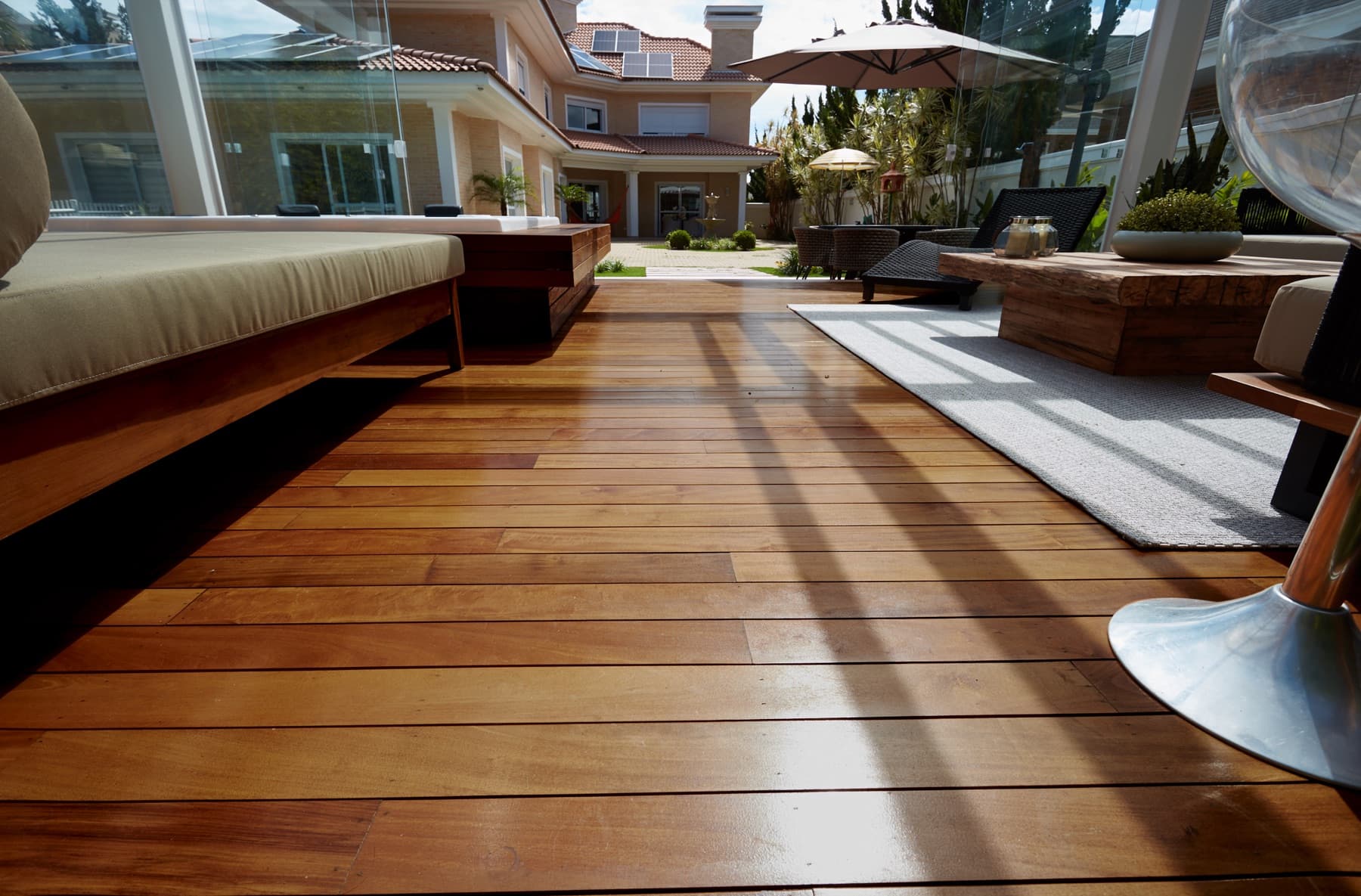
Assessing Your Existing Deck Frame
Before selecting new decking material, a thorough inspection of your current deck frame is crucial. Look for any signs of rot, insect damage, or structural instability in the joists, beams, and ledger board. Even if your current decking is failing, the underlying structure might be sound enough for a new surface. However, if the frame shows significant wear, it may be more cost-effective and safer in the long run to replace the entire structure.
Consider the spacing of your existing joists. Hardwood decking typically requires specific joist spacing to ensure proper support and prevent movement. If your current joist spacing doesn't meet the recommended guidelines for hardwood, you may need to add blocking or sister new joists to meet structural requirements. This assessment will help you determine if your renovation is a simple re-decking project or a more extensive structural overhaul.
Comparing Hardwood Species for Durability and Appearance
Lumber Plus offers several hardwood species suitable for decking, each with distinct properties. It exhibits a reddish-brown to olive-brown color and is known for its resistance to weather changes, mold, and termites. Ipe can last for decades with proper care, making it a long-term investment for your Des Moines home.
It is also highly resistant to termites and weather changes, offering stiffness, strength, and hardness. Cumaru provides a warm, reddish-brown tone and can give off a subtle cinnamon and vanilla scent when worked. For those seeking a balance of performance and value, Garapa presents a golden-toned option, while Tigerwood offers a dramatic grain figure. These species are naturally dense, which contributes to their resilience without chemical treatments.
The choice of species can significantly influence the final appearance and required maintenance of your renovated deck. Consider whether you prefer the rich, deep tones that can be maintained with an annual oil application, or if you embrace the silvery-gray patina that develops when the wood is left to weather naturally. Both approaches maintain the structural integrity of the hardwood.
Planning for Des Moines Climate and Exposure
Des Moines experiences a range of weather conditions, including hot, humid summers and cold winters with snow and ice. Hardwood decking, particularly dense species like Ipe and Cumaru, is well-suited to these fluctuating conditions due to its natural resistance to warping and decay. The inherent density of these woods means they absorb less moisture, reducing the impact of freeze-thaw cycles.
When planning your renovation, consider the sun exposure of your deck. South-facing decks will experience more intense UV radiation, which can accelerate the weathering process. While hardwood's structural integrity is not compromised by this, the color change to a silvery-gray will occur more rapidly. If maintaining the original color is a priority, regular application of a UV-blocking sealer will be necessary regardless of exposure. For decks in partially shaded areas, ensure adequate ventilation beneath the deck to prevent moisture buildup.
Selecting Profiles and Fastening Methods
Hardwood decking is available in various profiles and lengths. Common profiles include standard rectangular boards and those designed for hidden fastening systems. Hidden fasteners create a clean, uninterrupted surface, while face-fastening provides a traditional look. Due to the density of hardwood, pre-drilling is typically required for face-fastening to prevent splitting.
When planning your renovation, consider the aesthetic you desire. A consistent board width can create a uniform look, while mixing widths can add visual interest. Discuss available profiles and lengths with your Lumber Plus representative, as these can vary. Precise measurements and a detailed layout plan will ensure efficient material usage and a professional finish.
Worked Example: Re-decking a 10'x12' Deck in Des Moines
Let's consider a hypothetical deck renovation project for a 10-foot by 12-foot elevated deck in Des Moines. The homeowner desires the rich brown tones of Ipe and plans to maintain the color with an annual oil.
For a 10'x12' deck, the total area is 120 square feet. If using Ipe decking boards that are 5.5 inches wide and available in common lengths like 10, 12, or 14 feet, we need to calculate the number of boards. To cover the 120 square feet, accounting for typical waste and cuts, we might estimate needing approximately 2.2 linear feet of decking per square foot. This translates to roughly 264 linear feet of boards. If using 12-foot boards, this would be 22 boards (264 / 12 = 22). It's always advisable to order 5-10% extra for cuts and potential future repairs. For hidden fasteners, count the number of joists crossed by each board and the linear feet of board edges to determine the quantity needed. For a picture-frame border, additional calculations for mitered corners and border board lengths will be required.
This example assumes standard installation with minimal complex cuts. Always verify precise measurements and product-specific installation guidelines before finalizing your material order. Consider a professional contractor for installation due to hardwood's density and specific handling requirements.
Before you order
- Inspect existing deck frame for structural integrity, rot, and insect damage.
- Measure existing joist spacing and determine if it meets hardwood decking requirements.
- Select hardwood species based on desired appearance, durability, and maintenance preference (Ipe, Cumaru, Garapa, Tigerwood).
- Consider the deck's exposure to sun, rain, and snow, and plan for color maintenance accordingly.
- Choose between face-fastening or hidden fastening systems.
- Determine desired board width and consider a picture-frame border if applicable.
- Calculate the total square footage and estimate linear footage of decking needed, adding 5-10% for waste.
- Confirm current availability of profiles and lengths with Lumber Plus.
- Plan for professional installation due to hardwood's density.
Confirm installation details, approved uses and warranty terms in the current instructions for the exact product and profile. Your installer should verify the substrate, structure and applicable project requirements.
This is a planning guide for projects in Des Moines, IA. Ask our team to confirm availability, delivery to your ZIP code and which branch can support your order.
Questions to help you decide
How does hardwood decking perform in Des Moines' winter climate?
Dense hardwoods like Ipe and Cumaru are well-suited for Des Moines' winter climate. Their natural density and resistance to moisture absorption help them withstand freeze-thaw cycles, reducing the likelihood of warping or cracking. While snow and ice will accumulate, the material itself is robust.
Can I install hardwood decking over an existing composite deck frame?
It is generally not recommended to install hardwood decking directly over an existing composite deck frame. Composite frames may not be designed to support the weight or fastening requirements of dense hardwood. Always inspect the existing frame thoroughly and consult with a structural engineer or experienced contractor to ensure compatibility and safety before proceeding with any re-decking project.
What is the typical lifespan of hardwood decking in a Des Moines renovation?
With proper installation and maintenance, high-quality hardwood decking such as Ipe can last up to 75 years, and Cumaru over 25 years. This significantly exceeds the lifespan of many other decking materials. Regular cleaning and optional annual oiling can help preserve its appearance and extend its service life, even with Des Moines' varied weather.
Ready to Renovate Your Des Moines Deck?
Request a material quote for your project by providing your deck dimensions, preferred hardwood profile, and ZIP code. Our team can help confirm current availability and service options for your renovation.
Request a material quote →