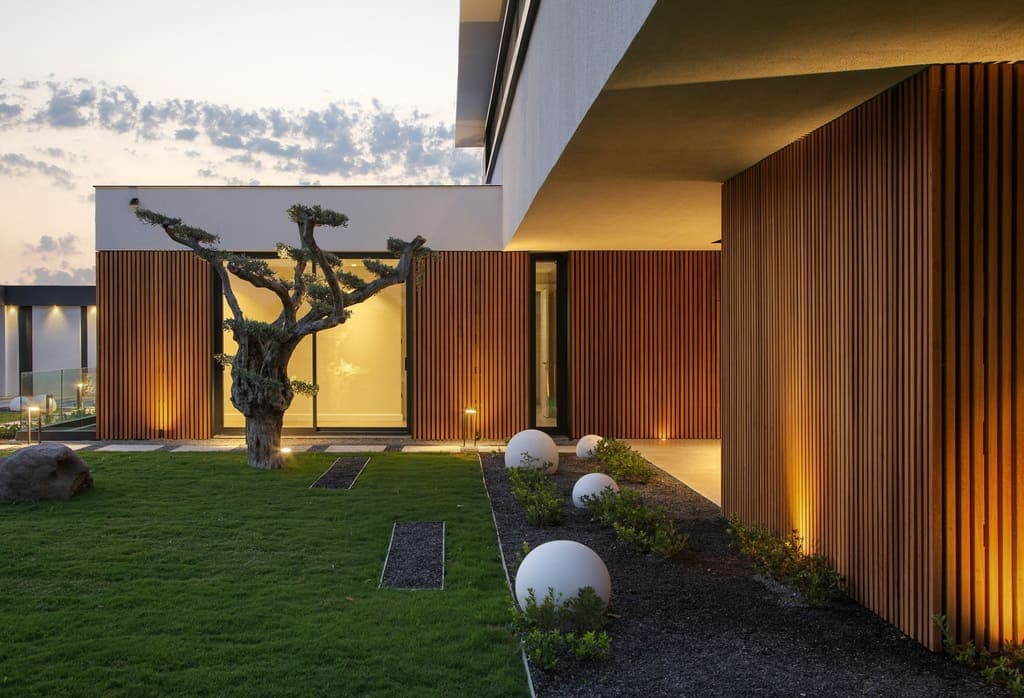
Understanding Thermally Modified Wood for Patio Walls
Thermally modified wood undergoes a high-heat treatment process in controlled conditions, which alters its cellular structure. This modification enhances its dimensional stability, making it less prone to expansion and contraction due to changes in humidity. It also increases its resistance to decay and insect infestation, which is beneficial for any outdoor application, even those protected by a roof.
For covered patio walls, this means a material that is less likely to warp, cup, or check compared to traditional untreated wood. The process gives the wood a consistent, rich brown tone, which can be maintained with a finish or allowed to weather naturally to a silver-gray patina over time. This characteristic makes it a versatile choice for various design aesthetics, from rustic to contemporary.
While thermally modified wood is enhanced for outdoor use, covered patio walls still require attention to detail regarding ventilation and moisture management, particularly in a humid climate like Columbia, SC.
Selecting the Right Profile and Species
The aesthetic impact of your covered patio walls largely depends on the chosen profile. Thermally modified wood is available in various profiles, each offering a distinct look and shadow line. Common options include tongue-and-groove, shiplap, and square edge profiles.
Tongue-and-groove profiles create a tight, interlocking fit, often favored for a smooth, continuous surface. Shiplap offers a more pronounced shadow line, adding depth and architectural interest. Square edge profiles, when installed with a gap, can achieve a modern, slatted look. The choice of profile will influence both the visual texture and the ease of installation.
While specific species undergo thermal modification, the process itself yields similar performance benefits across different wood types. Always verify that the chosen thermally modified wood product is approved for vertical wall applications. For example, NORX thermally modified wood products are designed for durability and appearance in exterior applications, including cladding.
Consider the overall design of your patio and home when selecting a profile. A contemporary home might benefit from a sleek shiplap or slatted design, while a more traditional setting could suit a classic tongue-and-groove.
Finishing and Appearance Over Time
Thermally modified wood can be left unfinished to gradually weather to a silver-gray. This natural aging process is a popular choice for those seeking a low-maintenance, organic aesthetic. However, if you prefer to maintain the initial rich brown color, or introduce a specific hue, a penetrating oil finish can be applied.
For covered patio walls, the UV exposure is reduced compared to fully exposed siding, which can slow the weathering process if left unfinished. If applying a finish, ensure it is suitable for exterior wood and follow the manufacturer's application guidelines. Regular reapplication will be necessary to maintain the desired color and provide additional protection.
It's important to understand that even with a finish, the wood's appearance will evolve over time. The choice between a finished and unfinished look should align with your long-term aesthetic preferences and willingness to perform periodic maintenance.
Planning for Proper Ventilation and Substructure
Even on a covered patio wall, proper ventilation behind the thermally modified wood is crucial, especially in humid climates. A rainscreen assembly, while often associated with fully exposed exteriors, can still offer benefits by allowing air circulation and moisture drainage behind the cladding. This helps prevent moisture accumulation and promotes drying, contributing to the longevity of the installation.
The substructure for your covered patio walls typically consists of furring strips or battens installed over the existing wall sheathing or framing. These create the necessary air gap for ventilation. Ensure the substructure is sound, level, and securely fastened to support the weight of the thermally modified wood. The spacing of the furring strips will depend on the chosen profile and the recommended fastening schedule.
Consider the local building practices and any specific requirements for exterior wall assemblies in Columbia, SC, to ensure your substructure design is appropriate.
Worked Example: Covered Patio Accent Wall
Let's consider a hypothetical covered patio in Columbia, SC, where a homeowner wants to install a thermally modified wood accent wall. The wall measures 12 feet wide by 8 feet high, with no windows or doors. The chosen product is a 6-inch wide (nominal, 5.5-inch actual coverage) tongue-and-groove thermally modified wood profile, available in 10-foot lengths.
First, calculate the total area: 12 feet * 8 feet = 96 square feet. To determine the number of boards needed, we'll calculate the linear footage. The actual coverage of each board is 5.5 inches, or 0.458 feet. For an 8-foot high wall, we need 8 feet / 0.458 feet per board (approx) = 17.47 boards. Since we can't buy partial boards, we'll need 18 boards for the height. For the 12-foot width, we have 12 feet / 10-foot board length = 1.2 boards. This means each 10-foot board will cover part of the 12-foot width, and we'll need to use cuts.
A more practical approach for horizontal installation: Each 10-foot board covers 5.5 inches in height. For an 8-foot (96-inch) height, we need 96 inches / 5.5 inches per board = 17.45 boards. Round up to 18 full boards. Since boards are 10 feet long, each row will require one 10-foot board and one 2-foot board. This means we need 18 x 10-foot boards and 18 x 2-foot pieces. However, we can optimize cuts. From one 10-foot board, we can get five 2-foot pieces (10 feet = 120 inches; 2 feet = 24 inches; 120/24 = 5). So, for 18 x 2-foot pieces, we would need 18 / 5 = 3.6, so 4 additional 10-foot boards to yield the 2-foot cuts. Therefore, we would need 18 (for the 10-foot sections) + 4 (for the 2-foot sections) = 22 boards, each 10 feet long. It is recommended to add 10-15% for waste and cuts, bringing the total to approximately 24-25 boards. Always confirm exact dimensions and coverage with the product supplier.
Fastening: For a tongue-and-groove profile, blind fastening is often preferred for a clean look. Fasteners should be corrosion-resistant and appropriate for exterior wood applications. Ensure adequate spacing and attachment to the furring strips.
Before you order
- Verify if thermally modified wood product is approved for vertical wall applications.
- Choose a profile (tongue-and-groove, shiplap, square edge) that complements your patio design.
- Decide on an unfinished (silver-gray weathering) or finished (color retention) look.
- Plan for proper ventilation behind the cladding, potentially using a rainscreen assembly.
- Ensure the substructure is sound, level, and securely fastened.
- Calculate material quantities accurately, including a waste factor for cuts.
- Select corrosion-resistant fasteners suitable for exterior wood.
- Consider the long-term maintenance requirements based on your finishing choice.
Confirm installation details, approved uses and warranty terms in the current instructions for the exact product and profile. Your installer should verify the substrate, structure and applicable project requirements.
This is a planning guide for projects in Columbia, SC. Ask our team to confirm availability, delivery to your ZIP code and which branch can support your order.
Questions to help you decide
Can thermally modified wood be used in humid climates like Columbia, SC?
Yes, thermally modified wood is well-suited for humid climates. The thermal modification process significantly enhances the wood's dimensional stability, making it less prone to swelling and shrinking due to moisture fluctuations, which is a key advantage in regions with high humidity.
Does thermally modified wood require special maintenance on a covered patio?
If left unfinished, thermally modified wood will naturally weather to a silver-gray patina over time, requiring minimal maintenance. If you choose to apply a finish to retain its original color, periodic reapplication of an exterior-grade oil or stain will be necessary to maintain the desired appearance and offer additional protection.
What is the best way to fasten thermally modified wood to a covered patio wall?
The best fastening method depends on the chosen profile. For tongue-and-groove or shiplap, blind fastening (where fasteners are concealed in the tongue or overlap) is often preferred for a clean aesthetic. For square edge profiles, face fastening with corrosion-resistant screws or nails is common. Always use fasteners recommended for exterior wood applications and follow manufacturer guidelines for spacing and type.
Ready to Transform Your Covered Patio Walls?
Request a material quote with your project dimensions, desired profile, and ZIP code to explore the possibilities of thermally modified wood for your Columbia, SC covered patio. Our team can help confirm current availability and service options for your project.
Request a material quote →