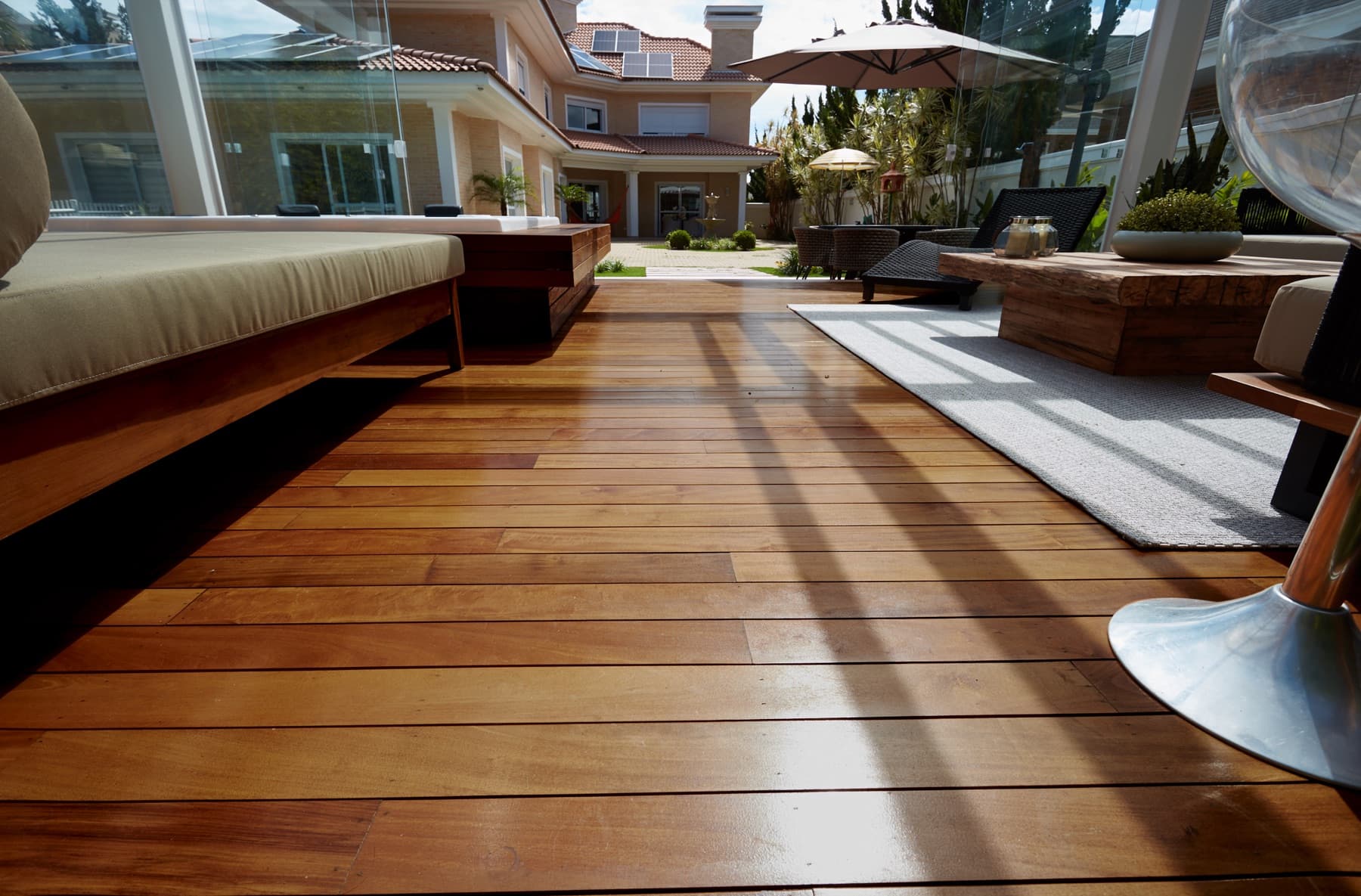
Assess Your Existing Deck Frame: The First Step in Renovation
Before selecting any new decking material, the most critical step in a deck renovation is to thoroughly inspect your existing frame. The condition of your joists, beams, and ledger board will determine whether your current structure can support new hardwood decking. Look for any signs of rot, insect damage, or excessive deflection. Hardwood decking species like Ipe and Cumaru are known for their density and weight, which means your existing frame must be robust enough to handle the increased load. If there are any concerns, consulting with a structural engineer or a qualified contractor is essential to ensure safety and longevity.
Verify that the joist spacing is appropriate for the hardwood decking you plan to install. If your existing joist spacing is wider, you may need to add additional joists or consider a different decking material. Also, check the ledger board connection to your house; this is a common point of failure if not properly installed and maintained. Ensure all fasteners are secure and free from corrosion.
Understanding Hardwood Decking Options: Ipe vs. Cumaru
Once your frame is deemed suitable, you can explore hardwood decking options. Two popular choices for their durability and appearance are Ipe and Cumaru. Both are tropical hardwoods known for their strength and natural resistance to various elements.
Ipe, also known as Brazilian walnut, is a benchmark hardwood. Its color ranges from reddish-brown to olive-brown. Ipe is highly resistant to weather changes, mold, and termites, and with proper care, it can last for many decades. It also carries a Class A fire rating. Ipe is often considered for projects where longevity and minimal post-installation movement are priorities.
Cumaru is another very durable tropical hardwood. Cumaru is resistant to termites and weather changes and offers stiffness, strength, and extreme hardness. Cumaru presents a slightly different aesthetic, with colors often described as a reddish-brown, and can release a subtle cinnamon and vanilla scent when worked. It also holds a Class A fire resistance rating. Cumaru can be a compelling alternative to Ipe, offering similar performance characteristics at a different price point.
Considerations for Columbia, SC Projects: Sun, Moisture, and Maintenance
Columbia, SC, experiences warm, humid summers and mild winters, which means your deck will be exposed to significant sun and moisture throughout the year. Hardwood decking like Ipe and Cumaru are well-suited for these conditions due to their natural density and oil content, which help resist warping and rot. However, even with highly durable hardwoods, understanding the local climate's impact on maintenance is crucial.
Both Ipe and Cumaru will naturally weather to a silvery-gray patina if left untreated. If you prefer to maintain their original rich brown tones, a UV-blocking sealer should be applied periodically. Annual cleaning to remove dirt, pollen, and mildew is recommended to preserve the deck's appearance and prevent surface growth. While these hardwoods are naturally resistant to many issues, consistent exposure to the Columbia sun and humidity means considering a maintenance plan from the outset. This might include applying an oil finish every 1-2 years, depending on exposure and desired color retention.
Worked Example: Renovating a 10x12 Foot Deck with Cumaru Decking
Let's consider a hypothetical renovation of an existing 10-foot by 12-foot deck in Columbia, SC, using Cumaru hardwood decking.
For this example, we'll use Cumaru decking boards in a common profile: 5/4 inch by 6 inches (nominal, actual dimensions around 1 inch by 5.5 inches). The deck area is 120 square feet (10 ft x 12 ft).
Assuming minimal waste for cuts and a preference for continuous boards where possible, we could plan for 10-foot or 12-foot lengths. For a 10-foot wide deck, 10-foot boards would be ideal, minimizing end waste. Each 10-foot board, at 5.5 inches actual width, covers approximately 4.58 square feet (10 ft * 5.5 in / 12 in/ft).
To cover 120 square feet, you would need approximately 26.2 boards (120 sq ft / 4.58 sq ft/board). Since you can't buy fractional boards, you would likely round up to 27 boards. This is a simplified calculation and does not account for specific cut plans, end-matching, or potential offcuts. Always add 10-15% for waste, especially with hardwoods that may require selective cutting for aesthetics or to remove minor imperfections. So, for this project, you might consider ordering 30-31 boards of 10-foot Cumaru decking.
Remember, this is a hypothetical example. Actual material quantities depend on the exact board dimensions, layout, presence of stairs or railings, and waste factor determined by your installer and specific project needs. Always get a precise material takeoff from your contractor or supplier based on detailed measurements.
Complementary Products for Your Hardwood Deck Renovation
A successful hardwood deck renovation extends beyond just the decking boards. Consider these complementary products to complete your project:
Decking Fasteners: For hardwood, you'll need strong, corrosion-resistant fasteners. Hidden fastening systems are popular for a clean, unblemished surface, but face-fastening with appropriate screws is also an option. Ensure your chosen fasteners are compatible with the density of Ipe or Cumaru and are rated for outdoor use.
Decking Oil/Sealer: If you wish to preserve the natural color of your hardwood, a high-quality UV-blocking decking oil or sealer is essential. These products help protect the wood from UV degradation and moisture, enhancing its longevity and appearance. Look for products specifically formulated for dense hardwoods.
Ventilation Materials: Proper ventilation beneath your deck is crucial to prevent moisture buildup and ensure the longevity of both your new decking and the existing frame. Consider lattice or skirting materials that allow for adequate airflow while maintaining aesthetic appeal.
Cleaning Solutions: Regular cleaning is key to maintaining your hardwood deck. Have appropriate deck cleaning solutions on hand that are safe for hardwood and effective against dirt, mildew, and grime.
Before you order
- Thoroughly inspect existing deck frame for rot, insect damage, and structural integrity.
- Measure your deck dimensions precisely to calculate material needs, adding 10-15% for waste.
- Choose between Ipe (benchmark durability, reddish-brown to olive-brown) and Cumaru (very durable, reddish-brown, cinnamon scent when worked).
- Decide on desired aesthetic: allow to silver naturally or apply UV-blocking sealer to retain original color.
- Plan for annual cleaning and potential re-application of oil/sealer based on Columbia's climate.
- Select appropriate fasteners (hidden or face-fastened) compatible with dense hardwoods.
- Consider complementary products: decking oil, cleaning solutions, and ventilation materials.
- Obtain a detailed material quote with project dimensions, exact profile, and ZIP code.
- Confirm current availability of desired profiles and lengths with your supplier.
Confirm installation details, approved uses and warranty terms in the current instructions for the exact product and profile. Your installer should verify the substrate, structure and applicable project requirements.
This is a planning guide for projects in Columbia, SC. Ask our team to confirm availability, delivery to your ZIP code and which branch can support your order.
Questions to help you decide
Can I use my existing deck frame for hardwood decking?
You may be able to, but a thorough inspection is critical. The existing frame must be structurally sound, free of rot or insect damage, and capable of supporting the increased weight of dense hardwood.
How do I maintain the original color of my hardwood deck in Columbia, SC?
To maintain the original color of hardwood decking like Ipe or Cumaru, you will need to apply a UV-blocking decking oil or sealer periodically. The frequency depends on sun exposure and product type, but typically every 1-2 years. Without treatment, the wood will naturally weather to a silvery-gray patina.
What is the difference between Ipe and Cumaru for a renovation project?
Both Ipe and Cumaru are durable tropical hardwoods suitable for decking. Cumaru can be a cost-effective alternative to Ipe while still offering high performance.
Ready to Renovate Your Deck with Hardwood?
Request a material quote today! Provide your project dimensions, desired hardwood profile (e.g., Ipe 1x6, Cumaru 5/4x6), and your ZIP code to confirm current availability and service options for your Columbia, SC project.
Request a material quote →