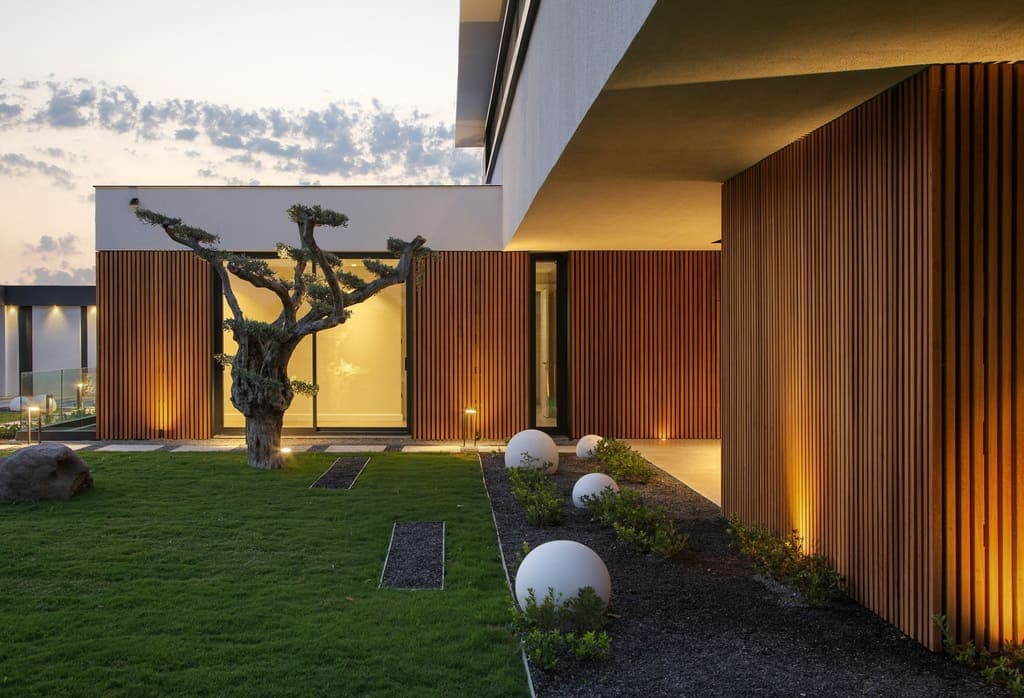
Understanding Thermally Modified Wood for Wall Applications
Thermally modified wood undergoes a high-heat treatment process that alters its cellular structure. This modification process typically enhances the wood's stability and can influence its appearance, often resulting in richer, darker tones depending on the species and treatment level. For covered patio walls, these characteristics can be beneficial.
The enhanced stability means the wood may exhibit reduced tendencies for expansion and contraction compared to untreated wood when exposed to changes in temperature and humidity. This can contribute to a more consistent appearance over time, especially in an environment like a covered patio where it's shielded from direct rain and intense UV radiation, but still subject to ambient conditions. Various wood species, such as Ash or Poplar, are commonly used for thermal modification, offering different grain patterns and natural characteristics. NORX is one brand that offers thermally modified wood products suitable for wall applications.
Selecting the Right Profile and Species
The profile of the thermally modified wood planks will significantly impact the visual texture and shadow lines of your covered patio walls. Common profiles include tongue-and-groove, shiplap, and square-edge boards. Tongue-and-groove profiles often provide a tight, interlocked fit, which can create a smooth, continuous surface. Shiplap offers distinct shadow lines, adding depth and a more traditional or rustic aesthetic.
Consider the overall design of your patio and home. For a contemporary look, a sleek, narrow profile with minimal gapping might be preferred. For a more rustic or casual feel, wider boards with pronounced shadow lines could be appropriate. The choice of wood species, such as thermally modified Ash or Poplar, will also influence the grain pattern and natural color variations, even before any finish is applied. Reviewing samples of different profiles and species is recommended to visualize the final appearance.
Finishing Options for Covered Patio Walls
While thermally modified wood is often chosen for its natural appearance, applying a finish can protect its color and enhance its longevity. For covered patio walls, the decision to finish depends on your desired aesthetic and maintenance commitment. Left unfinished, thermally modified wood will naturally weather and develop a silver-gray patina over time, a process that may occur more slowly and evenly in a covered application than in full sun and rain exposure.
If you prefer to maintain the wood's original color or achieve a specific hue, a penetrating oil finish is often recommended. These finishes can help protect the wood from UV degradation and moisture absorption, while allowing the natural grain to show through. Clear or tinted oils are available. Always follow the finish manufacturer's instructions for application and reapplication schedules. For covered patio walls, maintenance might be less frequent than for fully exposed siding, but periodic reapplication will be necessary to preserve the finish's effectiveness and appearance.
Attachment Methods and Substructure Considerations
Proper attachment is crucial for the long-term performance and appearance of your thermally modified wood walls. For covered patio applications, direct fastening into a suitable substructure is common. This typically involves fastening the boards to furring strips or framing members that are securely attached to the main structure of the patio. Using stainless steel fasteners is generally recommended to prevent corrosion and staining of the wood.
For a clean, fastener-free appearance, some profiles, such as certain tongue-and-groove systems, may allow for concealed fastening. This involves driving fasteners through the tongue or groove, hiding them from view once the next board is installed. Always ensure that the substructure provides adequate support and that fasteners are appropriate for the thickness and species of the thermally modified wood. Consider a rainscreen assembly if any moisture accumulation behind the wall is a concern, even in a covered area, to promote air circulation and drainage. This involves creating a small air gap between the wood cladding and the wall sheathing using furring strips.
Hypothetical Project Example: Covered Patio Wall in Burlington, VT
Imagine a covered patio in Burlington, VT, measuring 12 feet wide by 8 feet high, with two walls to be clad in thermally modified wood. The homeowner desires a contemporary look with a consistent appearance. They select a thermally modified Ash, tongue-and-groove profile, with boards measuring 5 inches wide (nominal, 4.5 inches actual coverage) by 12 feet long. They plan to use a clear penetrating oil finish to retain the wood's natural hue.
For each 12-foot wide wall, approximately 32 boards are needed (12 feet * 12 inches/foot / 4.5 inches/board = 32 boards). Since the boards are 12 feet long, no horizontal cuts are needed for length. The total number of boards for two walls would be 64. The project also includes a small accent around an outdoor fireplace, requiring an additional 10 linear feet of the same material. It is good practice to order an additional 10-15% for waste, cuts, and future repairs. In this hypothetical example, ordering 75 boards (approximately 15% overage) would be a reasonable starting point for material acquisition.
For this project, the homeowner would also need to account for the penetrating oil finish, estimating coverage based on the product's specifications and the total surface area (approximately 2 x (12 ft * 8 ft) = 192 sq ft, plus the fireplace accent). Appropriate stainless steel fasteners and any necessary flashing around penetrations (like electrical outlets or light fixtures) would also be included in the material list. This example illustrates the importance of precise measurements and accounting for waste in your material calculations.
Before you order
- Confirm the specific exposure conditions of your covered patio walls (e.g., degree of shelter from rain, sun, wind).
- Select a thermally modified wood species and profile suitable for wall applications and your desired aesthetic.
- Decide on a finish (or no finish) and understand the maintenance requirements.
- Verify the substructure readiness and plan appropriate fastening methods and materials.
- Calculate the required quantity of material, including waste factor, based on precise measurements.
- Consider complementary materials like trim, flashing, and fasteners.
- Review local building practices and any applicable codes for exterior wall cladding in Burlington, VT.
Confirm installation details, approved uses and warranty terms in the current instructions for the exact product and profile. Your installer should verify the substrate, structure and applicable project requirements.
This is a planning guide for projects in Burlington, VT. Ask our team to confirm availability, delivery to your ZIP code and which branch can support your order.
Questions to help you decide
Can thermally modified wood be left unfinished on covered patio walls?
Yes, thermally modified wood can be left unfinished. It will naturally weather to a silver-gray patina over time. In a covered patio setting, this weathering process may be slower and more uniform compared to fully exposed applications, but the color change will still occur. If you prefer to maintain the original color, a penetrating oil finish is recommended.
How do I clean thermally modified wood on covered patio walls?
For routine cleaning, a soft brush or cloth with mild soap and water is usually sufficient. Avoid harsh chemicals or abrasive cleaners that could damage the wood or its finish. For any stubborn stains or mildew, specific wood cleaning products designed for outdoor use can be considered, always testing in an inconspicuous area first. Ensure good ventilation for drying.
Are there specific considerations for thermally modified wood in a cold climate like Burlington, VT?
While thermally modified wood exhibits enhanced stability, it is still wood. In cold climates like Burlington, VT, where temperatures fluctuate significantly, proper installation practices are key. Ensure adequate ventilation behind the cladding, especially if moisture could become trapped. Using appropriate fasteners and allowing for minor wood movement, even with the enhanced stability of thermally modified wood, is important. For covered patio walls, the main benefit in a cold climate is reduced direct exposure to freeze-thaw cycles and snow accumulation compared to fully exposed siding.
Ready to Plan Your Thermally Modified Wood Patio Walls?
Request a material quote with your project dimensions, desired profile, and ZIP code to confirm current availability and service options for your Burlington, VT project. Explore our selection of thermally modified wood, siding and cladding, and products from brands like NORX and Maximo Accoya to find the perfect fit for your covered patio.
Request a material quote →