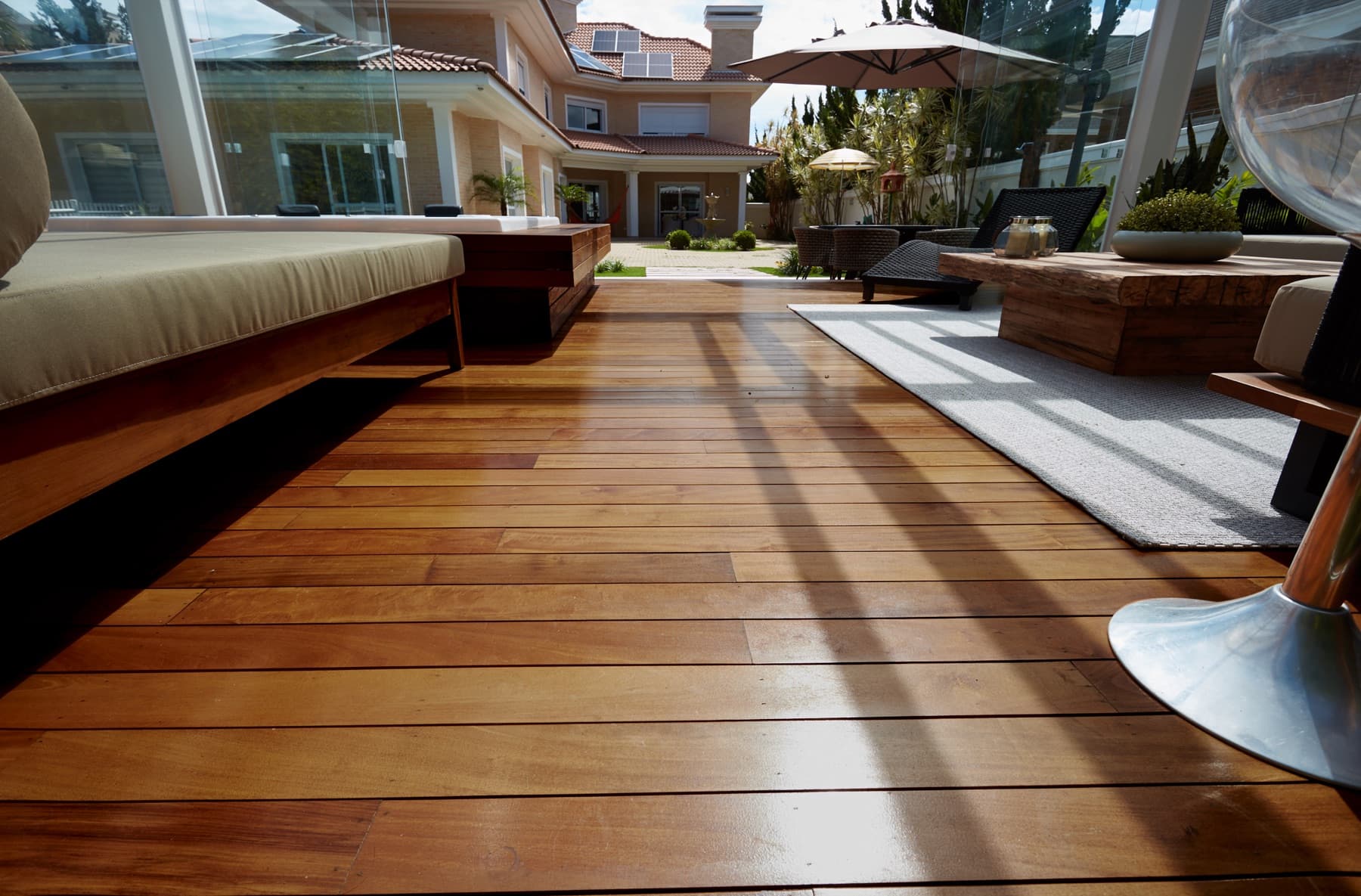
Evaluating Your Existing Deck Frame
The first step in any deck renovation is a thorough inspection of the existing substructure. This includes joists, beams, ledger boards, and support posts. Look for signs of rot, insect damage, significant warping, or cracked timber. Pay close attention to areas where wood meets the ground, where fasteners are installed, and where water might collect.
In a climate with seasonal changes, such as Burlington, VT, moisture exposure and freeze-thaw cycles can impact wood over time. Ensure all structural components are sound and capable of supporting the weight of new decking, especially if you are upgrading to a denser material like hardwood. If any structural elements are compromised, they must be repaired or replaced before new decking is installed. This foundational integrity is non-negotiable for safety and longevity.
Understanding Hardwood Decking: Ipe and Cumaru
Hardwood decking, particularly species like Ipe and Cumaru, offers exceptional durability and a distinct aesthetic. These tropical hardwoods are known for their natural resistance to rot, insects, and weather, making them a suitable choice for outdoor applications.
Ipe, also known as Brazilian walnut, is a dense and durable hardwood. It ranges in color from reddish-brown to olive-brown and is prized for its longevity. It exhibits minimal movement post-installation and has natural resistance to weather changes, mold, and termites. Ipe is a benchmark hardwood for demanding outdoor projects. (S1)
Cumaru is another very durable tropical hardwood. It is resistant to termites and weather changes, featuring an air dry density and Janka rating that indicate stiffness, strength, and extreme hardness.
Comparing Hardwood Species for Your Project
When selecting hardwood for your Burlington, VT deck renovation, consider the specific characteristics of each species. While both Ipe and Cumaru are robust choices, they have subtle differences.
Ipe is often considered the premium option due to its exceptional density and reported lifespan. It is often chosen for projects where maximum durability and a deep, rich color are priorities. (S1)
Cumaru provides a very durable alternative, offering similar resistance properties and strength. It can be a compelling choice for projects that seek high performance with a slightly different aesthetic. (S1)
Both species can be left untreated to weather to a silvery-gray patina or maintained with a UV-blocking sealer to preserve their original wood tones. (S1)
Planning for Decking Installation and Layout
Hardwood decking, due to its density, requires specific installation techniques and tools. Professional installation is often recommended to ensure proper fastening and board spacing. Consider your desired board width and length, and how these will impact the overall visual flow and minimize waste.
A common approach is to plan for board lengths that reduce the number of end-to-end seams. For instance, if your deck is 16 feet deep, ordering 16-foot boards can create a continuous look. For a smaller 8-by-5-foot section, a straightforward layout might use two 8-foot boards and one 5-foot board for each row if the width allows, minimizing cuts. Always account for a waste factor in your material order, typically 10-15%, to cover cuts, defects, or unforeseen issues.
Consider the final appearance, whether a traditional linear layout or a more intricate pattern like diagonal boards or a picture-frame border. These choices should be finalized before ordering materials to ensure accurate quantities and profiles. Ensure adequate ventilation beneath the deck to prevent moisture buildup, especially in areas prone to humidity or snow melt.
Worked Example: Resurfacing a 10x12-foot Deck
Let's consider a hypothetical renovation of a 10-foot by 12-foot deck in Burlington, VT, assuming the existing frame is sound. We want to resurface it with Ipe decking boards, available in 1x6 inch nominal dimensions (actual 0.75x5.5 inches) and lengths from 8 to 20 feet. For simplicity, we'll plan for a linear layout across the 12-foot dimension.
First, calculate the number of boards needed to cover the 10-foot width. A 1x6 board is 5.5 inches wide. 10 feet = 120 inches. 120 inches / 5.5 inches/board = approximately 21.82 boards. We will need 22 boards to cover the width.
Total boards needed: 22 boards (width) x 1 (length) = 22 boards. Adding a 10% waste factor: 22 * 1.10 = 24.2 boards. Round up to 25 boards. Therefore, you would order 25 Ipe boards, each 1x6 inches by 12 feet long. This example assumes minimal cuts for the width and no complex patterns. For actual projects, precise measurements and a detailed cut plan are essential.
Before you order
- Assess existing deck frame for structural integrity (joists, beams, posts, ledger board).
- Identify and repair/replace any compromised structural elements.
- Determine the desired finished aesthetic (color, grain, weathering).
- Select hardwood species (e.g., Ipe, Cumaru) based on durability, appearance, and budget.
- Choose board dimensions (width, length) suitable for your deck size and layout.
- Plan for ventilation and drainage under the deck.
- Confirm local building codes and regulations for deck renovations.
- Estimate material quantities, including a waste factor (10-15%).
- Consider professional installation due to hardwood density and specialized tools.
Confirm installation details, approved uses and warranty terms in the current instructions for the exact product and profile. Your installer should verify the substrate, structure and applicable project requirements.
This is a planning guide for projects in Burlington, VT. Ask our team to confirm availability, delivery to your ZIP code and which branch can support your order.
Questions to help you decide
How long does Ipe wood last?
With proper care, Ipe decking can last up to 75 years, significantly longer than many other wood species used for outdoor purposes. (S1)
Does hardwood decking require maintenance?
Hardwood decking like Ipe and Cumaru is low maintenance. An annual wash is recommended. To maintain the original rich brown color, an annual application of a UV-blocking oil or sealer is needed. If left untreated, the wood will naturally weather to a silvery-gray patina, with no structural difference. (S1, S2)
Can I install hardwood decking myself?
While it is possible, installing dense hardwoods like Ipe and Cumaru typically requires specialized tools and techniques. Professional installation is often recommended to ensure correct fastening, proper board spacing, and a durable finish. (S1)
Ready to Plan Your Hardwood Deck Renovation?
Request a material quote with your project dimensions, exact profile preferences, and ZIP code to confirm current availability and service options for your Burlington, VT project.
Request a material quote →