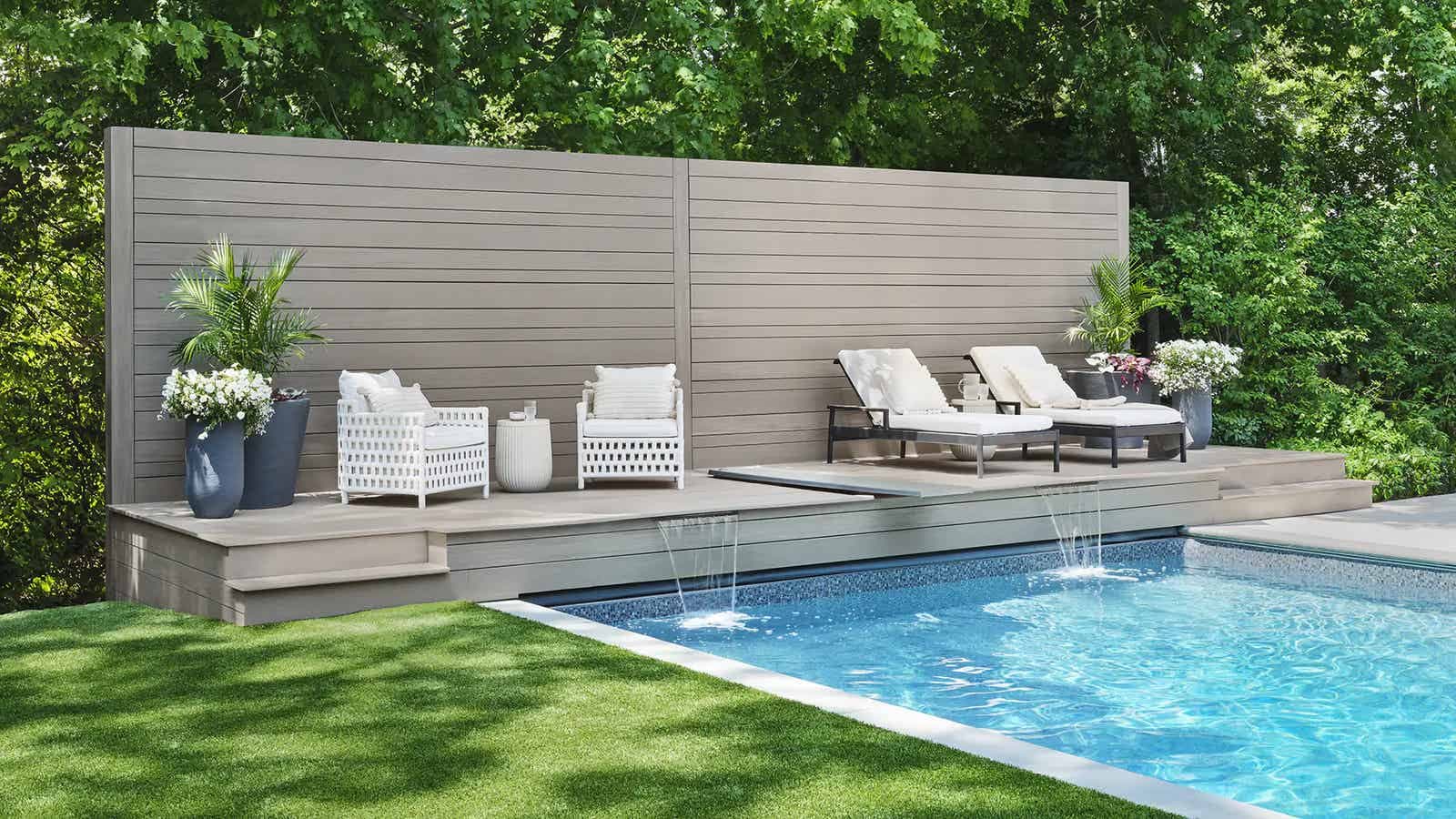
Why PVC Decking for a Pool Terrace?
PVC decking is a 100% synthetic material, meaning it contains no wood fiber. This composition makes it inherently resistant to moisture absorption. For pool surrounds, where constant splashing and humidity are common, this characteristic is a primary advantage. Unlike wood or even some composite materials, PVC boards are designed to withstand prolonged exposure to water without swelling, staining, or rotting.
The resistance to moisture also extends to other poolside considerations, such as chlorine or salt spray, which can be present depending on the pool type. PVC decking is engineered to maintain its integrity and appearance in these conditions. This material's synthetic nature also contributes to its ease of cleaning, as spills and pool chemicals tend to remain on the surface rather than penetrating the board, allowing for simple cleanup with soap and water.
Material Properties: Waterproof to the Core
The core characteristic of PVC decking is its waterproof nature. Being 100% synthetic, these boards are waterproof to the core, which makes them a suitable choice for areas where boards are frequently wet, such as pool surrounds, docks, or covered porches that experience weather from multiple directions.
This inherent water resistance means that PVC decking does not rely solely on a cap layer for protection against moisture. While many PVC decking products feature advanced capping for enhanced durability and aesthetic appeal, the underlying material itself is non-absorbent. This provides a consistent level of performance throughout the board, reducing concerns about delamination or internal damage from water saturation over time.
Design Considerations for Poolside Aesthetics
PVC decking is available in various collections that offer different aesthetic profiles, including options with deep wood looks. For a pool terrace, selecting a finish that complements the home's architecture and the pool's design is important. Some PVC decking lines offer heat-mitigating color options, which can be a practical consideration for surfaces exposed to direct sunlight, helping to keep the deck more comfortable underfoot.
When planning the layout, consider how the decking will integrate with the pool coping and surrounding landscaping. Picture-frame borders can create a defined edge around the pool or the entire deck, providing a finished look. Board widths and lengths should also be chosen to minimize seams and cuts where possible, contributing to a cleaner, more expansive appearance.
Planning for Drainage and Ventilation
Even with waterproof materials like PVC decking, proper drainage and ventilation beneath the deck surface are essential. Adequate spacing between boards is necessary to allow water to drain through and promote airflow. This helps prevent standing water on the deck surface and reduces moisture buildup in the sub-structure, which can be beneficial for the longevity of the entire deck system.
Consult the manufacturer's specific installation guidelines for recommended board spacing and ventilation requirements. These details are critical for ensuring the deck performs as intended and to maintain any applicable coverage terms. Ensuring good airflow also helps in managing surface temperatures by allowing heat to dissipate.
Maintenance and Cleaning for Pool Areas
One of the benefits of PVC decking for a pool terrace is its low-maintenance nature. Capped polymer surfaces are designed to shed common stains like grease and wine, making them easy to clean. For routine maintenance around a pool, a simple cleaning with soap and water is often sufficient to remove dirt, pool chemicals, and other residues.
It is important to follow the manufacturer's specific cleaning instructions and to avoid abrasive cleaners or tools that could damage the deck surface. Regular cleaning helps maintain the decking's appearance and can prevent the buildup of substances that might make the surface slippery or discolored over time. For specific or stubborn stains, refer to the product's care guide for recommended cleaning agents.
Hypothetical Project Example: A Burlington Pool Terrace
Consider a hypothetical pool terrace project in Burlington, VT, measuring 20 feet by 15 feet, surrounding an existing inground pool. The homeowners prioritize a low-maintenance material that can withstand the local climate, including snowy winters and humid summers, and frequent water exposure from the pool.
They select a light-colored PVC decking board, approximately 5.5 inches wide and available in 16-foot and 20-foot lengths, to help mitigate surface heat under the summer sun. For the 20x15 foot area (300 sq ft), they plan for a straight lay. Using 16-foot boards for the 20-foot dimension would require cuts and seams. By using 20-foot boards, they can run full lengths along one dimension, minimizing waste and creating a cleaner look. For the 15-foot dimension, three 5.5-inch wide boards would cover 16.5 inches. To cover the 15-foot width (180 inches), approximately 33 boards (180 inches / 5.5 inches per board) of the 20-foot length would be needed for the main field. This calculation is for coverage only; actual purchased quantity would account for cuts, waste, and any perimeter boards. They also plan for a contrasting PVC fascia board to finish the edges of the terrace, providing a clean transition to the surrounding landscape. They would also confirm the specific installation requirements for their chosen product, including joist spacing and fastener type, to ensure proper performance in a wet environment.
This example illustrates how product dimensions and layout planning influence material quantities and the final appearance of a poolside deck. Always confirm product availability, exact dimensions, and installation requirements with your supplier.
Before you order
- Confirm PVC decking is 100% synthetic and waterproof to the core for poolside use.
- Evaluate available color options, considering heat mitigation for sunny exposures.
- Verify manufacturer's specific installation guidelines for board spacing and ventilation.
- Plan for proper drainage to prevent standing water on and under the deck.
- Choose fascia and trim options that complement the main decking and pool coping.
- Review cleaning and maintenance instructions for poolside substances (e.g., chlorine, sunscreen).
- Calculate material needs, accounting for board dimensions, layout, and waste.
Confirm installation details, approved uses and warranty terms in the current instructions for the exact product and profile. Your installer should verify the substrate, structure and applicable project requirements.
This is a planning guide for projects in Burlington, VT. Ask our team to confirm availability, delivery to your ZIP code and which branch can support your order.
Questions to help you decide
Is PVC decking slippery when wet, especially around a pool?
Different manufacturers and product lines may have varying textures. It's always advisable to review specific product specifications regarding slip resistance and to exercise caution on any wet surface.
Can PVC decking be installed directly on concrete around a pool?
Installing PVC decking directly on concrete typically requires a sub-frame or sleeper system to allow for proper drainage and ventilation. Direct contact with a solid surface without airflow can trap moisture and potentially lead to issues. Always refer to the manufacturer's installation instructions for approved methods of installation over concrete or existing patios.
How does PVC decking handle the freeze-thaw cycles common in Burlington, VT?
PVC decking's synthetic composition makes it highly resistant to moisture absorption, which is key to its performance in freeze-thaw cycles. Unlike wood, which can absorb water and then crack or warp when that water freezes and expands, PVC boards are designed to resist these effects. This makes it a durable option for climates with significant seasonal temperature fluctuations like Burlington, VT.
Request a Quote for Your PVC Decking Project
Ready to plan your pool terrace or outdoor living space with PVC decking? Provide your project dimensions, desired profile, and ZIP code to request a material quote. We can also confirm current availability and service options for your area. We look forward to helping you with your project.
Request a material quote →