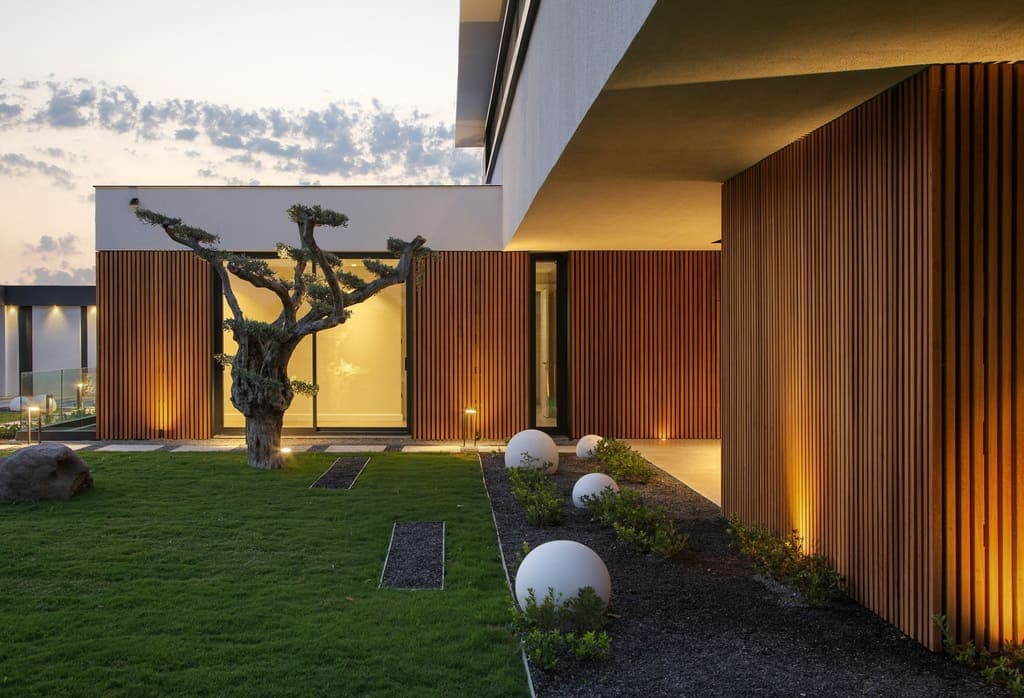
Understanding Thermally Modified Wood for Wall Applications
Thermally modified wood undergoes a high-heat treatment process that alters its cellular structure. This process aims to enhance the wood's stability and resistance to certain environmental factors, making it a suitable candidate for various outdoor applications, including covered patio walls. The modification process typically results in a darker, more uniform color throughout the wood.
For wall applications, particularly in covered areas, the enhanced stability of thermally modified wood can be beneficial in reducing tendencies towards warping or checking that might occur with untreated wood when exposed to fluctuating humidity. While covered walls are not fully exposed to the elements, they still experience changes in temperature and humidity, making material stability a key consideration.
It's important to confirm that the specific thermally modified wood product is approved for vertical wall use. Product specifications will detail suitable applications, profiles, and any required installation practices.
Selecting Profiles and Aesthetics for Covered Patio Walls
Thermally modified wood is available in various profiles, each offering a different aesthetic and installation method. Common profiles suitable for covered patio walls include tongue-and-groove, shiplap, and square-edge boards. The choice of profile can significantly impact the visual texture and shadow lines of the finished wall.
Tongue-and-groove profiles create a tight, interlocking joint, often preferred for a cleaner, more continuous surface. Shiplap offers a distinctive overlapping joint that creates a consistent shadow line, adding depth. Square-edge boards, when installed with a gap, can create a more open, slatted appearance.
The natural color of thermally modified wood is typically a rich, medium to dark brown, resembling many tropical hardwoods. This color can be maintained with a UV-protective finish or allowed to gradually weather to a silvery-gray patina if left unfinished. For covered patio walls, where direct sun exposure is reduced, the rate of weathering will be slower than on fully exposed surfaces.
Finishing Options for Enhanced Appearance and Protection
While thermally modified wood exhibits improved stability, applying a finish can offer additional benefits for covered patio walls. Finishes can protect the wood from UV degradation, help maintain its original color, and provide an extra layer of defense against moisture and dirt accumulation.
For retaining the wood's initial color, a transparent or semi-transparent stain with UV inhibitors is often recommended. These finishes allow the natural grain to show through while offering protection. Alternatively, a solid stain can be used for a uniform color application, completely changing the appearance of the wood.
If a natural, weathered look is desired, thermally modified wood can be left unfinished. However, even in covered areas, some degree of color change will occur over time. Regular cleaning can help prevent mildew and maintain the aesthetic of unfinished wood. Always follow the manufacturer's recommendations for specific finishes and maintenance schedules for the chosen product.
Attachment and Substructure Considerations
Proper attachment to a sound substructure is critical for the longevity and appearance of thermally modified wood walls. The substructure typically consists of furring strips or blocking, which provide a flat surface for attachment and create an air gap behind the wood, promoting ventilation.
For covered patio walls, a rainscreen assembly might not be strictly necessary as it would be for fully exposed siding, but creating an air gap behind the cladding is still good practice to manage moisture. This gap allows any moisture that gets behind the wood to drain and dry, preventing accumulation that could lead to issues.
Fasteners should be corrosion-resistant, such as stainless steel, to prevent staining and ensure a secure hold. Hidden fastening systems, often used with tongue-and-groove or specific shiplap profiles, can provide a cleaner aesthetic by concealing the fasteners. For square-edge boards or specific designs, visible face fastening might be appropriate, using fasteners that complement the wood's appearance.
Hypothetical Project Example: Covered Patio Wall
Consider a covered patio with an existing concrete slab and a roof structure, where one wall (10 feet wide by 8 feet high) is to be clad with thermally modified wood. The goal is a modern aesthetic with subtle shadow lines.
We select NORX thermally modified spruce shiplap, 5.5 inches wide with a 0.5-inch overlap, and 16-foot lengths. The shiplap will be installed horizontally.
For the 10-foot wide by 8-foot high wall (80 square feet):
1. **Calculate boards needed:** Each 5.5-inch wide board has an exposed face of 5 inches due to the overlap. 8 feet (96 inches) / 5 inches per board = 19.2 boards. Round up to 20 boards for the height.
2. **Length per board:** The wall is 10 feet wide. Since the boards come in 16-foot lengths, one 16-foot board can be cut into one 10-foot piece and one 6-foot offcut. The 6-foot offcut can be used for other sections or waste. For 20 boards across the height, we need 20 x 10-foot pieces.
3. **Total purchased lengths:** If we assume 16-foot lengths are the most efficient, we would need 20 lengths to get 20 x 10-foot pieces. This would result in 20 x 6-foot offcuts. It is more efficient to buy 20 x 10-foot lengths if available, or calculate cuts. If only 16-foot lengths are available, we need 20 boards. The total material for the main wall area is 20 boards x 16 feet = 320 linear feet. Given the exposed face, 80 square feet / (5/12 feet) = 192 linear feet of exposed face. This calculation confirms that ordering based on full board dimensions and considering cuts is essential.
4. **Finish:** A clear, UV-resistant exterior wood oil will be applied to maintain the natural brown tone and provide some moisture resistance. This will be applied according to the manufacturer's instructions after installation.
Year-Round Performance in Varied Climates
Thermally modified wood offers good performance across a range of climates. Its enhanced dimensional stability helps it resist swelling and shrinking, which can be particularly beneficial in regions experiencing significant seasonal temperature and humidity swings. This stability means the material is less likely to warp or cup, maintaining a consistent appearance on covered patio walls.
In areas with cold winters, the material's stability helps it withstand freeze-thaw cycles without significant degradation. For coastal environments, while thermally modified wood itself has good stability, any fasteners used should be highly corrosion-resistant due to potential salt air exposure. The 'covered' aspect of patio walls means less direct exposure to extreme weather events, further contributing to the material's longevity in these applications.
Before you order
- Verify specific thermally modified wood product is approved for vertical wall use.
- Choose a profile (e.g., tongue-and-groove, shiplap, square-edge) that matches desired aesthetic and installation method.
- Decide on a finish: retain natural color with UV-protective oil, apply a solid stain, or allow to weather naturally.
- Plan substructure (furring strips/blocking) to ensure a flat surface and adequate ventilation/drainage.
- Select corrosion-resistant fasteners (e.g., stainless steel), considering visible vs. hidden attachment.
- Calculate material quantities accurately, accounting for board dimensions, exposed face, and waste from cuts.
- Consider long-term maintenance requirements for the chosen finish and environment.
Confirm installation details, approved uses and warranty terms in the current instructions for the exact product and profile. Your installer should verify the substrate, structure and applicable project requirements.
This is a planning guide for projects in Buffalo, NY. Ask our team to confirm availability, delivery to your ZIP code and which branch can support your order.
Questions to help you decide
Can thermally modified wood be painted for covered patio walls?
Yes, thermally modified wood can be painted. However, many users choose it for its natural wood aesthetic. If painting, ensure the surface is clean, dry, and properly primed with a product compatible with thermally modified wood to ensure good adhesion and a lasting finish. Always follow the paint manufacturer's recommendations for application and surface preparation.
Is an air gap necessary behind thermally modified wood on a covered patio wall?
While a full rainscreen system might not be strictly required for covered patio walls due to reduced direct exposure, an air gap created by furring strips or blocking is still recommended. This gap promotes ventilation, allows any trapped moisture to dry, and helps prevent potential issues like mildew growth or moisture accumulation behind the cladding. It contributes to the overall longevity and performance of the wall system.
How does the color of thermally modified wood change over time on a covered patio?
If left unfinished, thermally modified wood will gradually weather to a silvery-gray patina, similar to other wood species. On a covered patio wall, this process will generally be slower and potentially less uniform than on fully exposed surfaces, as UV exposure and direct precipitation are reduced. If you wish to maintain the original rich brown tone, a UV-protective finish or stain should be applied and periodically reapplied according to the manufacturer's instructions.
Request a Material Quote for Your Covered Patio Wall Project
Ready to enhance your outdoor space with thermally modified wood? Provide your project dimensions, desired profile, and ZIP code to request a material quote. We can help confirm current availability and service options for your project.
Request a material quote →