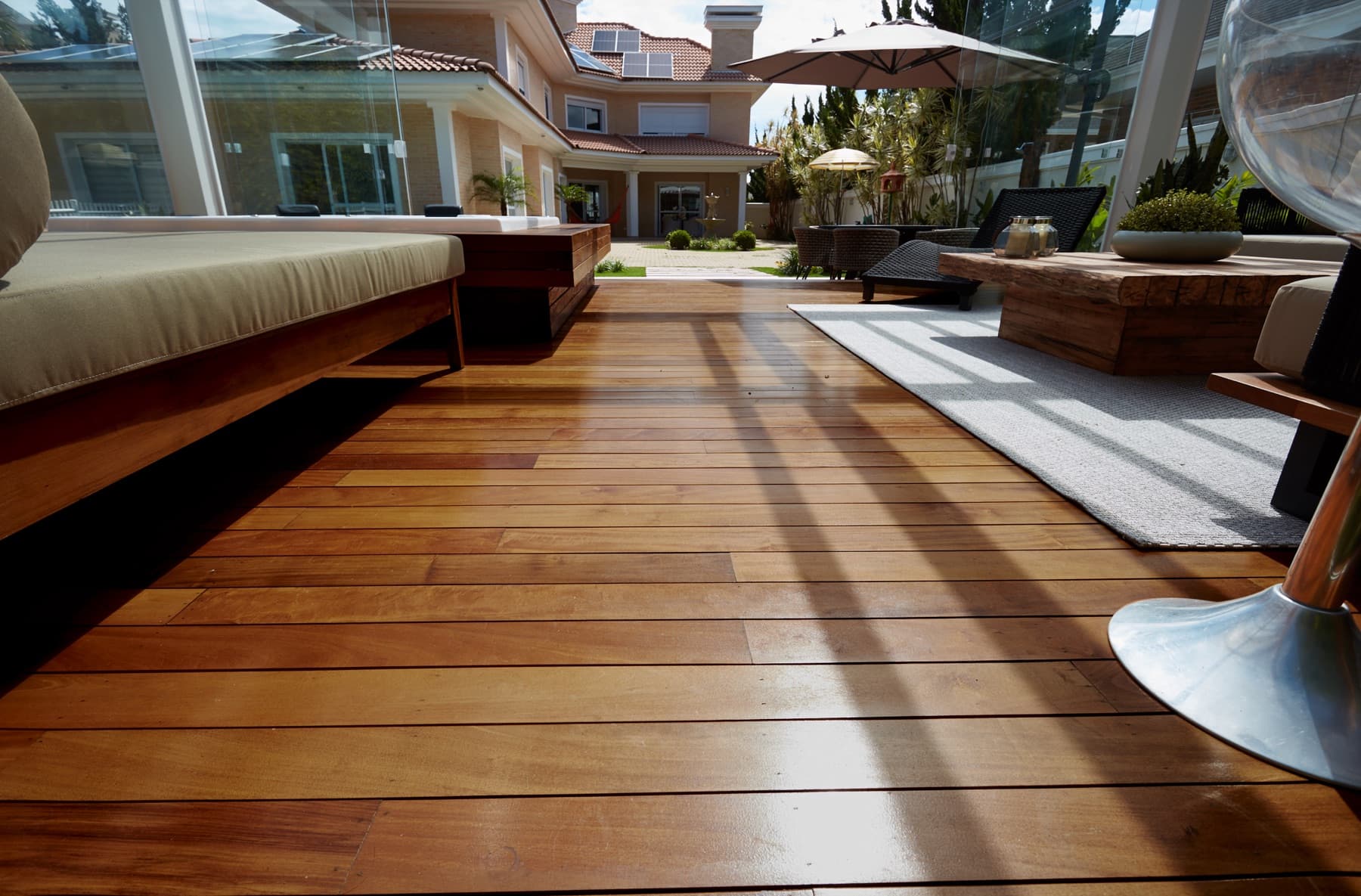
Assess Your Existing Deck Frame for Hardwood Suitability
Before selecting any decking material, a critical first step for any renovation project is to evaluate the condition and capacity of your existing deck frame. Hardwood decking, particularly dense species like Ipe and Cumaru, is heavier than many common decking materials or older softwoods. Your current joists, beams, and footings must be capable of supporting this additional weight.
Inspect all structural components for signs of rot, insect damage, or excessive wear. Pay close attention to connections, ledger boards, and posts. Any compromised elements should be repaired or replaced to ensure a safe and stable foundation for your new hardwood deck. Consult with a qualified builder or engineer to confirm the existing frame's suitability for the hardwood species you are considering, especially if you plan to change board dimensions or layout.
Choosing Hardwood Species: Ipe vs. Cumaru for Buffalo Conditions
For Buffalo's varied climate, selecting a hardwood species known for durability and weather resistance is key. Two popular choices for outdoor decking are Ipe and Cumaru, both originating from South America and offering distinct advantages.
Ipe, also known as Brazilian walnut, is a benchmark for outdoor hardwoods due to its exceptional density and natural resistance. It is noted for minimal movement post-installation and natural resistance to weather changes, mold, and termites. Its color ranges from reddish-brown to olive-brown. With proper care, Ipe decking can last for decades. It also carries a Class A fire rating.
It is resistant to termites and weather changes, and its natural resistance to insects, rot, and fungi makes it a dependable choice. Cumaru can also offer a scent of cinnamon and vanilla when being worked.
Both species are well-suited for demanding outdoor applications and can withstand conditions with significant temperature fluctuations. They can be left untreated to weather to a silvery-gray patina or maintained with a UV-blocking sealer to preserve their original color.
Consider the aesthetic you desire and your budget when making your choice. Ipe generally represents a higher investment but offers supreme longevity, while Cumaru provides comparable durability at a more accessible price point.
Understanding Board Profiles and Lengths for Renovation Planning
Hardwood decking is available in various profiles and lengths, which can impact your renovation plan and overall aesthetic. Standard profiles often include nominal 1"x4" or 5/4"x6" boards, but other dimensions may be available.
Longer board lengths can reduce the number of butt joints, creating a more seamless appearance, but they may also require more careful handling and support during installation. Shorter lengths can be more economical for smaller areas or intricate patterns. It's important to confirm the exact profiles and lengths available for your chosen species, as stock can vary. Planning your layout with available lengths helps minimize waste and optimize material use.
For Ipe, common availability includes profiles from 1"x2" through 6"x6" dimensions, in lengths from 3 to 24 feet, available in both air-dried (AD) and kiln-dried (KD) options.
When planning, consider how your chosen board width will align with your existing joist spacing. While hardwood is dense, proper support is crucial to prevent deflection and ensure the longevity of your deck. If your existing joist spacing is wider than recommended for your chosen board thickness, additional blocking or joists may be required.
Fastening Systems and Installation Considerations
The density of hardwoods like Ipe and Cumaru requires specific fastening techniques. Pre-drilling is often necessary for face-fastening to prevent splitting, and specialized hardwood screws are recommended. Alternatively, hidden fastening systems can provide a clean, fastener-free surface, but these systems must be compatible with the density and movement characteristics of hardwood.
Ensure adequate ventilation beneath the deck to prevent moisture buildup, which can contribute to wood movement or decay over time. Proper spacing between boards is also crucial to allow for natural expansion and contraction, which can occur with changes in humidity and temperature, even with highly stable hardwoods. Always refer to the manufacturer's specific installation guidelines for your chosen product to ensure correct spacing and fastening.
Given the density and specific installation requirements, professional installation is often recommended for hardwood decking projects.
Maintenance for Hardwood Decks in a Northeastern Climate
Hardwood decking, particularly Ipe and Cumaru, is known for its low maintenance requirements compared to many other decking materials. In Buffalo's climate, an annual wash is generally sufficient to keep the deck clean.
If you prefer to maintain the original reddish-brown to olive-brown color of Ipe or the rich tones of Cumaru, an annual application of a UV-blocking oil or sealer is recommended. Without this treatment, the wood will naturally weather to a beautiful silvery-gray patina. This silvering is a cosmetic change and does not affect the structural integrity or durability of the wood.
Regularly clear debris, leaves, and snow from your deck to prevent moisture from accumulating on the surface. While these hardwoods are highly resistant to rot and mold, prolonged standing water can still impact their appearance and require more frequent cleaning.
Worked Example: Renovating a 10' x 12' Deck with Ipe
Let's consider a hypothetical renovation of an existing 10-foot by 12-foot deck in Buffalo, aiming for an Ipe hardwood surface.
First, confirm your existing frame can support the weight of Ipe. Ipe has an air dry density of 5.75 lbs/bf. A 5/4" x 6" board weighs approximately 2.9 lbs per linear foot. This translates to roughly 770 pounds of decking material. Ensure your joists, beams, and footings are robust enough for this load, plus live loads.
For material calculation: The deck area is 120 square feet. If using 12-foot lengths, this would be 26 boards * 12 feet/board = 312 linear feet. Always add 10-15% for cuts, waste, and future repairs, bringing your estimate to around 340-360 linear feet. If Ipe is available in 12-foot lengths, you would purchase 26 boards. If only 8-foot lengths are available, you would need to plan for seams or purchase more boards to achieve full coverage with cuts.
For fastening, if using hidden fasteners, ensure the specific system is compatible with Ipe's density. If face-fastening, plan to pre-drill all holes and use specialized stainless steel screws. This example highlights the need for precise measurements and understanding material properties before ordering.
Before you order
- Assess existing deck frame for structural integrity and load capacity.
- Verify joist spacing is suitable for chosen hardwood board thickness.
- Select hardwood species (e.g., Ipe, Cumaru) based on durability, aesthetic, and budget.
- Confirm available board profiles and lengths for your chosen species.
- Plan deck layout to minimize waste and optimize board lengths.
- Choose appropriate fastening system (hidden vs. face-fastened) compatible with hardwood.
- Budget for specialized tools if self-installing, or professional installation services.
- Consider long-term maintenance preferences (silver patina vs. maintained color).
- Request a material quote with exact dimensions and desired profile.
Confirm installation details, approved uses and warranty terms in the current instructions for the exact product and profile. Your installer should verify the substrate, structure and applicable project requirements.
This is a planning guide for projects in Buffalo, NY. Ask our team to confirm availability, delivery to your ZIP code and which branch can support your order.
Questions to help you decide
How does Buffalo's winter climate affect hardwood decking?
Hardwoods like Ipe and Cumaru are highly resistant to extreme weather, including cold temperatures, snow, and ice. Their natural density and oils protect them from cracking or warping due to moisture exposure and freeze-thaw cycles. Regular clearing of snow and ice is recommended to prevent prolonged moisture contact, but the material itself is well-suited for winter conditions.
Can I install hardwood decking over an existing composite or softwood deck frame?
You can, provided the existing frame is structurally sound and adequately sized to support the increased weight of hardwood decking. Hardwoods are denser and heavier than most composite or softwood options. A professional assessment of the frame's condition and load-bearing capacity is crucial before proceeding to ensure safety and longevity.
What is the primary difference in appearance if I let my hardwood deck weather naturally?
If left untreated, Ipe and Cumaru hardwood decking will gradually transition from their initial rich reddish-brown or olive-brown tones to a distinguished silvery-gray patina over time. This natural weathering process is purely cosmetic and does not compromise the wood's structural integrity or durability. If you prefer to retain the original color, periodic application of a UV-blocking oil is necessary.
Ready to Transform Your Buffalo Deck?
Request a material quote with your project dimensions, exact profile, and ZIP code to confirm current availability and service options for hardwood decking. Our team can help you select the ideal species for your renovation.
Request a material quote →