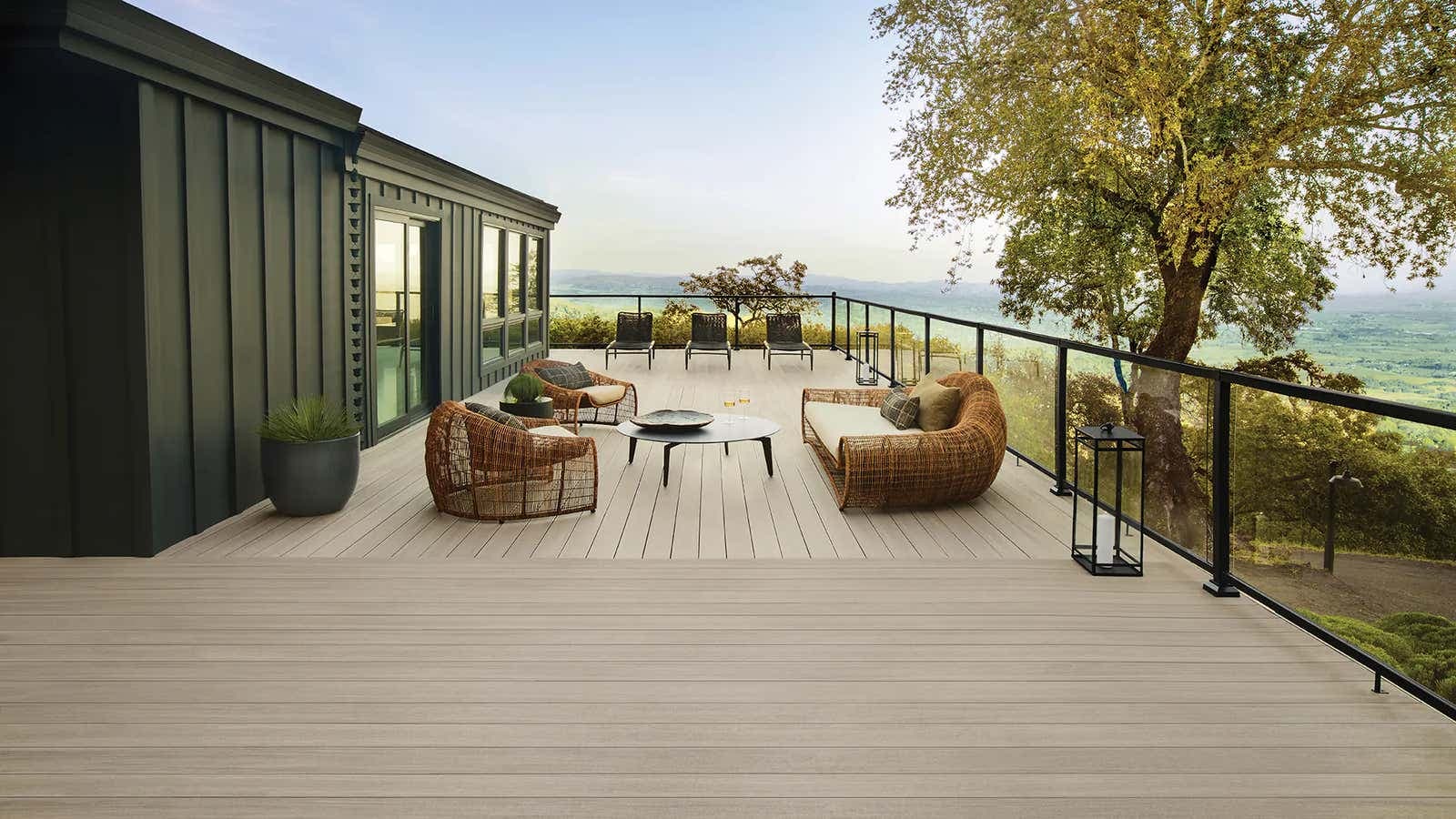
Maximizing Space with Composite Decking
In compact outdoor spaces, careful planning of every element is essential. Composite decking, available in various board widths and lengths, allows for design flexibility that can make a smaller area feel more expansive. Lighter colors can reflect light, visually opening up a space, while consistent board dimensions and minimal gapping contribute to a clean, uncluttered look. The uniform appearance of composite boards, free from the natural variations found in wood, can also create a sense of order.
Consider using a single board width throughout the project to maintain visual continuity. For very small areas, a diagonal layout can sometimes create an illusion of depth, though it may result in more material waste due to cuts. Picture-frame borders can define the edge of a compact deck, providing a finished look and drawing the eye around the perimeter rather than directly to the limited size.
Benefits of Composite Decking for Small Decks
Composite decking offers several advantages that are particularly beneficial for compact outdoor spaces. Its low-maintenance nature means less time spent on upkeep and more time enjoying your small deck. Unlike natural wood, composite boards do not require sanding, staining, or sealing, ever, reducing the need for storage of maintenance supplies and avoiding dusty or messy annual tasks in a confined area.
The consistent color and grain of composite boards ensure a uniform look, which can be desirable in a small space where visual clutter can easily overwhelm. Many composite options feature capped shells designed to resist fading and staining, helping the deck retain its appearance over time. This durability is valuable for decks that might experience heavy foot traffic or be exposed to the elements.
Some composite decking collections offer cooler-underfoot options, which can be a comfort feature for decks that receive significant sun exposure. Additionally, many composite products incorporate recycled content, aligning with sustainable building practices.
Considerations for Support and Installation
Even for a compact deck, proper structural support is critical. Composite decking requires a stable and level substructure, typically built with traditional lumber framing. The specific joist spacing will depend on the composite decking product's specifications and the board orientation. Always refer to the manufacturer's installation guide for precise requirements.
Access to the project site is an important consideration for compact spaces. If your deck is on a balcony, rooftop, or in a tight backyard, consider how materials will be delivered and moved to the installation area. Standard board lengths are common, and planning for cuts to fit the exact dimensions of your space is usually necessary. Hidden fastener systems are often compatible with composite decking, providing a clean, screw-free surface that can enhance the aesthetic of a small deck.
Worked Example: A 10' x 8' Balcony Deck
Imagine planning a 10-foot by 8-foot balcony deck (80 square feet) using a standard 5.5-inch wide composite decking board, which typically comes in 12-foot or 16-foot lengths. For this example, let's assume a desired board orientation running parallel to the 8-foot dimension, meaning each board needs to be cut to 8 feet long.
To cover the 10-foot width with 5.5-inch boards (0.458 feet), you would need approximately 10 feet / 0.458 feet/board = 21.8 boards. Rounding up, you would need 22 boards for the width. Since each board needs to be 8 feet long, and they are purchased in 12-foot lengths, each 12-foot board yields one 8-foot section with a 4-foot offcut. These 4-foot offcuts may not be long enough for other deck sections.
Therefore, you would need to purchase 22 boards, each 12 feet long. The total linear footage purchased would be 22 boards * 12 feet/board = 264 linear feet. The area equivalent coverage is 22 boards * 8 feet/board * 5.5 inches/board = 80.67 square feet. This illustrates that while the deck is 80 sq ft, the purchase quantity is based on board lengths and cutting efficiency, not simply area divided by board area. Always account for cuts and potential waste.
Connecting to the Surroundings
In a compact space, the deck's connection to its surroundings is especially important. Consider how the composite decking transitions to adjacent structures, landscaping, or paving. Using fascia boards and edge finishes that match or complement the main decking can create a cohesive look. For projects in Buffalo, NY, where seasonal weather changes are significant, ensure that any connections allow for proper drainage and accommodate material expansion and contraction as per manufacturer guidelines.
Integrating small, built-in seating or planters can also maximize usable space on a compact deck. These elements can be designed to complement the composite decking, creating a unified and functional outdoor area without overcrowding.
Before you order
- Measure the exact dimensions of your compact outdoor space.
- Consider the desired board width and length options available for composite decking.
- Determine board orientation (parallel, perpendicular, or diagonal) and its impact on material needs.
- Review manufacturer specifications for joist spacing and installation requirements.
- Plan for material delivery and access to the installation site.
- Choose a composite decking color and finish that complements your home and personal style.
- Consider fascia and trim options for a finished edge.
- Account for potential waste from cuts when calculating material quantities.
Confirm installation details, approved uses and warranty terms in the current instructions for the exact product and profile. Your installer should verify the substrate, structure and applicable project requirements.
This is a planning guide for projects in Buffalo, NY. Ask our team to confirm availability, delivery to your ZIP code and which branch can support your order.
Questions to help you decide
Can composite decking be installed over an existing patio?
Composite decking typically requires a structural substructure (joists and beams) for support and ventilation. While it's possible to build a deck frame over an existing concrete patio, ensure that there's adequate drainage and ventilation underneath the deck to prevent moisture issues. Consult the decking manufacturer's installation guidelines for specific requirements and recommendations for your chosen product.
How do I clean composite decking in a small space?
Composite decking generally requires minimal maintenance. A simple wash with soap and water is usually sufficient to clean the surface. For more stubborn dirt or stains, refer to the manufacturer's specific cleaning recommendations. Avoid using harsh chemicals or abrasive cleaners, which can damage the deck surface. The compact nature of the space often makes cleaning easier and quicker.
Are there lighter-weight composite decking options for balconies?
While all decking materials have weight, some composite lines may offer different profiles or compositions that could be lighter than others. However, the primary consideration for balcony applications is the structural capacity of the existing balcony structure. Always consult with a qualified engineer or contractor to ensure the balcony can safely support the additional weight of any new decking and its substructure, regardless of the material chosen.
Ready to Plan Your Compact Composite Deck?
Request a material quote with your project dimensions, exact composite profile, and ZIP code to confirm current availability and service options. We can help you identify the right composite decking for your compact outdoor space.
Request a material quote →