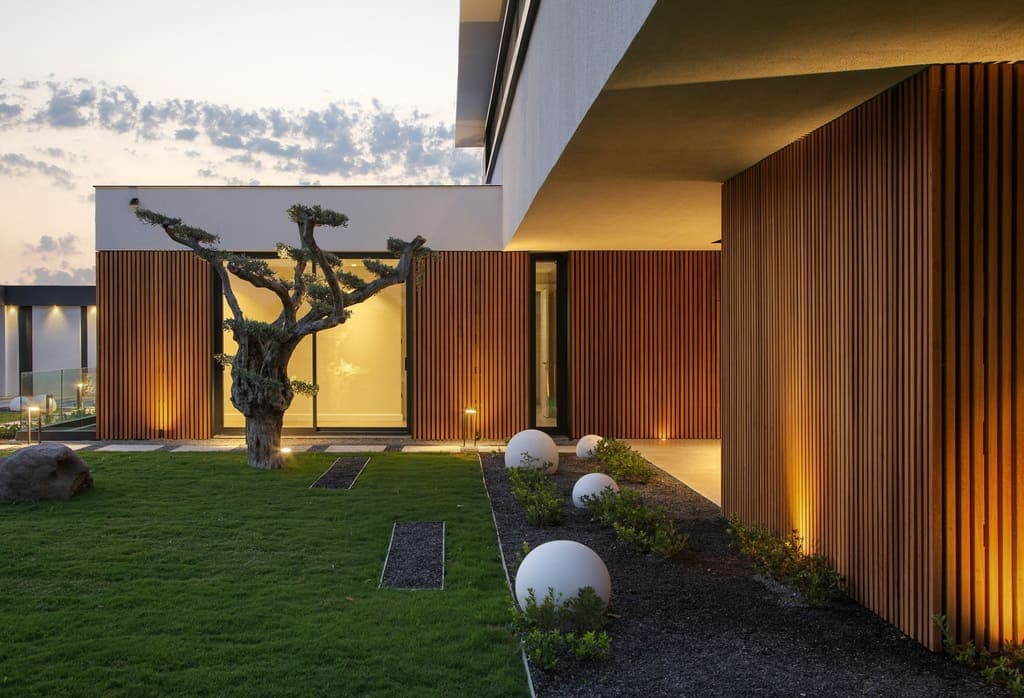
Understanding Thermally Modified Wood for Wall Applications
Thermally modified wood undergoes a high-temperature heat treatment process in the absence of oxygen. This process alters the wood's cellular structure, resulting in a material with enhanced stability and reduced moisture absorption compared to untreated wood. These characteristics make it a suitable choice for various exterior applications, including covered patio walls.
For covered patio walls, the increased stability of thermally modified wood helps minimize common wood movement issues such as warping, cupping, and checking. This can contribute to a more consistent appearance over time, especially in environments with seasonal temperature and humidity fluctuations. The modification process also typically darkens the wood, providing a range of natural, rich tones that can complement various design aesthetics.
Selecting Profiles and Species for Covered Walls
The choice of profile significantly impacts the final look of your covered patio walls. For a contemporary aesthetic, consider a Tongue and Groove (T&G) profile, which creates a smooth, continuous surface with minimal visible fasteners. Shiplap profiles offer a distinct shadow line, adding depth and texture. Both T&G and shiplap are common choices for wall cladding.
Thermally modified wood is available in various species, each with unique grain patterns and characteristics. NORX thermally modified spruce, for example, offers a uniform appearance and is known for its stability. Maximo thermally modified wood, often made from Accoya, is another option recognized for its dimensional stability and durability. The specific species and profile should align with your desired aesthetic and the level of detail you wish to achieve for your covered patio.
Finishing Options and Their Impact
While thermally modified wood is naturally durable, applying a finish can enhance its appearance and provide additional protection, especially in a covered patio setting. Finishes can be broadly categorized into transparent, semi-transparent, and opaque.
Transparent finishes allow the natural grain and color of the thermally modified wood to show through, offering a subtle enhancement. Semi-transparent finishes add a hint of color while still revealing some wood texture. Opaque finishes, such as paints, provide solid color coverage. For covered patio walls, a transparent or semi-transparent finish can highlight the wood's inherent beauty. It's important to choose a finish suitable for exterior wood, even if the application is covered, to ensure it can withstand ambient moisture and temperature changes. Regular reapplication of finishes may be necessary to maintain their protective and aesthetic qualities.
Installation Considerations for Covered Patio Walls
Proper installation is key to the longevity and appearance of thermally modified wood walls. Even in a covered environment, adequate ventilation behind the cladding is important to manage moisture. A rainscreen assembly, which creates a capillary break and air gap between the cladding and the wall structure, is a robust approach. This allows any moisture that gets behind the cladding to drain and the assembly to dry.
Fastening methods should be chosen based on the profile and the desired aesthetic. Concealed fasteners, often used with T&G profiles, provide a clean, fastener-free surface. Face fastening, where fasteners are visible, is common with shiplap and other profiles. Always use corrosion-resistant fasteners, such as stainless steel, to prevent staining and ensure long-term holding power. Leave appropriate expansion gaps as recommended by the manufacturer to accommodate any minor wood movement.
Hypothetical Project Example: A Billings Covered Patio Wall
Consider a covered patio in Billings, MT, with a wall section measuring 10 feet wide by 8 feet high. The homeowner desires a modern look with a subtle shadow line. They choose NORX Thermally Modified Spruce in a shiplap profile, with individual boards measuring 5.5 inches wide (nominal, with an actual coverage width of approximately 5 inches due to the overlap).
To calculate the material needed for this 80 square foot wall (10 ft x 8 ft):
1. **Determine linear feet per board:** Standard lengths might be 8, 10, 12, or 16 feet. Let's assume 10-foot boards are chosen to minimize cuts and waste for the 10-foot width.
2. **Calculate number of courses (rows):** 8 feet height = 96 inches. Each board covers 5 inches. 96 inches / 5 inches/board = 19.2 boards. Since you can't use a fraction of a board, you'd need 20 courses.
3. **Calculate total linear feet:** 20 courses * 10 linear feet/course = 200 linear feet of material.
4. **Account for waste:** A typical waste factor for siding projects is 10-15%. For this project, adding 15% for cuts, mistakes, and potential future repairs: 200 linear feet * 1.15 = 230 linear feet.
Therefore, approximately 230 linear feet of 5.5-inch wide NORX Thermally Modified Spruce shiplap would be a good starting point for material estimation for this 10x8 foot covered patio wall. This calculation assumes minimal vertical cuts and efficient use of board lengths. Always confirm actual coverage width and waste factors with your supplier.
Before you order
- Verify local building codes and permits for outdoor wall cladding in Billings, MT.
- Assess the level of protection your patio walls will receive from direct weather (fully covered vs. partially exposed).
- Choose a thermally modified wood species (e.g., NORX Spruce, Maximo Accoya) based on desired appearance and stability.
- Select a profile (e.g., Tongue and Groove, Shiplap) that matches your aesthetic and installation preferences.
- Decide on a finish (transparent, semi-transparent, opaque) or natural weathering, understanding maintenance implications.
- Plan for proper ventilation and drainage behind the cladding, potentially incorporating a rainscreen.
- Select appropriate corrosion-resistant fasteners suitable for thermally modified wood and your chosen profile.
- Measure the wall dimensions accurately and calculate material quantities, including a waste factor.
- Consider the overall design integration with other patio elements like flooring, roofing, and furniture.
- Obtain a material quote with project dimensions, exact profile, and ZIP code to confirm current availability and service options.
Confirm installation details, approved uses and warranty terms in the current instructions for the exact product and profile. Your installer should verify the substrate, structure and applicable project requirements.
This is a planning guide for projects in Billings, MT. Ask our team to confirm availability, delivery to your ZIP code and which branch can support your order.
Questions to help you decide
Can thermally modified wood be left unfinished on covered patio walls?
Yes, thermally modified wood can be left unfinished. Over time, it will naturally weather to a silvery-gray patina, similar to other wood species. For covered patio walls, this weathering process may be slower and more uneven than fully exposed surfaces. While the material's stability remains, a finish can help maintain its initial color and offer an additional layer of protection against moisture and UV degradation, even if indirect.
How does thermally modified wood compare to traditional cedar or redwood for covered patio walls?
Thermally modified wood generally offers enhanced dimensional stability compared to untreated cedar or redwood, meaning it's less prone to warping, cupping, or shrinking due to moisture changes. While cedar and redwood are naturally resistant to decay, the thermal modification process also improves the wood's resistance to biological degradation. The choice often comes down to desired aesthetics, specific performance requirements, and budget. Thermally modified wood typically has a darker, richer tone than new cedar or redwood.
What maintenance is required for thermally modified wood on covered patio walls?
Maintenance for thermally modified wood on covered patio walls depends on whether it's finished or unfinished. If unfinished, occasional cleaning to remove dust, dirt, or mildew may be sufficient. If finished, regular cleaning and periodic reapplication of the chosen finish will be necessary to maintain its appearance and protective qualities. Always follow the specific recommendations of the finish manufacturer for maintenance schedules and products. Inspect the walls annually for any signs of wear or damage.
Start Your Covered Patio Wall Project with Thermally Modified Wood
Ready to enhance your outdoor living space with the stability and beauty of thermally modified wood? Request a material quote for your project. Provide your project dimensions, desired profile, and ZIP code to confirm current availability and explore service options for your Billings, MT location.
Request a material quote →