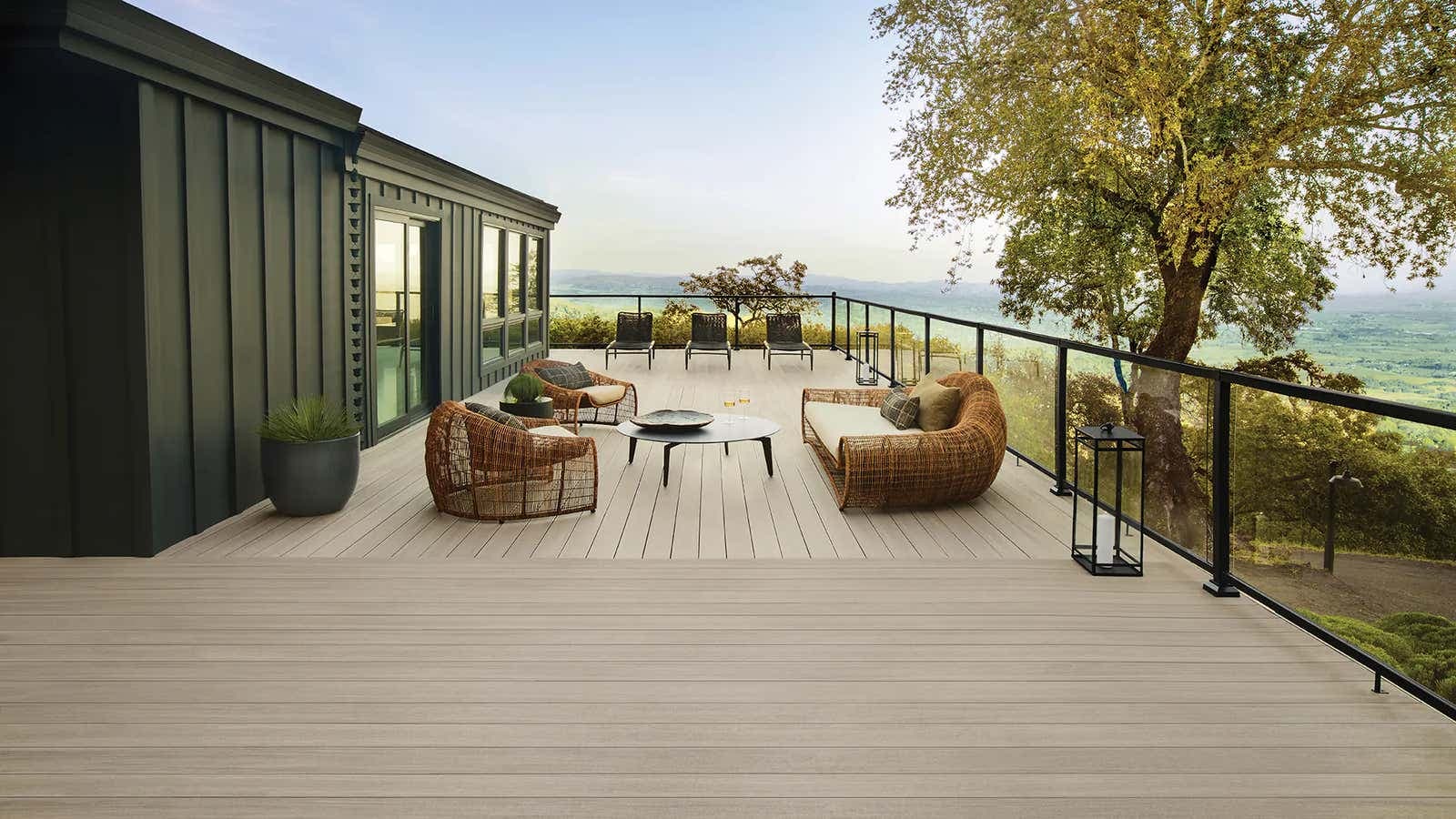
Understanding the Constraints of Compact Spaces
Compact outdoor spaces, by definition, have limitations. These often include restricted access for material delivery, limited maneuverability for tools during installation, and the need for efficient use of every square foot. In Billings, where seasonal weather can impact project timelines, selecting materials that are relatively straightforward to install and maintain can be a significant advantage. Composite decking, known for its consistent dimensions and simplified installation compared to some traditional materials, can help streamline these projects.
Consider the overall footprint and how the decking will integrate with existing structures or landscaping. Will it be a standalone platform, or will it connect to a doorway? The smaller the space, the more critical it is to have a clear vision for its function and flow.
Material Selection: Balancing Aesthetics and Practicality
When choosing composite decking for a compact space, both appearance and practical properties are important. Manufacturers like Trex, TimberTech, and Fiberon offer a range of collections, colors, and profiles. For smaller areas, lighter colors can sometimes make a space feel more open, while darker tones can create a sense of intimacy.
Consider the board width and length. Standard board widths may be suitable, but some projects might benefit from narrower profiles to visually expand the space, or careful planning of board lengths to minimize cuts and waste. Look for composite decking that offers consistent color and grain, board after board, to ensure a cohesive look in a confined area where every detail is visible. Some composite options also feature capped shells, designed to resist humidity, a useful characteristic for outdoor applications.
Composite decking also offers low-maintenance benefits, typically requiring only a soap-and-water wash, which is ideal for busy homeowners who want to enjoy their outdoor space without extensive upkeep. Many composite products are made with recycled content, such as sawdust and plastic film, offering an environmentally conscious choice.
Decking Layout Strategies for Small Areas
The layout of your composite decking can significantly impact the perception and usability of a compact space. Straight board layouts running parallel to the longest dimension can help elongate a narrow area. Alternatively, a diagonal layout can add visual interest and create a sense of expansiveness, though it may result in more material waste due to angled cuts.
For very small areas, consider a simple square or rectangular design. If the space is irregular, detailed measurements and a precise cut plan are essential to optimize material use. Picture-frame borders can define the edges and provide a clean finish, especially important in a small space where design details are prominent. Ensure proper board spacing as per manufacturer guidelines to allow for drainage and material movement.
Support Systems and Foundation Considerations
Even in a compact space, a solid foundation is crucial for any deck. For ground-level applications, this might involve concrete footings or piers. For elevated decks or balconies, the existing structure's capacity to support the additional load of the decking and any planned furnishings must be verified. Local building codes in Billings will dictate specific requirements for foundations, joist spacing, and ledger board attachments.
Composite decking requires specific joist spacing, which can vary by product line and profile. Always refer to the manufacturer's installation guide for precise recommendations. Proper ventilation beneath the deck is also important, especially in areas prone to moisture, to prevent issues and maintain the integrity of the decking and substructure.
Worked Example: A 6x10 Foot Balcony Deck
Let's consider a hypothetical 6-foot by 10-foot balcony in Billings. The client wants a new composite deck surface. Assuming standard 12-foot composite decking boards are chosen, and a straight layout running the 10-foot length is preferred to minimize seams and simplify installation.
For the 10-foot length, each board will be cut to 10 feet. If the composite boards are 5.5 inches wide, we'll need to calculate how many boards fit across the 6-foot (72-inch) width. 72 inches / 5.5 inches per board ≈ 13.09 boards. Given the need for full boards and potential edge cuts, we'd typically purchase 14 boards (13 full boards plus one for the remaining width and any trim). Each board is 10 feet long, so a total of 14 x 10 = 140 linear feet of decking is needed. Since boards are sold in 12-foot lengths, we would purchase 14 boards at 12 feet each, totaling 168 linear feet. This allows for the 10-foot cuts and provides some material for potential errors or trim pieces.
This calculation is simplified and assumes minimal waste and no diagonal cuts. A detailed cut plan would optimize material usage, especially for specific designs or custom sizes. Always factor in waste and potential extra cuts when ordering materials.
Before you order
- Measure your compact space precisely, noting all obstructions and existing structures.
- Consider the primary function of the space (e.g., dining, lounging, plant display).
- Research composite decking collections from Trex, TimberTech, or Fiberon for suitable colors and profiles.
- Determine the desired board layout (straight, diagonal, picture frame) and sketch a plan.
- Verify local building codes in Billings, MT, for decking foundation and support requirements.
- Plan for proper ventilation beneath the deck, especially if it's close to the ground.
- Calculate material needs, factoring in board width, length, and potential waste from cuts.
- Identify any specific edge finishing or fascia board requirements for the project.
- Confirm access for material delivery and installation in your compact space.
Confirm installation details, approved uses and warranty terms in the current instructions for the exact product and profile. Your installer should verify the substrate, structure and applicable project requirements.
This is a planning guide for projects in Billings, MT. Ask our team to confirm availability, delivery to your ZIP code and which branch can support your order.
Questions to help you decide
Is composite decking suitable for very small balconies?
Yes, composite decking can be an excellent choice for small balconies. Its consistent dimensions and low-maintenance nature make it practical for compact spaces. Careful planning of the layout and board direction can help maximize the visual appeal and functionality of even the smallest balcony.
How do I choose the right color for a small deck?
The right color depends on your personal preference and the surrounding environment. Lighter colors can make a small space feel more open and expansive, while darker colors might create a cozy, intimate atmosphere. Consider how the color will complement your home's exterior and any existing landscaping. Many manufacturers offer a range of consistent colors.
What kind of maintenance does composite decking require in a compact space?
Composite decking generally requires minimal maintenance. For compact spaces, this typically means a simple annual wash with soap and water to remove dirt and debris. Unlike traditional wood, composite decking does not require sanding, staining, or sealing, which is a significant advantage for areas where extensive maintenance might be challenging due to space constraints.
Start Your Compact Decking Project in Billings
Ready to transform your compact outdoor space in Billings, MT, with composite decking? Request a material quote today. Provide your project dimensions, desired composite profile, and ZIP code to confirm current availability and service options. Explore our full range of composite decking options at our main composite decking page: /decking/composite.
Request a material quote →