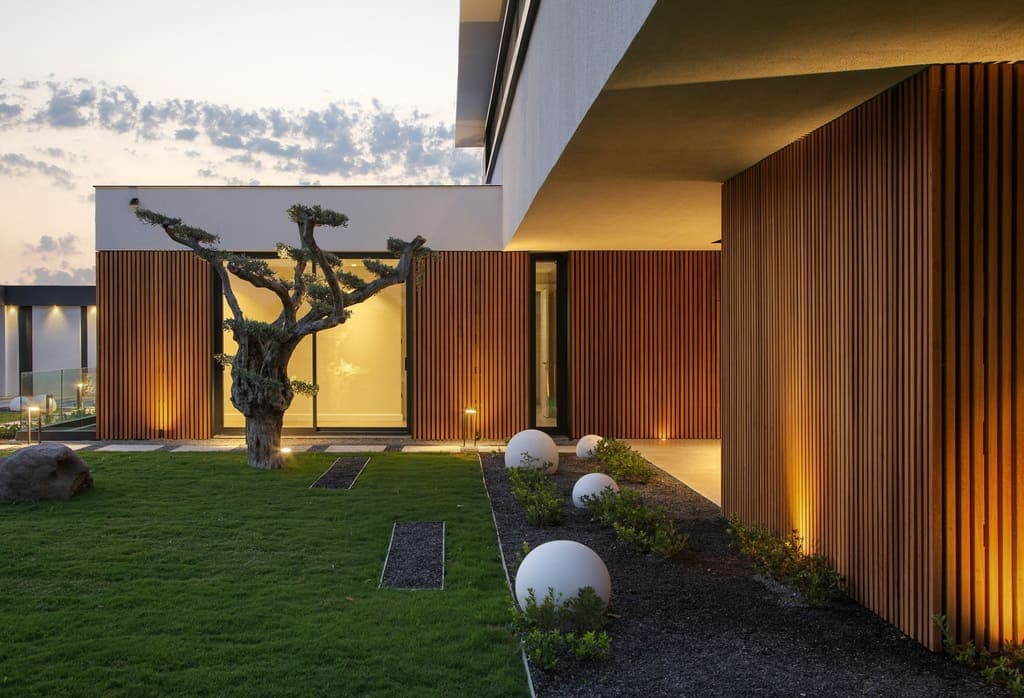
Understanding Thermally Modified Wood for Wall Applications
Thermally modified wood undergoes a high-temperature treatment process that alters its cellular structure. This modification process typically occurs in a kiln under controlled conditions, often involving steam, which removes moisture and sugars from the wood. The result is a material with reduced equilibrium moisture content, improved dimensional stability, and increased resistance to decay.
For covered patio walls, these properties translate into several benefits. The enhanced stability means less expansion and contraction due to changes in humidity, which can help maintain the integrity and appearance of your wall cladding over time. While covered patios offer protection from direct rain and snow, they are still subject to ambient moisture and temperature shifts. Thermally modified wood's improved decay resistance is also beneficial, offering peace of mind for an outdoor application.
It's important to note that 'covered' does not mean 'indoor'. While protected, these walls are still part of an exterior environment. The material chosen needs to withstand these conditions without compromising structural or aesthetic qualities.
Selecting the Right Thermally Modified Wood Profile
Thermally modified wood is available in various profiles, each offering a distinct aesthetic and installation method. For covered patio walls, common options include tongue-and-groove, shiplap, and square-edge profiles. The choice of profile will influence the shadow lines, overall texture, and visual impact of your patio walls.
Tongue-and-groove profiles create a tight, interlocking fit, often resulting in a smooth, continuous surface with minimal gaps. This can be ideal for a more refined or modern look. Shiplap profiles feature an overlapping joint that creates a distinct shadow line, adding depth and a more traditional or rustic feel. Square-edge boards can be installed with a visible gap between planks, allowing for a more open or slatted appearance, which can be striking in contemporary designs.
Consider the desired aesthetic and how the profile will complement other elements of your patio, such as flooring, furniture, and landscaping. The choice of profile also impacts installation, as some are designed for concealed fastening, contributing to a cleaner finish. For wall applications, ensure the chosen profile is approved for vertical installation.
Finishing Options for Covered Patio Walls
Thermally modified wood can be left unfinished to weather naturally, or it can be treated with various finishes to preserve its initial color or achieve a desired tone. When left unfinished, thermally modified wood will gradually silver over time, developing a soft, grey patina characteristic of weathered wood. This natural aging process is often desired for its low maintenance and organic aesthetic.
If you prefer to maintain the wood's original color or introduce a specific hue, a penetrating oil finish or a stain can be applied. These finishes offer UV protection, which can help slow the natural graying process and enhance the wood's inherent beauty. For covered patios, where direct sunlight exposure might be less intense than a fully exposed facade, the longevity of finishes can be extended, though periodic reapplication will still be necessary.
It is crucial to select finishes specifically formulated for exterior wood applications, even in covered environments. Always follow the manufacturer's recommendations for application and maintenance to ensure optimal performance and appearance. Consider how the chosen finish will interact with the wood's natural tones and the surrounding architectural elements.
Attachment and Substructure Considerations
Proper attachment and a robust substructure are fundamental for the long-term performance of thermally modified wood patio walls. The substructure typically consists of furring strips or battens installed over the existing wall framing. This creates an air gap behind the cladding, which is beneficial for ventilation and managing any moisture that might accumulate.
Fastening methods vary by profile. Concealed fasteners, such as clips or screws installed through the tongue of tongue-and-groove boards, offer a clean, unblemished surface. Face fastening, where screws are driven directly through the board face, is also an option, particularly with square-edge profiles, and can become a design feature when using decorative fasteners. Always use corrosion-resistant fasteners, such as stainless steel, to prevent staining and ensure durability.
Ensure the substructure is plumb and level to facilitate a straight and consistent installation. The spacing of furring strips should align with the manufacturer's recommendations for the chosen cladding profile to provide adequate support and prevent warping. Consider local building practices and any specific requirements for exterior wall assemblies, even for covered structures.
Worked Example: Covered Patio Wall Cladding in Augusta
Let's consider a hypothetical covered patio in Augusta, Maine, with a wall section measuring 10 feet wide by 8 feet high, totaling 80 square feet. The homeowner desires a modern look with a subtle shadow line, opting for a thermally modified wood shiplap profile. The chosen shiplap boards are 5.5 inches wide (nominal, with 5-inch exposed face) and available in 12-foot lengths.
To calculate the required quantity, first determine the number of courses needed for the 8-foot height. With a 5-inch exposed face, 8 feet (96 inches) / 5 inches/board = 19.2 boards. Since we cannot use partial boards in a course, we round up to 20 boards. For the 10-foot width, each board will need to be cut from a 12-foot length, leaving a 2-foot offcut. Since the offcuts are too short to be reused in this particular wall section, we will need full boards.
Therefore, for a 10-foot wide wall, we will need 20 boards, each 12 feet long, to cover the 8-foot height. This results in 20 boards x 12 feet = 240 linear feet of material. If the project had multiple wall sections or shorter lengths were required, careful planning of cuts could maximize material utilization from the 12-foot lengths. Always add an overage of 10-15% for cuts, waste, and future repairs. In this case, 240 linear feet + 10% = 264 linear feet, or 22 full 12-foot boards.
Before you order
- Verify the specific thermally modified wood species and profile are approved for vertical wall applications.
- Assess the level of exposure to sun, wind, and ambient moisture on the covered patio.
- Determine if a natural weathered look or a maintained finish is preferred.
- Select appropriate fasteners (e.g., stainless steel) and ensure they are compatible with the chosen wood and profile.
- Plan the substructure (furring strips) for proper ventilation and attachment.
- Calculate material quantities, including an adequate waste factor for cuts and potential future needs.
- Consider the aesthetic impact of the profile and finish on the overall patio design.
Confirm installation details, approved uses and warranty terms in the current instructions for the exact product and profile. Your installer should verify the substrate, structure and applicable project requirements.
This is a planning guide for projects in Augusta, ME. Ask our team to confirm availability, delivery to your ZIP code and which branch can support your order.
Questions to help you decide
Does thermally modified wood require a finish on a covered patio wall?
No, thermally modified wood does not strictly require a finish for durability, especially in a covered application. It can be left unfinished to weather naturally to a silver-gray patina. However, a finish can be applied to maintain its original color or achieve a specific aesthetic, and it will offer some UV protection.
Can thermally modified wood be installed directly over existing masonry walls?
It is generally recommended to install thermally modified wood cladding over a substructure of furring strips, even on masonry. This creates an essential air gap for ventilation and helps manage moisture, preventing direct contact between the wood and the masonry, which can trap moisture. This approach also allows for easier and more secure fastening.
How does the Augusta, ME climate affect thermally modified wood for covered patios?
Augusta's climate, with its distinct seasons and humidity fluctuations, makes thermally modified wood a suitable choice due to its enhanced dimensional stability. While covered patios protect from direct precipitation, the wood will still be exposed to ambient humidity and temperature changes. The thermal modification process reduces the wood's tendency to swell and shrink, making it more resilient to these conditions compared to untreated wood.
Start Your Covered Patio Wall Project with Thermally Modified Wood
Ready to enhance your Augusta, ME covered patio? Request a material quote for thermally modified wood. Provide your project dimensions, desired profile, and ZIP code to confirm current availability and service options for your area. Explore our selection of thermally modified wood products and complementary materials like siding and cladding to complete your vision. Visit our product pages for specific options: Thermally Modified Wood, Siding and Cladding, NORX, Maximo Accoya.
Request a material quote →