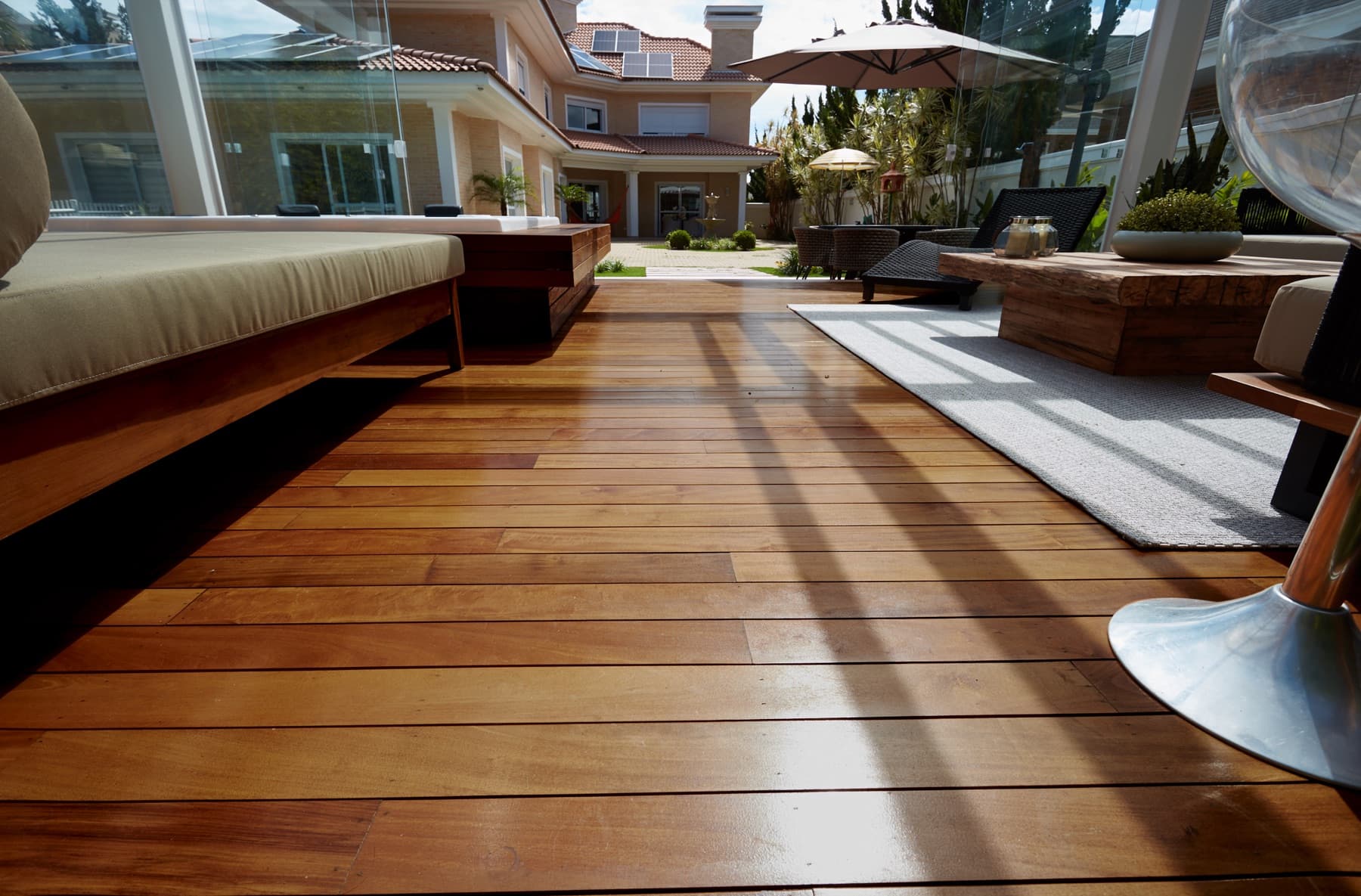
Evaluating Your Existing Deck Frame for Hardwood
Before selecting new decking boards, a thorough inspection of your existing deck frame is crucial. Hardwood decking species like Ipe and Cumaru are known for their density and weight. This means the underlying structure must be robust enough to support the increased load. Verify that all joists, beams, and support posts are sound, free from rot, insect damage, or significant warping.
Check the spacing of your joists. Most hardwood decking requires specific joist spacing to ensure stability and prevent deflection. If your existing joist spacing is wider than recommended for the hardwood species you select, you may need to add blocking or additional joists. Any signs of structural compromise, such as sagging or excessive movement, indicate a need for repair or reinforcement before new decking is installed.
Consider the age of your deck frame. If the frame is nearing the end of its service life, even if seemingly sound, investing in new hardwood decking might not be the most economical long-term solution. A professional inspection can provide a definitive assessment.
Choosing Hardwood Species: Ipe vs. Cumaru
When considering hardwood decking for your renovation, Ipe and Cumaru are two prominent choices known for their durability and natural resistance. Understanding their characteristics can help you select the best fit for your Augusta project.
It exhibits minimal movement post-installation and offers natural resistance to weather changes, mold, and termites. Ipe typically ranges in color from reddish-brown to olive-brown. With proper care, Ipe decking can last for decades. It is a premium choice often specified for demanding applications due to its strength and longevity.
It offers stiffness, strength, and extreme hardness. Cumaru has a natural resistance to insects, rot, and fungi. When worked, Cumaru can emit a scent of cinnamon and vanilla. While also a robust option, Cumaru can be a suitable alternative if budget is a primary consideration, offering similar performance to Ipe.
Both Ipe and Cumaru resist warping after moisture exposure and their natural oils help protect them from cracking. They are also both known for their ability to withstand coastal conditions and winter exposure, making them suitable for the climate in Augusta, ME. If left untreated, both species will weather to a silvery-gray patina; applying a UV-blocking sealer can help preserve their original color.
Hardwood Decking Profiles and Lengths
Hardwood decking comes in a variety of profiles and lengths, which are important considerations for your renovation. Common profiles include standard dimensional lumber, often available in dimensions like 1x4, 1x6, or 5/4x6. The choice of profile can influence the final appearance and installation method.
Lengths typically range from 3 to 24 feet, though specific availability can vary. Longer boards can reduce the number of butt joints, creating a more seamless look, while shorter boards might be more manageable for DIY installations or smaller deck sections. When planning your layout, consider how board lengths will align with your existing frame and minimize waste.
For a renovation, measure your deck's dimensions carefully to determine the most efficient board lengths. This helps in ordering the correct quantity and reduces cuts on site. Keep in mind that longer boards may require more careful handling during installation due to their weight and rigidity.
Installation Considerations for Hardwood Decking
Installing hardwood decking, especially dense species like Ipe and Cumaru, requires specific tools and techniques. Due to their hardness, pre-drilling pilot holes for fasteners is often necessary to prevent splitting. Specialized fasteners, including hidden fastening systems or corrosion-resistant screws, are recommended to ensure a secure and lasting installation.
Proper board spacing is critical for drainage and ventilation, allowing the wood to expand and contract naturally with changes in humidity. Always follow the manufacturer's recommendations for spacing, as this can vary by species and profile. Adequate ventilation beneath the deck is also important to prevent moisture buildup and promote the longevity of both the decking and the substructure.
While it is possible for experienced DIYers to install hardwood decking, professional installation is often recommended due to the specialized requirements and the precision needed for a high-quality finish. This is especially true for complex layouts or when integrating with existing structures during a renovation.
Worked Example: Decking Renovation for an 8'x12' Deck
The homeowner wants to replace the old decking with new Ipe 1x6 boards (nominal 5.5 inches actual width).
First, calculate the total deck area: 8 feet * 12 feet = 96 square feet. To determine the number of 5.5-inch wide boards needed across the 8-foot width (96 inches), divide 96 inches by 5.5 inches, which equals approximately 17.45 boards. We'll round up to 18 boards to ensure full coverage and account for minor edge cuts. For the 12-foot length, we would need 18 boards, each 12 feet long. Total lineal footage: 18 boards * 12 feet/board = 216 lineal feet.
If the Ipe boards are available in 12-foot lengths, the homeowner would purchase 18 boards. If only 8-foot and 10-foot lengths are available, a different approach is needed. This generates more cuts and potential waste. Therefore, sourcing the appropriate length (12-foot in this case) is ideal to minimize seams and waste. Always add an extra 10-15% for cuts, waste, and unforeseen issues. In this example, 216 lineal feet + 15% waste = approximately 248.4 lineal feet. The homeowner would likely order 21 boards of 12-foot length to cover this, totaling 252 lineal feet.
Always confirm the required joist spacing with the product specifications for the specific hardwood chosen.
Before you order
- Inspect existing deck frame for rot, insect damage, and structural integrity.
- Verify existing joist spacing is adequate for the chosen hardwood species and profile.
- Measure deck dimensions precisely to calculate material needs, accounting for waste.
- Compare hardwood species (e.g., Ipe, Cumaru) based on durability, appearance, and budget.
- Confirm desired board profile and available lengths.
- Plan for appropriate fasteners (hidden or face-fastened) and necessary pre-drilling.
- Consider ventilation and board spacing requirements for your chosen hardwood.
- Decide between professional installation or DIY, considering specialized tools and techniques.
Confirm installation details, approved uses and warranty terms in the current instructions for the exact product and profile. Your installer should verify the substrate, structure and applicable project requirements.
This is a planning guide for projects in Augusta, ME. Ask our team to confirm availability, delivery to your ZIP code and which branch can support your order.
Questions to help you decide
Does hardwood decking work well in Augusta, ME's winter climate?
Yes, hardwood species like Ipe and Cumaru are well-suited for winter exposure. Their natural density and oils provide resistance to moisture and temperature fluctuations, helping to prevent cracking or warping, making them a durable choice for Augusta's climate.
Can I install hardwood decking over an existing deck surface?
No, it is generally not recommended to install new decking directly over an existing deck surface. The old decking should be removed to allow for a thorough inspection of the substructure and to ensure proper ventilation and fastening of the new hardwood boards. This also prevents moisture from getting trapped between layers.
How much maintenance does hardwood decking require in a renovation?
Hardwood decking is considered low maintenance. A wash once a year is typically sufficient. If you prefer to maintain the original brown color of species like Ipe or Cumaru, you can apply an annual UV-blocking oil. If left untreated, the wood will naturally weather to a silvery-gray patina with no structural difference. Check product instructions for specific maintenance recommendations.
Ready to Renovate Your Augusta Deck with Hardwood?
For a material quote tailored to your project dimensions, desired hardwood profile, and ZIP code, contact us today. Our team can also confirm current availability and service options for your Augusta, ME renovation.
Request a material quote →