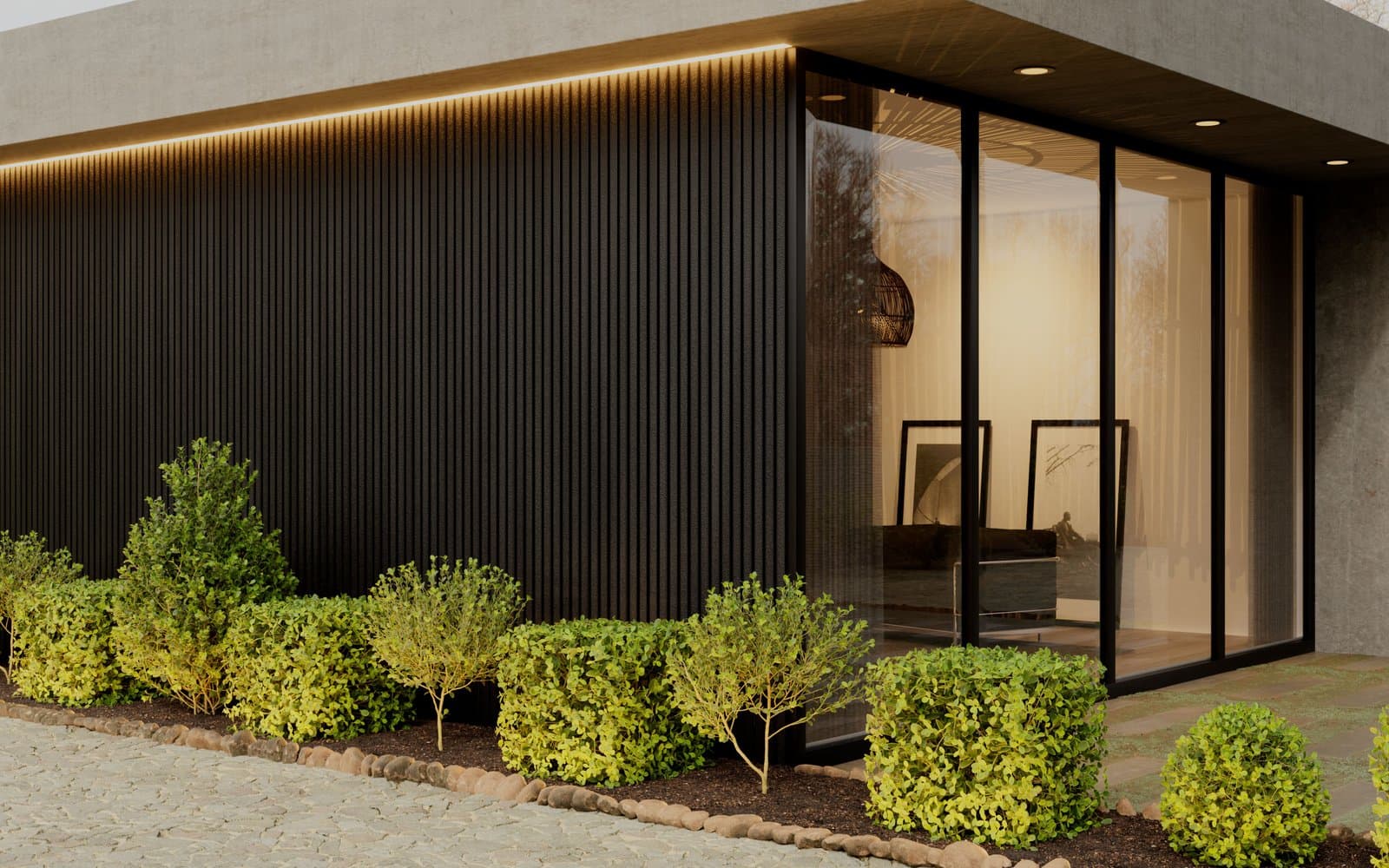
Evaluating Existing Wall Conditions for Renovation
Before any new siding or cladding can be specified, a thorough assessment of the existing wall assembly is crucial. This includes identifying the current sheathing, framing, insulation, and any vapor or weather barriers. Understanding the layers beneath the surface will inform decisions about moisture management, ventilation, and structural support for the new facade.
For coastal areas like Nantucket, particular attention should be paid to signs of moisture intrusion, salt exposure degradation, or wind damage to the existing structure. Documenting these conditions with photographs and measurements provides a baseline for renovation planning and helps identify necessary repairs before new materials are installed. This initial investigation can prevent costly issues later.
Material Selection: Thermally Modified Wood
Thermally modified wood offers an option for facade renovations, particularly where dimensional stability and a natural appearance are desired. This process alters the wood's cellular structure through heat, aiming to enhance its resistance to moisture absorption and decay.
Lumber Plus offers Scandinavian thermally modified wood, including Ayous and Ash, which can be milled into various profiles suitable for cladding applications. Thermally modified clear Radiata pine is another option. These materials can achieve a contemporary facade aesthetic while offering a degree of stability against environmental changes. However, all wood, including thermally modified, will naturally weather and change color over time, which is an aesthetic consideration for long-term facade planning. Regular maintenance, such as cleaning, can help preserve its appearance. For specific profiles, refer to our collection of thermally modified wood.
For a renovation, thermally modified wood can be a choice for rainscreen assemblies, which provide a ventilated air gap behind the cladding. This system can help manage moisture and promote drying, which is beneficial in coastal settings.
Material Selection: Maximo Accoya
Maximo Accoya is an acetylated wood product, distinct from thermally modified wood. The acetylation process chemically modifies the wood, aiming to enhance its durability and dimensional stability. This makes Accoya a candidate for exterior applications, including siding and cladding, where consistent performance in varying weather conditions is a priority.
Accoya's stability can be advantageous in Nantucket's coastal environment, where fluctuations in humidity and temperature can challenge less stable materials. It is often chosen for projects where minimizing expansion and contraction is critical for maintaining facade integrity and appearance. Explore its siding and cladding applications in its own collection: Maximo Accoya.
When considering Accoya for a renovation, verify its compatibility with the existing structural supports and fastening systems. Its inherent properties mean it can be a long-term solution, but proper installation detailing is essential to maximize its benefits.
Material Selection: Brazilian Hardwoods
Brazilian hardwoods such as Ipe, Cumaru, Garapa, Angelim, Jatoba, and Tigerwood are known for their density and natural characteristics, making them options for robust exterior cladding. Each species presents a distinct appearance, from the bold grain of Ipe to the golden tone of Cumaru and the deep red of Jatoba.
These hardwoods are often selected for their natural resistance to certain environmental factors, which can be an advantage in coastal areas. However, like all natural wood, they will undergo a natural weathering process, typically developing a silvery-gray patina over time if left untreated. If maintaining the original color is desired, regular application of UV-inhibiting finishes would be necessary.
When integrating Brazilian hardwoods into a renovation, consider the weight of the material and ensure the existing wall structure can adequately support it. Proper ventilation and fastening are also important for these dense materials to perform well in an exterior application. Find more details on our siding and cladding page.
Material Selection: Norx Composite Cladding
Norx composite cladding offers an alternative to natural wood, designed for consistent appearance and reduced maintenance. Made from a blend of materials, composite cladding aims to resist common issues like rotting, splitting, and insect damage, which can be concerns in humid or coastal environments.
Norx composite cladding is available in various colors and profiles, such as London Black and Navona Black, providing design flexibility for facade renovations. This material can maintain its color more consistently than natural wood, which may be a priority for homeowners seeking a facade that retains its initial look with minimal effort. Explore Norx products.
For renovation projects, composite cladding can be simpler to install compared to some natural wood options, as it often comes in consistent dimensions and may have specific fastening systems. However, it is crucial to follow manufacturer guidelines for installation, including expansion and contraction allowances, especially in areas with temperature fluctuations.
Worked Example: Facade Renovation on a Nantucket Cottage
Consider a hypothetical 1,200 sq ft single-story Nantucket cottage built in the 1950s, currently clad with cedar shingles showing significant weathering and some rot. The homeowner wants to upgrade to a more durable, low-maintenance facade while retaining a classic coastal aesthetic. The existing wall assembly consists of diagonal wood sheathing over 2x4 framing, with no discernible modern weather barrier.
After an inspection, it's determined that the existing sheathing is sound, but a new weather-resistive barrier (WRB) and a rainscreen furring system are necessary to meet modern performance expectations and protect against Nantucket's coastal elements. The homeowner opts for Norx composite cladding in a gray tone to mimic weathered cedar but without the ongoing maintenance.
The cottage has exterior dimensions of approximately 40 ft by 30 ft, with a total wall perimeter of 140 ft. Assuming an average wall height of 8 ft, the total wall area is 1,120 sq ft (140 ft * 8 ft). After deducting for windows and doors (e.g., 200 sq ft), the net cladding area is 920 sq ft. For a Norx composite cladding profile that covers 5.5 inches (0.458 ft) per board and comes in 12 ft lengths, each board covers 5.5 sq ft (0.458 ft * 12 ft).
To cover 920 sq ft, approximately 168 boards would be needed (920 sq ft / 5.5 sq ft per board). Accounting for waste from cuts, corner treatments, and potential damage during installation (e.g., 10-15%), an order of around 190-200 boards would be a practical estimate. This example highlights the need for precise measurements, waste factor planning, and integrating new weather protection into an older structure.
Before you order
- Thoroughly inspect and document existing wall conditions (sheathing, framing, insulation, moisture issues).
- Determine if a new weather-resistive barrier (WRB) and rainscreen system are required or advisable for the renovation.
- Evaluate material properties for Nantucket's coastal climate: dimensional stability, moisture resistance, weathering characteristics.
- Consider the desired aesthetic: natural wood aging vs. consistent color retention.
- Assess maintenance requirements for each material option.
- Verify the existing structure's capacity to support the weight of the chosen cladding material.
- Plan for fastening systems and details around windows, doors, and corners.
- Calculate the required material quantity, including a waste factor for cuts and unforeseen issues.
Confirm installation details, approved uses and warranty terms in the current instructions for the exact product and profile. Your installer should verify the substrate, structure and applicable project requirements.
This is a planning guide for projects in Nantucket, MA. Ask our team to confirm availability, delivery to your ZIP code and which branch can support your order.
Questions to help you decide
What is the most durable siding material for a coastal climate like Nantucket?
Durability in a coastal climate depends on several factors, including material properties, installation quality, and ongoing maintenance. Maximo Accoya, with its enhanced dimensional stability and resistance to decay, is often considered a strong candidate. Brazilian hardwoods like Ipe are also known for their natural resilience. Norx composite cladding offers a manufactured solution designed to resist common coastal issues with minimal maintenance. The 'best' choice depends on your specific priorities for appearance, maintenance, and budget.
Do I need to install a rainscreen system with new siding on an older home?
While not always strictly required by code for all renovations, installing a rainscreen system is highly recommended, especially in a coastal environment like Nantucket. A rainscreen creates a ventilated air gap behind the siding, allowing moisture to drain and walls to dry, which can significantly improve the longevity of the wall assembly and prevent moisture-related issues in older homes.
How will the appearance of natural wood siding change over time in Nantucket?
Natural wood siding, including thermally modified wood and Brazilian hardwoods, will undergo a natural weathering process when exposed to the elements. This typically results in the wood developing a silvery-gray patina over time due to UV exposure. If you prefer to maintain the original color of the wood, regular application of a UV-inhibiting finish or stain will be necessary. The rate and extent of weathering can vary based on sun exposure and specific material.
Plan Your Nantucket Facade Renovation
Ready to select siding and cladding for your Nantucket project? Request a material quote with your project dimensions, desired profile, and ZIP code to confirm current availability and service options. Our team can help you identify materials suitable for your renovation goals.
Request a material quote →